Lucien’s Promise of the Countship of Rubempré Falls Through
Illusions perduesLucien’s promised elevation to the name and titles of the counts of Rubempré turns from a dazzling prospect into a public rebuke. The reversal links his hunger for aristocratic recognition to the volatile newspaper politics on which he has staked his advancement: the same royalist service presented as proof of his loyalty becomes the occasion for the court to withdraw its favor.
The Promise at the Salon
At a grand evening gathering, Madame de Bargeton tells Lucien that he can collect his signed royal decree at the Chancery two days later. She says the Keeper of the Seals will present it to the king the following day, and that she will send word if she learns the result sooner. Lucien is too ashamed to admit that he lives on Rue de la Lune, a modest detail that makes the promised transformation in status feel immediate as well as ceremonial.
Marquise d'Espard then describes the political support behind the expected reward. The dukes of Lenoncourt and Navarreins, she says, have praised Lucien to the king as an entirely devoted royalist deserving conspicuous recompense for Liberal persecution. The king has supposedly ordered an instrument authorizing Lucien Chardon to bear the name and titles of the counts of Rubempré, on the grounds that his mother makes him the last count’s grandson. The account gives the hoped-for change a precise legal form: Lucien is not merely to enjoy a title socially, but to receive royal authorization to assume the name and rank.
The announcement is also a trap in miniature. Lucien receives it with a rush of gratitude, failing to recognize that Marquise d'Espard is making a joke. His lack of tact leaves him unable to read the injury and vengeance beneath the gracious performance. What he takes for confirmation of his arrival is, at first, only a promise staged by people who know how readily he will believe it.
A Newspaper Article Turns the Favor
The next day, the political climate changes around a satirical article about Louis XVIII and a supposed secret correspondence. The piece falsely depicts a royal mistress discovering that the king’s apparent romantic correspondence is actually with the Keeper of the Seals. Although invented, the story wounds the king, the minister, and the minister’s wife. des Lupeaulx is said to have devised the anecdote, while Finot has kept his involvement secret.
The article pleases the Liberals and the party of Monsieur. Lucien, however, regards it only as an entertaining canard. He does not understand that a joke capable of amusing opposing political camps can also injure the people whose support he needs. Its consequences become visible when he goes to see des Lupeaulx and Sixte du Châtelet. The latter has just received a position as Councillor of State in extraordinary service, the title of count, and the promise of the Charente prefecture once the current prefect has served long enough to qualify for the maximum pension. He takes Lucien into his carriage and treats him as an equal. Lucien’s own articles may have helped Sixte du Châtelet rise quickly, even as their political effects threaten Lucien’s reward.
The Decree Is Torn Up
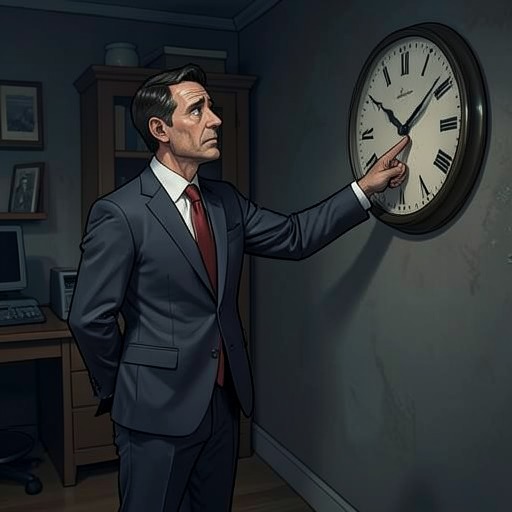
At the Ministry, the Secretary-General confronts Lucien with the reversal: the Keeper of the Seals has torn up the prepared decree. He shows him a torn paper and hands him a copy of the article, identifying Lucien as its author. The official condemns the contradiction between Lucien’s royalist profession and his collaboration with a paper that alarms ministers, distresses the political centre, and, in the government’s view, drives the country toward an abyss.
The rebuke is not simply that Lucien has offended an opponent. The minister has denounced him to the king, who has angrily reprimanded the Duke of Navarreins. The official explains that Lucien has made enemies of people who had been favorably disposed toward him; an injury from an enemy might be expected, but an injury from a friend is intolerable. The promised title therefore fails not through a slow bureaucratic delay but through a sharp reversal of patronage. The decree that seemed to embody the king’s recognition is destroyed because Lucien’s writing has made him politically unsafe to those who were meant to secure it.
The Cost of Recognition
des Lupeaulx tells Lucien that he has compromised him. Marquise d'Espard, Madame de Bargeton, and the Countess of Montcornet had vouched for Lucien, and their reputations are now implicated in his conduct. He is advised not to visit them. The consequences thus reach beyond the lost title: Lucien’s reckless article damages the network of social sponsors whose confidence had made the promised advancement seem possible.
Dismissed from the Ministry, Lucien walks back along the boulevards, stunned and exhausted. He sees himself as the plaything of envious, greedy, and treacherous people, but also recognizes his own part in the failure: he has pursued pleasures and vanity, drifted from one attraction to another without a settled plan, and thought well while acting badly. He has no money, feels worn out by work and pain, and knows that his articles appear only after those by Merlin and Nathan. The broken promise of the Rubempré name is therefore one element in a larger collapse of confidence and prospects. The episode makes aristocratic recognition look less like a secure reward for talent or loyalty than a contingent favor, vulnerable to the next article and to the shifting judgments of the people who control access to power.