Martinville
Illusions perduesMartinville is a journalist whose role in Lucien de Rubempré’s story is defined by an unusual combination of belligerent partisanship and personal loyalty. He joins a collective war against rival writers, but when Lucien becomes isolated, Martinville is the one associate who serves him without ulterior motives—and later publishes a forceful defense of his novel despite the campaign’s political costs.
Identity and Public Position
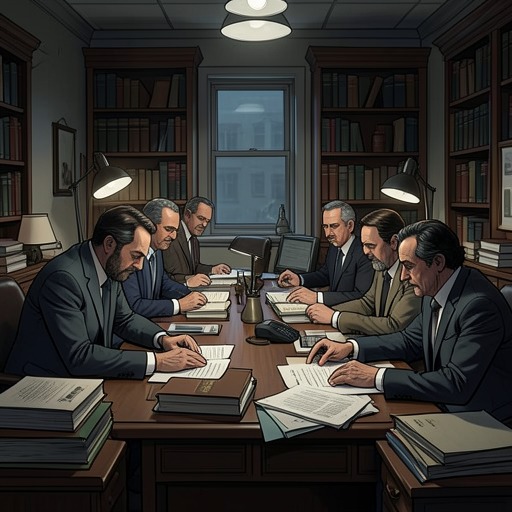
At a late-night gathering of journalists, Martinville embraces a proposal to attack classical and liberal writers without distinction. He urges the group to be relentless, and the assembled writers unanimously approve the campaign at one in the morning, sealing their decision over a blazing bowl of punch. The scene places him within journalism’s factional warfare and shows his readiness to turn criticism into an organized assault.
The gathering also gives Martinville a part in a call to restore journalism by resisting publishers’ money and gifts. His stated commitment to that principle sits within a meeting shaped by factional maneuvering, but the narrative does not establish whether he keeps to it in every circumstance.
Alliance and Loyalty
When Lucien is treated as an intruder by his fellow journalists, Martinville stands apart from their hostility. During the first fifteen days of Lucien’s furious writing for the royalist paper Le Réveil, Martinville supports him; the narrator identifies him as the only person helping without an ulterior motive. That constancy contrasts with the journalists who secretly maintain friendships across party lines while leaving Lucien to experience them as implacably cold.
Martinville’s loyalty is especially significant because Lucien’s own conduct has helped provoke the professional circle’s resentment. The account does not present Martinville as leading the campaign to punish him or as sharing in the private bargains behind the journalists’ public antagonisms. Instead, he remains a practical ally while others withdraw or pursue their own interests.
Defense of Lucien’s Novel
After the publishing house Fendant and Cavalier fails and Lucien’s novel, The Archer of Charles IX, is disastrously discounted, Martinville writes a magnificent article in its favor. The book has been sold off cheaply and has brought losses to booksellers; Lucien is also being pursued over the resulting commercial obligations. Martinville’s defense therefore arrives amid both literary failure and financial crisis.
His article cannot overcome the anger directed at Lucien, then editor-in-chief of rival royalist papers. Neither liberal nor ministerial newspapers answer Martinville’s challenge, however sharp his polemics are. The support is real, but its effect is limited: the hostility surrounding Lucien turns even a courageous intervention into something that fails to restore his standing.