Sixte du Châtelet
Illusions perduesSixte du Châtelet advances through society by making limited talents look like versatile accomplishment and by treating relationships as routes to power. A former imperial courtier, provincial intriguer, and eventual count and prefect, he is both a rival to Lucien and one of the forces that shapes Lucien’s changing fortunes. His career repeatedly turns on the same skill: reading a social situation, then arranging appearances to his own advantage.
Identity and Early Career
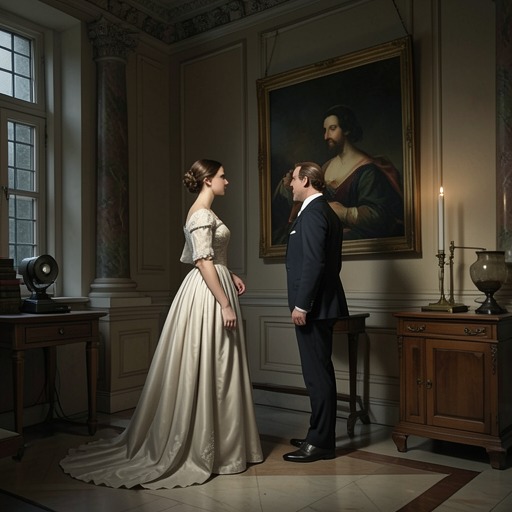
Born Sixte Châtelet, he had taken care to style himself with a title from 1804 onward. Under Napoleon, he avoided conscription by remaining near the imperial court and began his career as secretary of the commands of an imperial princess. He was handsome, accomplished in dancing and billiards, competent at a range of social exercises, and ready to adapt to the expectations of whoever mattered. His facility was broad but shallow: he could accompany a singer imperfectly, offer flat verses in place of poetry, sketch or copy pictures, and assist his patroness with embroidery. The narrator presents these minor accomplishments as useful social vehicles in a world where women could influence political advancement.
Du Châtelet also claimed expertise in diplomacy. In practice, the role suited his talent for saying little while appearing to know more: he could preserve a discreet silence, answer with mysterious gestures, and let events pass while seeming to guide them. His imperial patroness could not secure him a place on the Council of State, preferring to keep him close, but he was made a baron and sent to Cassel as an extraordinary envoy. During a crisis Napoleon used him as a diplomatic courier. At the Empire’s fall, he expected a ministerial post in Westphalia near Jérôme, and the collapse of that prospect plunged him into despair.
He then travelled in Egypt with Armand de Montriveau. Separated from his companion by unusual events, he spent two years wandering from desert to desert and tribe to tribe, captured by Arabs who repeatedly resold him without finding a use for his talents. He eventually reached the imam’s territory at Muscat and escaped aboard an English ship bound for Paris, returning a year before Montriveau. His hardships and former connections helped him obtain a post near Monsieur de Barante while he awaited an available directorship.
A Strategic Entrance into Angoulême
In Angoulême, the story of his imperial service and desert captivity made him an object of women’s curiosity. He carefully performed the part of a suffering, disenchanted man, touching his head as if old injuries still tormented him. He paid formal calls on the General, the Prefect, the Receiver-General, and the Bishop, but remained cool and faintly disdainful, as if his provincial post were beneath him and better favors were due. After observing local society for several Sundays at the cathedral, he settled on Madame de Bargeton as the connection most likely to serve him.
Music gave him an opening into her guarded salon. He secretly obtained a mass by Le Miroir, studied it at the piano, and played the organ at church on a Sunday when Angoulême society was present. By letting his name circulate through the lower clergy, he revived the curiosity already attached to his person. Madame de Bargeton complimented him after the service and regretted that she had no chance to make music with him; this carefully arranged encounter won him an invitation that a direct request might not have secured. At forty-five, he saw in her a woman whose youth might be revived, a possible wealthy widow, and a link to the Nègrepelisse family that could help reopen his political career through the Marquise d'Espard.
His arrival unsettled the town’s social hierarchy. Madame de Bargeton’s salon had excluded the Receiver-General, yet admitted a mere Director of Indirect Contributions; local authorities regarded the reversal as an affront. When Lucien first visited the house and found himself alone with Madame de Bargeton, du Châtelet noticed the young poet as a rival. On the way down from Beaulieu, he tried to impress Lucien with his own importance and claimed the status of the man who had introduced him. He later exaggerated the dangers of his travels and presented himself as a man capable of killing a rival. The display imposed on Lucien’s imagination but did not frighten him away.
Lucien: Rivalry, Patronage, and Surveillance
Du Châtelet’s response to Lucien was not simple exclusion. When the salon’s circle showed coldness toward the young man, du Châtelet publicly declared himself Lucien’s friend and organized a dinner attended by Angoulême’s administrative leaders. At dessert, Lucien recited his ode on the death of Sardanapalus. The praise was extravagant: the college head compared the poem favorably with the work of Jean-Baptiste Rousseau. Du Châtelet meant the hot-house acclaim to ruin Lucien—either by making him believe too early in his own greatness or by provoking an arrogance that would return him to obscurity. Meanwhile, he followed the progress of Lucien and Madame de Bargeton’s attachment and waited for a chance to destroy his rival.
He also made himself an intimate observer of their visits. To keep access to Madame de Bargeton while disguising his intentions, he played the friend and attached himself for show to the jealous Amélie de Chandour. With Stanislas de Chandour, he turned the question of whether Madame de Bargeton loved Lucien into a public controversy, encouraging others to take sides and thereby keeping the pair under scrutiny. He and Stanislas repeatedly visited the salon after Lucien’s arrival, hoping to catch signs of a compromising relationship. Yet the affair remained platonic: the boudoir door stood open, servants and visitors moved freely, and no outward evidence supported the scandal du Châtelet hoped to produce. His plan depended on engineering a surprise while maintaining the pose of a neutral observer.
The province’s close surveillance gave this scheme its leverage. Madame de Bargeton felt watched even inside her own home, and the obstacles to privacy sharpened the lovers’ discussions rather than giving them an easy intimacy. Du Châtelet, who did not believe in their innocence, continued to pursue a revealing incident. When Madame de Bargeton was preparing to leave Angoulême for Escarbas, he even went to her hotel soon after she had arrived in Paris, claiming that he had followed her at the risk of reprimand from the administration. Later, Lucien found him leaving her house and asked why Madame de Bargeton and the Marquise d'Espard had turned against him. Du Châtelet was thus placed at the point where Lucien’s provincial romance became his Parisian disgrace.
Political Advancement and Reversal
Du Châtelet’s fortunes became entangled with the newspaper attacks Lucien wrote against him and Madame de Bargeton. The Marquise d'Espard explained that society could appear to sacrifice a friend while using an enemy’s influence on that friend’s behalf: Lucien’s attacks, she said, could serve du Châtelet by diverting attention from the Ministry. The political usefulness of being ridiculed therefore complicated the apparent feud. In another account of the intrigue, Lucien’s attacks helped du Châtelet advance, while the women who had drawn Lucien into the Royalist press sought to prevent him from securing the promised Rubempré decree. They had expected Lucien to make terms with Madame de Bargeton; instead, he had accepted terms from others and remained attached to Coralie.
A satirical newspaper article about Louis XVIII’s intimate correspondence and the Garde-des-Sceaux angered the King and his ministers, even though its story was false. Du Châtelet, meanwhile, received a promotion: made a Councillor of State in extraordinary service, he was granted the title of count, with the du restored in the decree, and promised the prefecture of Charente once the incumbent had completed the service required for full retirement. Lucien’s press persecution had helped provide a pedestal for the promotion. Du Châtelet took Lucien in his carriage and treated him as an equal, a conspicuous change in their relationship.
That favor did not protect Lucien’s own prospects. The minister had prepared an order granting him the Rubempré name, but tore it up after learning that Lucien had contributed to the offending newspaper. The episode exposes the instability of the patronage du Châtelet inhabited: an attack could strengthen one man’s position while costing another his promised advancement. His rise was secured not by a settled allegiance but by the shifting value of public scandal and political connections.
Return to Angoulême and Final Intervention
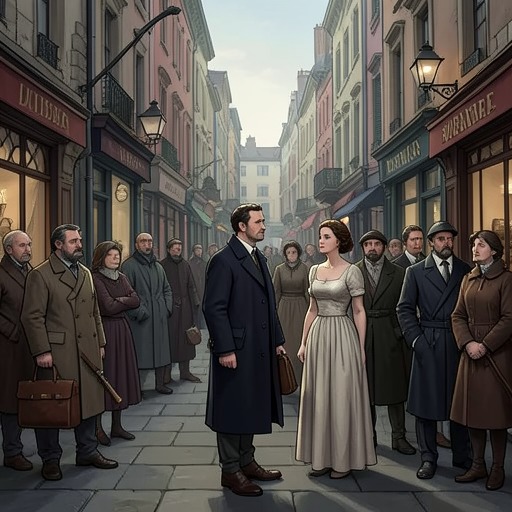
Eighteen months after Lucien had left Angoulême full of love and hope, he returned impoverished, walking much of the way and relying on whatever transport he could find. Near Mansle, he hid behind parcels in a carriage and awoke to discover that its occupants were the new Prefect of Charente, Count Sixte du Châtelet, and his wife, Louise de Nègrepelisse. She invited him into the carriage; Lucien answered with a cold greeting and continued on by a side road. The encounter compressed their reversal of fortune into a single scene: the former lover and rival now travelled as a titled couple, while Lucien was dusty, nearly penniless, and on foot.
At the later gathering in Angoulême, du Châtelet’s advancement was visible in the changed position and bearing of his wife. Louise had acquired the polished details and manners of Parisian high society, while the marriage had helped du Châtelet rise quickly; the provincial company joked about the contrast between her renewed appearance and his age. When Louise met Lucien privately during the gathering, du Châtelet interrupted to warn her about the Prefect’s wife and the government. Louise answered that she was discussing important matters with Lucien, including the rescue of an inventor threatened by underhanded manoeuvres, and said that du Châtelet would help them. She then appeared openly with Lucien and led him to sign the contract.
As they parted, du Châtelet told Lucien that if what Madame du Châtelet had just said was true, he could count on him: from that evening, Lucien’s brother-in-law could consider himself out of danger. His promise marks a final, limited reversal of his earlier hostility. The man who had watched Lucien to expose him, and whose political rise became bound up with Lucien’s attacks, now agrees to help because Louise has taken charge of the situation. Du Châtelet remains a negotiator of appearances and alliances, but at the close his influence is used to secure practical aid for David rather than to undermine Lucien.