The “Fatal One” in the Family
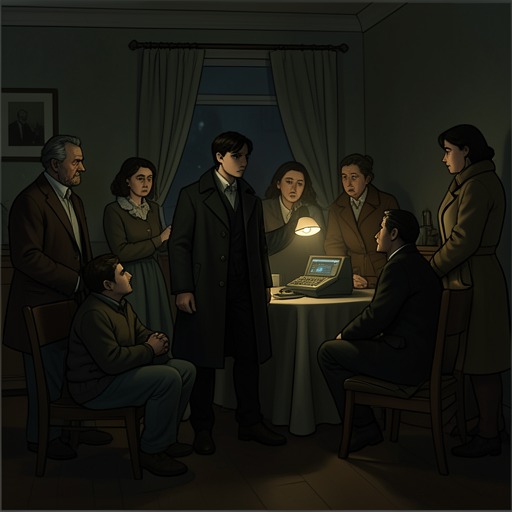
Illusions perduesThe “Fatal One” in the Family is a theory of how one person’s conduct can become a recurring source of harm to an entire household. Lucien de Rubempré adopts the idea to explain the damage he believes he has done to Eve Séchard, David Séchard, and their family. His letter makes the concept at once social diagnosis and self-condemnation: an attempt to name a pattern, not to excuse it.
The Theory and Its Origin
In his farewell letter to Eve, Lucien recalls hearing the theory from a diplomat at dinner with friends at Rocher de Cancale. The diplomat had begun with the striking example of a young woman who remained unmarried and was described as being made ill by her father. He then broadened the claim: in some families, a mother could prevent a household from prospering, a son could ruin his father, or a father could destroy his children’s prospects and standing. The theory turns family misfortune into a pattern with a human source—a person whose influence is damaging even within the most intimate relationships.
Lucien remembers the argument as having been offered jokingly, supported by a succession of examples, and sharpened by the satirical paradoxes journalists trade among themselves. Its comic origin matters: a piece of social wit becomes, in the crisis of his return, a severe framework for interpreting his own life. The letter does not establish the diplomat’s theory as an objective law. It shows how Lucien seizes on it to make sense of the harm surrounding him.
Lucien’s Self-Accusation
Lucien identifies himself as the family’s “fatal one” because he sees a repeated contradiction between his tenderness and his effects. He says that he has acted like an enemy despite loving his family, and that he has answered their devotion with trouble. The immediate crisis gives that judgment its force: David has been arrested after being drawn out by a false letter, and Eve collapses upon learning what has happened. Lucien admits to his mother that he caused the arrest, then withdraws to his room. In the letter, he calls the resulting blow—though not intended—the cruelest of all.
He places this injury within a longer contrast between his family’s life and his own. While Eve and David followed the difficult but dependable path of work toward security, he pursued a reckless chance to seize a fortune. In Paris, he says, he mistook companionship for friendship and left genuine friends for people who intended to exploit him; he remembered his family chiefly when he could bring them distress. The “fatal one” is therefore not simply a person struck by bad luck. In Lucien’s account, it is someone whose choices repeatedly turn other people’s loyalty into exposure to harm.
Ambition, Character, and Dependence
Lucien’s explanation also turns on a mismatch between desire and capacity. His ambitions are excessive, he says, and the pleasures he has known make the simpler satisfactions available to him seem inadequate. He describes his will as intermittent: he can exert intelligence and energy in bursts, but not with the steadiness demanded by a sustained struggle. He fears the future and finds the present unbearable, while recognizing that escape abroad without means would only add another folly to those already committed.
The letter makes this weakness relational as well as personal. Lucien imagines that he could gain value by joining himself to a person with a strong, merciless will. He names Madame de Bargeton as the woman he should have chosen instead of Coralie, and says that David and Eve might have guided him but were not strong enough to master a weakness that eluded control. His image of a small, elegant shrub aspiring to be a cedar condenses the imbalance between his self-conception and his actual endurance. The family theory lets him see that imbalance not as a private disappointment alone, but as a danger imposed on those around him.
Meaning and Ending
Lucien’s diagnosis is severe but not detached. He accepts responsibility for the harm he has caused, yet frames himself as a lasting affliction from which his family must be protected. He asks Eve and David not to search for him or learn his fate, and imagines that their memories can serve as his tomb. His statement that resignation would amount to a daily suicide contrasts with his resolve to act on his despair that night. At two o’clock, he confirms that his decision is settled and says farewell to his sister.
The concept’s force lies in the gap between affection and consequence. Lucien insists that he loves his family, but that love has not prevented him from injuring them; good intentions, in his own account, have not made his actions safe. By giving the pattern a name, he makes his guilt legible, but the letter also shows the danger of turning repeated failures into an identity from which no future seems possible. The “fatal one” is thus both Lucien’s explanation of his family’s suffering and the verdict he uses to close off his place within it.