Tuileries Garden
Illusions perduesTuileries Garden serves as a stage on which Lucien de Rubempré’s changing vision of Paris becomes visible. Its fashionable promenades initially promise pleasure and entry into a new world; the same setting soon exposes the social distance between his provincial appearance and the polished society he hopes to join.
The Garden as a Parisian Promenade
After receiving word that Madame de Bargeton would take him to the opera and introduce him to her cousin, Marquise d'Espard, Lucien went to Tuileries Garden to pass the hours before the evening. He walked along the terrace of the Feuillants, watching elegant couples and fashionable women among the promenaders. Compared with Beaulieu, the garden seemed to him alive with a richer variety of people, like the brilliant birds of distant lands set against the muted colors of European birds. His buoyant anticipation made the promenade look like a promise of the Parisian life he had imagined.
A Public Measure of Class
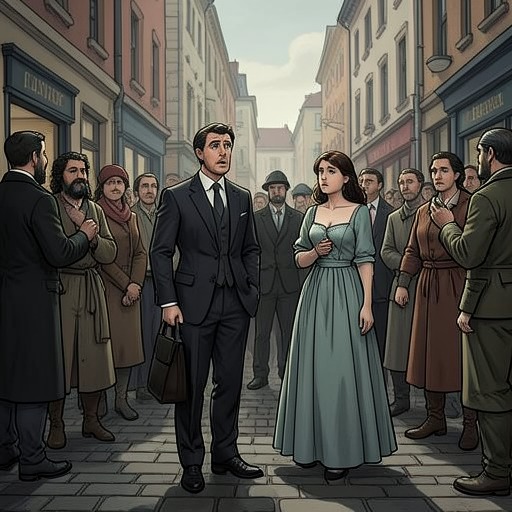
That pleasure gave way to a painful appraisal of his own appearance. Lucien noticed that fashionable young men were not wearing the kind of coat he had brought from Angoulême. His was out of date, with a faded shade of blue, an awkward collar, worn tails, and buttons that had reddened; he tried to hide his short waistcoat by fastening the coat. His nankeen trousers and boots also looked out of keeping with the fashionable cut and fabrics around him. Even his white embroidered cravat, made for him by his sister after she had seen similar ones on Francis du Hautoy and Stanislas de Chandour, seemed misplaced: a grocer's boy across the railings wore a comparable embroidered cravat. In the garden, clothing was not merely personal adornment but a public sign of social belonging, and Lucien’s careful attention to these details turned an ordinary walk into a painful lesson in class.
A Later Walk and Reversal
On a later visit, a note from Madame de Bargeton informed Lucien that Marquise d'Espard could not receive him, while offering reassurance about his literary prospects. He walked through Tuileries Garden in a daze, then followed the stream of promenaders and carriages toward the Champs-Élysées, where thousands of vehicles gathered on a fine Sunday. Returning, he saw Madame d'Espard and Madame de Bargeton riding together in a splendid carriage. Madame de Bargeton’s carefully chosen clothes and newly acquired manner showed how successfully she had adapted to her cousin’s world; the many greetings paid to the women also revealed that Parisian society already knew of their kinship. The garden and its routes thus frame two linked recognitions: Lucien’s clothes disclose his outsider status, while the carriage makes Madame de Bargeton’s social transformation unmistakable.