
The Search for a Motive
In Cold BloodThis thread follows the movement from theories of revenge and robbery toward the unsettling conclusion that the crime has no adequate motive.
increasing Bearing strength in each event
 decreasing
Bearing strength in each eventdecreasingThe Grudge Theory

The Grudge Theory
Familiar enemies considered
Investigators examine people who may have resented Herbert William Clutter, including men with old disputes or anger. Their local connections seem to offer a motive that the crime itself does not.
Alibis undo certainty
Each promising suspicion weakens under scrutiny. The search for a personal grievance continues, but no candidate can be securely attached to the killings.
Robbery Reconsidered
Robbery Reconsidered
Missing possessions
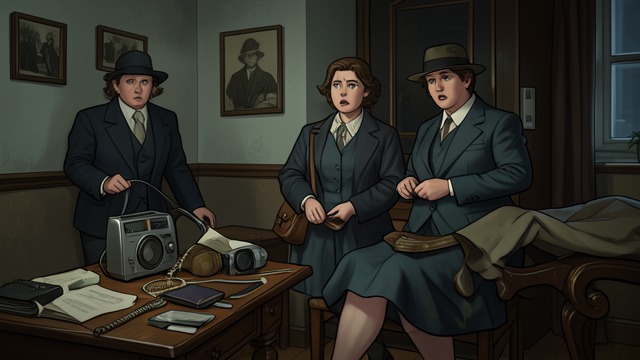
The open billfold, Nancy Clutter’s purse, and the missing portable radio renew the possibility of robbery. The evidence is small and inconsistent with the scale of the violence.
An unsatisfying explanation
Investigators struggle to believe that a few stolen objects explain four deaths. Yet dismissing robbery too quickly may also conceal the offenders’ actual purpose.
The Safe That Wasn’t There
The Safe That Wasn’t There
A false lead
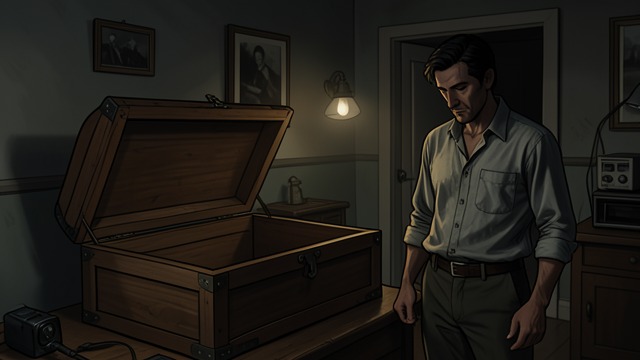
Floyd Wells had led Dick to believe that Herbert William Clutter kept a safe and substantial cash at home. The supposed safe does not exist, and the robbery yields little money.
Violence after failure
The discovery should have ended the scheme, but the intruders remain in control and continue searching. The original motive becomes less a justification than the trigger for an escalating disaster.
The Killers’ Accounts
The Killers’ Accounts
Conflicting blame
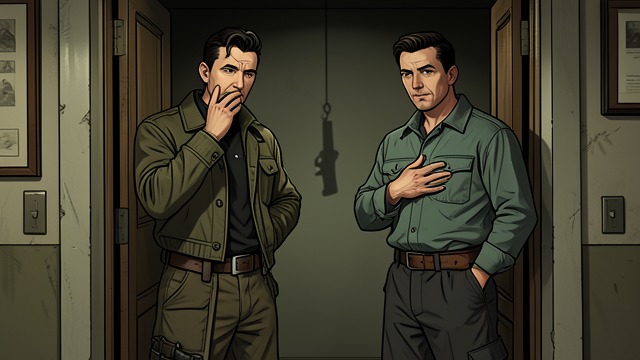
Dick says Perry killed the family, while Perry’s account assigns some deaths to Dick before later changing. Their statements overlap on many details but diverge on responsibility for the shots.
Motive narrows
The confessions establish a failed robbery and a violent decision, not a coherent personal hatred of the victims. The investigation answers how the crime happened more fully than why.
A Psychological Explanation
A Psychological Explanation
Past enters the present
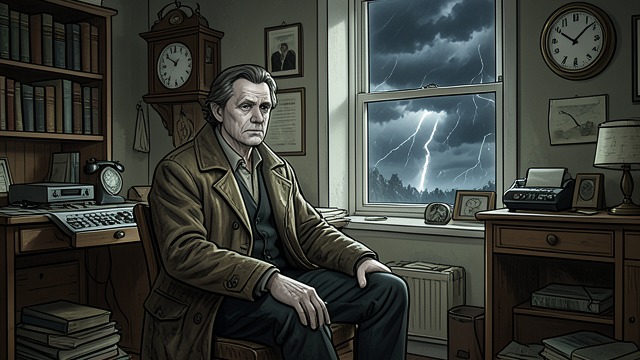
Later analysis suggests that Perry’s violence may have fused the Clutters with earlier figures from his life. This account treats the victims as strangers caught in a psychological crisis, not as the cause of it.
Meaning remains incomplete
The explanation can illuminate the shape of the violence without making it acceptable or fully knowable. The motive stays troubling precisely because it cannot be reduced to a simple grievance.
November 16–18, 1959
Late November 1959
Night of November 14–15, 1959
January 1960
March 1960 and after
