Bobby Rupp
In Cold BloodBobby Rupp, Nancy Clutter’s longtime boyfriend, is the last known visitor to see her before the Clutter family murders. His account of an ordinary evening at the Clutter home establishes the closeness of their relationship; afterward, his bereavement, his brief identification as the investigation’s principal suspect, and his eventual marriage show how the crime continues to shape a life beyond the immediate scenes of violence.
Identity and Relationship with Nancy
Bobby lived three miles west of River Valley Farm and had known Nancy since they attended school together from first grade. He remembered her as pretty and popular, but valued especially how she made people feel good about themselves. Their first date was the eighth-grade graduation dance: both were twelve, and Bobby was proud that Nancy chose him when many boys wanted to take her. He drove her to the dance in his father’s car. As they grew older, their courtship became a steady part of their lives. Nancy was the only girl Bobby had dated, and he also felt warmly attached to her family.
His affection extended to Herbert William Clutter, whom Bobby saw as stricter about religion than some people but never as someone who forced others to accept his beliefs. Bobby’s memories of the Clutters are domestic and specific: visits, conversation, television, and the comfortable presence of Herbert William Clutter reading in his chair. That sense of welcome helps explain why the family’s home was not merely where Bobby visited Nancy, but a place woven into his own routine.
The relationship had its disagreements. Nancy had taken off their shared ring for a time after hearing that Bobby had drunk a bottle of beer at a friend’s wedding reception. Someone had exaggerated the incident into a report that he was drunk, and Nancy would not speak to him for a week. By the time of his last visit, Bobby believed they had made up and that she might soon wear their ring again. The small silver ring Nancy wore instead was one she had bought during a trip to Colorado with Susan Kidwell; Bobby carefully distinguished it from the ring that represented their relationship.
The Last Visit and the Investigation
Bobby’s final visit began with a plan for an evening out. Under a full moon, he hoped Nancy might go driving with him to McKinney Lake or to the movies in Garden City. She said she would have to ask her father, then returned with his refusal because she and Bobby had stayed out late the previous night. She invited Bobby to come over and watch television instead. He arrived shortly after seven in his 1955 Ford. He saw nobody on the road or the lane, only the family dog, Teddy, who barked at him.
The downstairs lights were on, while the second floor was dark. Bobby assumed that Bonnie Clutter was asleep, an assumption later reinforced when Nancy stopped Kenyon Clutter from practicing his baritone horn because it might wake her. Supper was over; Nancy had loaded the dishes into the dishwasher, and Bobby joined Nancy, Kenyon, and Herbert William Clutter in the living room. Nancy sat with him on the couch while Herbert William Clutter read one of Kenyon’s Rover Boy books in his stuffed rocker. At one point, Herbert William Clutter went to the kitchen, returned with two apples, offered Bobby one, and ate both when Bobby declined.
Bobby remembered Nancy’s clothes and the items she wore that evening: socks and soft slippers, jeans, a green sweater, a gold wristwatch, and an identification bracelet he had given her for her sixteenth birthday. It bore her name on one side and his on the other. He also noticed the ring that was not their shared ring. These details, along with the ordinary refusal of an evening drive and the television visit that replaced it, make his account an intimate record of a last night that neither he nor Nancy could recognize as their last.
When the deaths were discovered, Bobby had not yet been told by Susan Kidwell, who wanted to run to the Rupp farm to tell him. Clarence Ewalt had already stopped there and informed Bobby’s father. Bobby listened without asking questions, thanked Ewalt, and stood outside looking across the harvested fields of River Valley Farm. His family called him in for dinner, but his father urged them to leave him alone. Bobby’s younger brother followed when he later set out across the fields toward Holcomb. At the barrier erected at the farm entrance, Bobby learned that officers would not let him through. The investigation’s principal suspect, as he learned before nightfall, was Bobby himself. The episode placed the boy who had been part of the Clutters’ everyday life under suspicion even as he was beginning to comprehend their deaths.
Bereavement and Susan Kidwell
The loss remained physically and socially isolating for Bobby. At Christmas, he stayed home instead of hurrying to River Valley Farm with Nancy’s present. Their proximity in age had always made Christmas and Nancy’s birthday just after New Year’s difficult to plan for: he had to find two gifts in quick succession. Each year he used money earned working summers on his father’s sugar-beet farm and arrived with a package his sisters had helped wrap. The previous Christmas he had given Nancy a small heart-shaped gold locket. This year he had been weighing imported perfume against riding boots. Her death ended the ritual before he could choose.
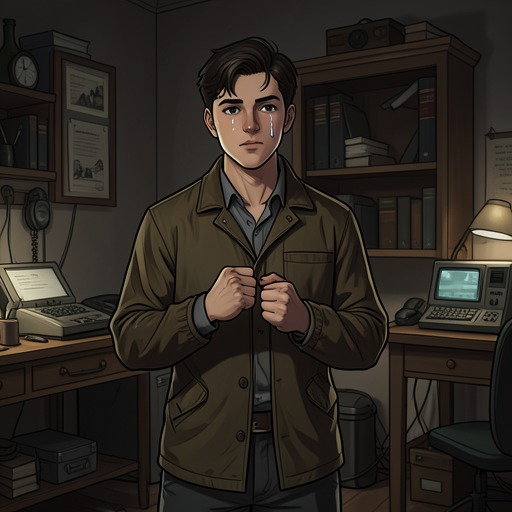
On Christmas Day Bobby ate with his parents and seven brothers and sisters, who had been careful with him since the tragedy. They repeatedly urged him to eat, but his grief was not something their concern could lift. The narrative describes it as a circle around him, difficult for others to enter. Susan was the possible exception. Before Nancy’s death, Bobby had not fully appreciated her; he thought her interest in painting, poetry, and piano music made her different, and he had been jealous of her importance to Nancy. Shared loss changed that understanding. Susan could comprehend what Bobby had lost, and her nearly constant presence helped him endure not only the murders but his interviews with Alvin Adams Dewey and the painful irony of having been suspected.
That closeness did not last unchanged. After about a month, Bobby visited the Kidwells less often, and Susan seemed less welcoming when he did. Their visits were forcing both of them to remember what they wanted to forget. The friendship’s gradual waning is not presented as a rejection of their shared bond; it reflects the difficulty of sustaining consolation when grief itself keeps reopening the loss.
Bobby sometimes found temporary distance from remembering Nancy through basketball, driving country roads at high speed, or running long distances across the flat yellow fields. He hoped to become a high-school gymnastics instructor and treated running as part of a self-imposed athletic program. On the Christmas day described in the narrative, after helping clear the holiday dishes, he put on a sweatshirt and chose to run. Physical motion offered a way to occupy himself when conversation and family care could not resolve his grief.
Memory, Change, and Later Life
The landscape repeatedly brings Nancy back to Bobby. When they were twelve, he carried her school satchel along the mile between the Holcomb schoolhouse and her father’s farm. On warm days they sometimes stopped by the Arkansas River. Nancy had told him about seeing its source in Colorado: there, she said, the river was clear, fast, and full of rocks, unlike the brown stream crossing the Kansas plains. After her death, Bobby could look at the local river and momentarily see it as she had described it, a bright mountain torrent. His memory of Nancy turns the familiar landscape into a measure of the energy and joy he associated with her.
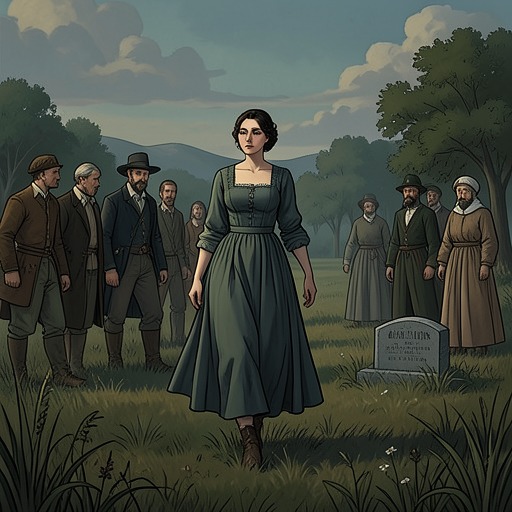
Years later, at Valley View Cemetery, Alvin Adams Dewey mentioned having heard that Nancy’s boyfriend had married. Susan identified the young man as Bobby and named his wife, Colleen Whitehurst, whom she described as beautiful and kind. The brief exchange establishes a consequential change without suggesting that marriage erased the earlier loss. Bobby’s life has continued beyond the relationship and the murders, while the cemetery visit and Susan’s recollection keep Nancy’s unrealized plans present in the story.
Bobby’s narrative function rests on this contrast between an ordinary future and its abrupt interruption. His memories record Nancy not as an abstraction but through the gifts, arguments, visits, clothes, and shared riverbank moments that made up their relationship. The later details of his withdrawal, his attempts to move through grief, and his marriage establish both the lasting force of the loss and the possibility of a life that does not remain fixed at the moment of the crime.