Death penalty as a criminal sentence
In Cold BloodThe death penalty as a criminal sentence becomes the central legal and moral question in the proceedings against Richard Eugene Hickock and Perry Edward Smith. In the book, it is not merely the punishment sought by the prosecution: it shapes jury selection, divides the community and the defense, and culminates in a carefully scheduled state execution. The narration places the sentence’s asserted purpose of public protection beside objections grounded in religion, mercy, and the moral authority of the state to take life.
The prosecution’s case for the sentence
On January 15, county attorney Duane West announced that he would seek the death penalty if the case went to a jury and would ask for the same sentence if the defendants pleaded guilty before a judge. He justified the decision by the violence of the crime and what he described as the lack of mercy shown to the victims. He argued that execution was necessary to protect the public, adding that Kansas had no life sentence without the possibility of parole and that prisoners sentenced to life served, on average, fewer than fifteen years.
The announcement also reached the defendants beyond the courtroom. While in Josephine Meier’s kitchen, Perry Smith heard that the county attorney intended to seek death and responded with the belief that the rich escaped hanging while the poor and friendless did not. The book records this as his immediate reaction to the announced penalty, placing the prospect of execution within his sense of social vulnerability without establishing that his view represented the community as a whole.
The penalty shapes the trial
Before trial, Arthur Fleming warned his client that moving the proceedings elsewhere in Kansas was unlikely to change the general sentiment. He saw Garden City’s religious character as a possible advantage: local ministers, including the Clutters’ own minister, had spoken against capital punishment as immoral and unchristian. Fleming’s stated aim was to save his client’s life, and he considered the local setting at least as promising as another venue in the state.
The issue directly affected jury selection. Of the first forty-four candidates, seven were removed through defense challenges and three at the prosecution’s request. Another twenty were excused because they opposed capital punishment or had already reached a firm view of guilt. The fourteen men ultimately selected, including two alternates, were drawn from the remaining pool. Several had known Herbert William Clutter, though each said that acquaintance would not prevent an impartial verdict. One juror said he ordinarily opposed execution but made an exception in this case; despite concern that the answer suggested prejudice, he was accepted. The process thus exposed a tension at the heart of the trial: jurors had to be considered for impartiality while their views on the sentence itself helped determine who could serve.
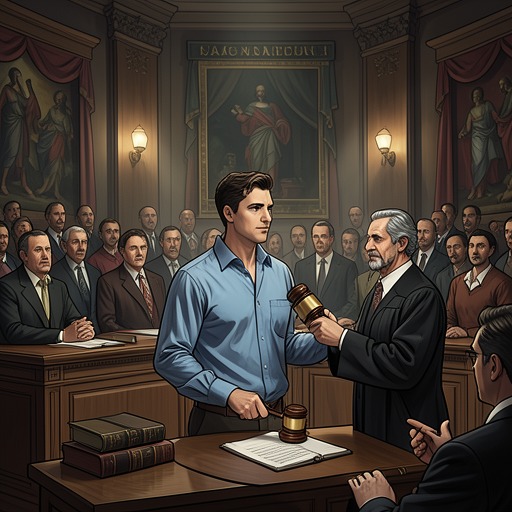
In the closing arguments, Duane West urged the jury to find both defendants equally guilty regardless of which man fired the shotgun and requested the maximum penalty. He presented the request as protection rather than vengeance. The defense answered on different grounds. Arthur Fleming appealed to the distinction between a human body and an enduring soul, arguing against the destruction of the body that housed it. Harrison Smith made opposition to capital punishment his principal theme: he characterized it as barbaric, questioned its deterrent effect, and asked the jury for mercy in the form of life imprisonment. The contrast was not simply between severity and leniency; it was also a dispute over whether the state could legitimately take a life in response to a crime.
Religious and personal objections
The trial’s religious setting gave the opposition to execution a public voice, though it did not settle the matter. Fleming pointed to ministers who considered the death penalty unchristian, and both defense attorneys appealed to the jurors’ presumed Christianity. These appeals coexisted with the prosecution’s demand for execution and with the jury-selection result that excluded many candidates opposed to it. The book therefore presents a community in which moral resistance to capital punishment was visible but did not prevent the case from moving toward a death sentence.
Personal responses also complicated the language of punishment. During the trial, Mrs. Hickock said she could not excuse her son’s part in the crime and continued to pray for the Clutter family, while also praying for Dick and feeling pity for Smith. Her words did not argue a legal theory, but they set grief and compassion beside the proceedings’ effort to assign a definitive penalty. The narrative’s attention to this response makes clear that the sentence was considered not only by lawyers and jurors but by families living with the crime and its consequences.
Appeals, confinement, and execution
After conviction, attorneys Joseph P. Jenkins and Robert Bingham carried the case to the United States Supreme Court three times. The Court declined each time to grant certiorari, leaving the defendants without the full hearing they sought there. In March 1965, the Kansas Supreme Court ordered that their lives end during a two-hour window between midnight and 2:00 a.m. on April 14. A clemency appeal to Governor William Avery followed; he refused to intervene, saying the decision was in the best interests of the people of Kansas.
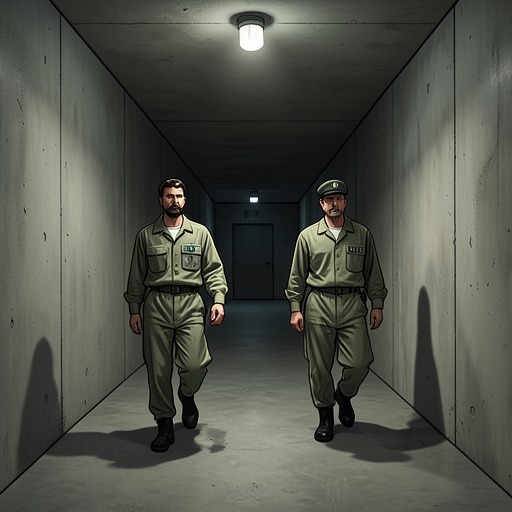
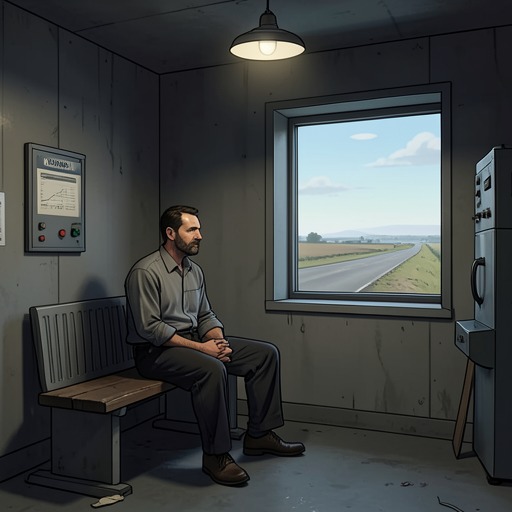
The sentence was carried out at the Kansas State Penitentiary in Lansing, after Smith and Hickock had spent almost two thousand days in Death Row cells. The book situates this final stage within a county whose economy included several prisons, and describes Death Row as the upper floor of a small, isolated building inside the prison compound. The punishment was thus both a legal judgment and an extended condition of confinement before the scheduled execution.
At the execution, Smith opposed capital punishment on moral and legal grounds, said that an apology for his crime would not undo it, and apologized nonetheless. He had spent his final three years on Death Row painting self-portraits and pictures of inmates’ children. Before the mask was put on, he spat his chewing gum into the chaplain’s hand. Hickock died first, at 12:41 a.m.; Smith died at 1:19. The account closes the legal sequence with those times, while preserving the unresolved moral contrast between the state’s authority to impose the sentence and Smith’s expressed rejection of it. The death penalty appears as a procedure capable of reaching its formal conclusion, but not as an argument that the characters or the narration have made morally simple.