Execution of Richard Hickock and Perry Smith
In Cold BloodThe execution of Richard Eugene Hickock and Perry Smith on April 14, 1965, ended the state’s prosecution of the men convicted in the Clutter family murders, but the ceremony offered no simple conclusion. Conducted in the state prison before invited witnesses, it placed legal authority, public spectatorship, and the condemned men’s final words in the same stark sequence. For Alvin Dewey, who had helped capture them, the deaths closed the case formally while leaving its emotional meaning unresolved.
Legal Road to the Execution
The executions followed years of appeals. The Kansas Supreme Court set the execution window for the early hours of April 14, after Hickock and Smith had spent almost two thousand days in Death Row cells. Their lawyers had carried the case to the United States Supreme Court three times, but the Court refused to grant certiorari each time, leaving the convictions in place without a full hearing there. A subsequent appeal for clemency went to newly elected Kansas governor William Avery, who declined to intervene, citing what he regarded as the public interest.
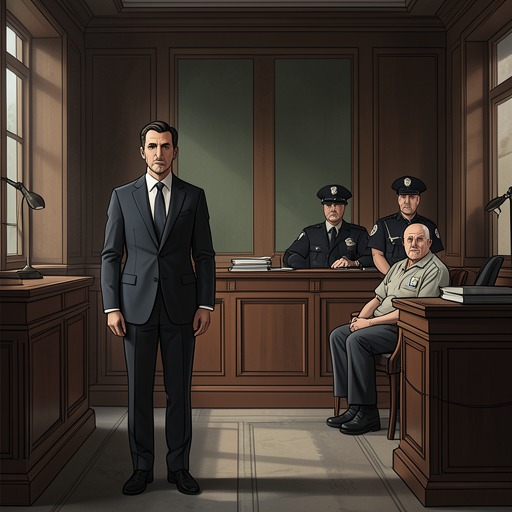
The event thus came at the end of a legal process that had repeatedly tested whether the convictions and sentences could be disturbed. The executions were not presented as spontaneous acts: a formal order, a warden’s recitation, and the presence of witnesses made the state’s procedure visible. Yet the finality of the sentence did not erase the arguments that had surrounded it. At trial, the prosecution had asked for death while insisting that the request was not made in vengeance; defense counsel had challenged capital punishment and sought mercy. The execution carried that dispute from the courtroom into the prison, where the state’s decision was enacted rather than debated.
The Prison and Its Audience
The setting belonged to a wider prison landscape in Leavenworth County, where several major penal institutions formed a substantial part of local life. The Kansas State Penitentiary stood in Lansing, enclosed by walls that separated the prison population from the surrounding rural town. Within that complex, Death Row occupied the upper story of a separate building officially designated for segregation and isolation. The execution itself took place in a warehouse, a space Dewey had not imagined as the setting for a ceremony of such consequence.
About twenty witnesses were invited. Dewey had never attended an execution and had expected a place of greater dignity; instead, he encountered a plainly lit, cluttered warehouse. The gallows, with its paired nooses, and the hangman waiting above the floor gave the proceedings a stark visual focus. The hangman had been brought from Missouri and was paid six hundred dollars. While the witnesses waited, their conversation remained strikingly casual, a contrast that unsettled Dewey. The scene therefore gathered the machinery of official punishment alongside ordinary spectators’ remarks, making the execution at once a state procedure and a public event observed by individuals with different responses to it.
Hickock’s Final Appearance
Rain began on the warehouse roof shortly before Hickock was brought in, accompanied by guards and a chaplain. He wore restraints and a leather harness. As the warden read the official execution order, Hickock searched the audience for someone he did not find: a member of the Clutter family. When told that none was present, he appeared disappointed, as if their absence left an expected part of the ceremony unfulfilled.
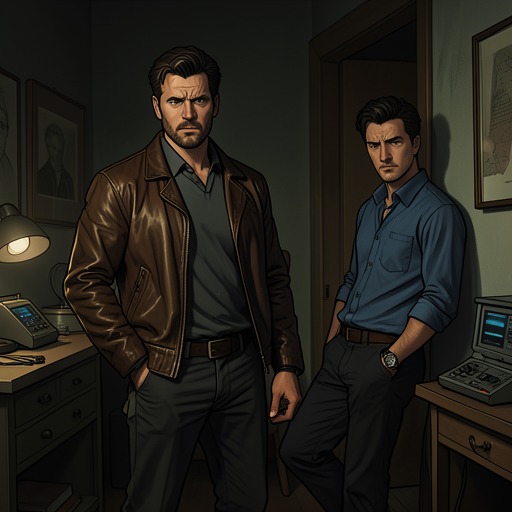
Asked whether he wished to make a final statement, Hickock said he held no hard feelings toward those sending him to his death and described the next world as better than this one. He then shook hands with the four investigators who had played leading roles in his capture and conviction: Roy Church, Clarence Duntz, Harold Nye, and Dewey. His courteous manner, including a charming smile, led the narrative to liken his greeting to that of a host receiving guests. Church later admitted that Hickock’s composure surprised him, though another detective dismissed him harshly. Their contrasting judgments show how the same final conduct could be read as courage by one witness and as no reason to revise a hostile view by another.
Hickock died first, at 12:41 a.m. The sequence was formally controlled: the warden read the order, the chaplain accompanied the condemned man, and the prison doctor made the official pronouncement of death. In the account’s treatment of the execution, these procedures give the event its institutional shape, while Hickock’s search for a Clutter relative and his handshakes make its personal and relational dimensions visible.
Smith’s Statement and Dewey’s Response
Smith entered chewing Doublemint gum. Recognizing Dewey, his old adversary, he stopped chewing long enough to grin and wink; when asked whether he had anything to say, he became serious. His hands were stained with ink and paint. During his final three years on Death Row, he had painted self-portraits and pictures of children, often working from photographs supplied by inmates. The account places that work beside his final statement, linking the prison years not only to confinement but also to the images he continued to make there.
Smith said he opposed capital punishment on moral and legal grounds. He hesitated as he spoke, then apologized for what he had done, while also saying an apology could not make the act meaningful or appropriate. Before the mask was adjusted, he spat his gum into the chaplain’s palm. The account records these small actions without turning them into a claim that they settled the larger questions of guilt or punishment. Smith died at 1:19 a.m., after Hickock.
Dewey shut his eyes during Smith’s execution and kept them closed until he heard the signal that it was over. Although he supported capital punishment as a deterrent and believed the men had earned the penalty, he had experienced the two executions differently. He had little regard for Hickock, whom he considered an empty small-time criminal, whereas Smith’s vulnerability and the memory of their first meeting in Las Vegas continued to affect him. When Dewey opened his eyes, he was reminded of the much younger-looking prisoner he had once seen in the interrogation room, his booted feet not reaching the floor. The contrast between the official ending and Dewey’s involuntary recollection prevents the execution from functioning as a clean emotional resolution.
Public Record and Aftermath
In the daylight hours after the executions, Dewey read the news in the Kansas City Star. The report stated that Hickock and Smith had died at the state prison, identifying Hickock as thirty-three and Smith as thirty-six and giving their separate times of death. Its newspaper form offered the public a concise account of an event Dewey had witnessed directly. The juxtaposition of headline and memory separates the execution’s reportable facts from the personal aftermath that the report could not contain.
The narrative closes the men’s legal trajectory with their deaths, but Dewey does not experience the climax or release he had anticipated. Instead, he finds himself recalling a chance encounter in Valley View Cemetery from nearly a year earlier, an incident that had, in retrospect, more or less ended the Clutter case for him. The return to that earlier scene shifts the emphasis from punishment as a completed state action to the investigator’s continuing effort to understand what the case had meant. The executions conclude the sentence; they do not conclude Dewey’s reckoning with the crime.