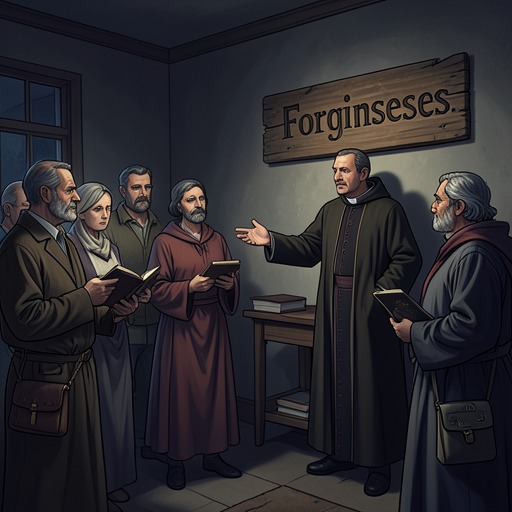
Genesis 9:6
In Cold BloodGenesis 9:6 enters the trial as a biblical precedent for capital punishment. In the prosecutor’s address to the jury, its principle of reciprocal punishment is used to argue that scripture does not rule out the death penalty but can be read to support it.
Use in the Closing Argument
The prosecutor anticipates the defense’s use of the Bible against capital punishment and argues that the coming of Christ did not invalidate the older law. After referring to other biblical passages, he fumbles and appears to close the Bible. The moment prompts smiles and nudges among visiting legal dignitaries, who recognize the gesture as a courtroom ploy: pretending to lose one’s place before reciting the desired passage from memory.
Meaning and Rhetorical Role
The appeal to Genesis 9:6 gives the prosecutor a scriptural answer to the defense’s moral argument. Rather than treating the Bible as a single, unambiguous prohibition on execution, he places its command against killing alongside a passage he presents as prescribing death for bloodshed. The citation thus supports his argument for the maximum penalty while turning the debate over scripture into a contest over which biblical teaching should govern the jury’s judgment.