Hickock and Smith appeals
In Cold BloodThe appeals by Dick and Perry Smith turned the Clutter murder trial into a prolonged dispute over whether a conviction could stand when the defendants alleged that local hostility, inadequate counsel, and procedural failures had deprived them of a fair defense. The challenges exposed a tension that remained unresolved in the courts: the prosecution possessed confessions and physical evidence, while the legal system was still obliged to examine claims that the proceedings had violated the defendants’ rights. Repeated hearings and petitions delayed execution dates, but no court set aside the convictions.
The challenge to the trial
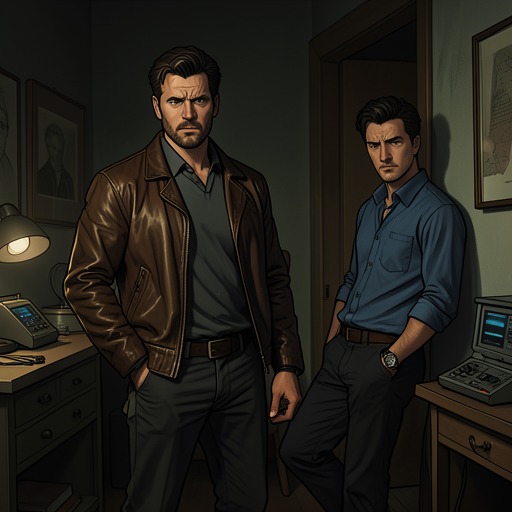
Dick continued sending letters protesting the convictions. He argued that intense local hostility in Garden City had prevented the selection of an unbiased jury and that the court should have moved the trial. He also questioned whether jurors had entered the case with fixed views about guilt or capital punishment, and pointed to the judge’s friendship with Herbert William Clutter. His most serious accusations concerned defense attorneys Arthur Fleming and Harrison Smith: Dick alleged that they had failed to prepare an adequate defense and suggested that their performance reflected collusion with the prosecution.
The allegations mattered beyond the defendants’ claims about their own treatment. If even partly true, they raised the possibility that constitutional rights had been denied. Prompted by Everett Steerman, chairman of the Kansas State Bar Association’s Legal Aid Committee, the association took an unprecedented step in Kansas legal history: it appointed Wichita attorney Russell Shultz to investigate and, if the evidence justified it, seek habeas corpus relief in the Kansas Supreme Court, which had already upheld the verdict.
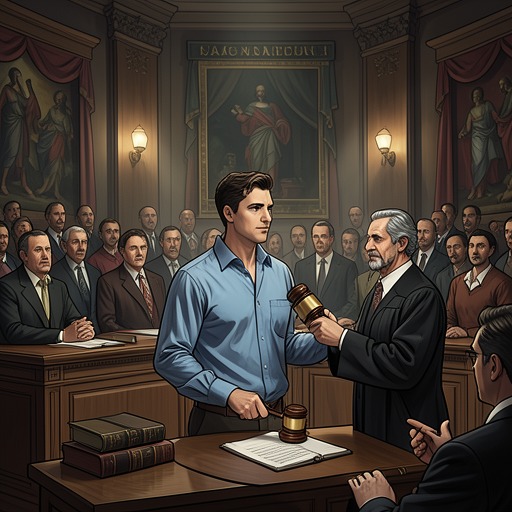
Shultz’s inquiry relied largely on interviews with Dick and Perry. He publicly framed the issue as whether poor defendants, even when plainly guilty, had a right to a complete defense, and warned that the state’s integrity depended on preserving due process. He then filed a habeas corpus petition. The Kansas Supreme Court assigned retired justice Walter G. Thiele to conduct a full hearing, bringing the principal figures back to a dispute over the trial nearly two years after it had ended.
The Kansas hearing
The hearing lasted six days and included testimony in Garden City and, at one point, Lansing, Kansas. Juror testimony addressed the claim that local ties had compromised impartiality. Eight jurors said they had never known any member of the murdered family; four acknowledged slight acquaintance with Herbert William Clutter. Each testified that he or she had entered the jury box without prejudice. One juror, N. L. Dunnan, acknowledged that he would ordinarily have been averse to capital punishment but said the scale of the crime could affect his view.
Shultz also questioned the attorneys’ conduct, including their consultations with the defendants, the waiver of a preliminary hearing, remarks attributed to counsel in news reports, and the preparation of the defense. The defense lawyers disputed the charges. Harrison Smith, for example, responded that he had not been appointed when the preliminary hearing was waived. The record thus placed broad allegations of professional failure alongside specific disputes about who had made decisions and when.
The court’s later assessment of the trial took account of the evidence available to counsel. When Fleming and Harrison Smith accepted their appointments, both defendants had made full confessions and were not seriously arguing in the state courts that those confessions were involuntary. A radio taken from the Clutter home and sold by the defendants in Mexico City had been recovered, and the prosecution held additional evidence. The defendants had stood mute at arraignment, requiring the court to enter not-guilty pleas for them, while the record contained no substantial basis for an insanity defense. In that evidentiary setting, the appeals court later reasoned, the attorneys’ options had been severely constrained and their principal hope was to spare their clients’ lives.
Denial of habeas relief
Justice Thiele concluded that Dick and Perry had received a constitutionally fair trial. The Kansas Supreme Court denied the petition to overturn the verdict and set a new execution date: October 25, 1962. The decision rejected the requested remedy, though the broader legal dispute continued. A federal judge granted a reprieve, and the defendants avoided that date while further litigation proceeded.
The record also contained evidence relevant to the strength of the convictions, distinct from the claims about representation. At trial, federal laboratory specialists had examined blood samples, footprints, cartridge shells, rope, and tape, and certified the validity of the exhibits. Kansas Bureau of Investigation agents described their interviews and the defendants’ confessions. Perry had dictated a seventy-eight-page statement but refused to sign it because of two disputed details; he later acknowledged that he had falsely blamed Dick for killing Nancy Clutter and her mother, saying he had wanted to punish Dick for cowardice. Perry’s account also led investigators to additional evidence, including items buried after the killings. These facts formed part of the difficult context in which the later courts assessed whether the defense had had a viable alternative strategy.
Federal appeals and repeated delays
After Shultz resigned from the case, Kansas City attorneys Joseph P. Jenkins and Robert Bingham took over. Appointed by a federal judge and working without compensation, they filed repeated appeals on the defendants’ behalf. They argued that counsel had not been appointed until after the confessions and the waiver of preliminary hearings; that the defense at trial had been inadequate; that evidence seized from the Hickock home, including a shotgun and knife, had been admitted without a search warrant; and that the court had refused a change of venue despite prejudicial publicity surrounding the trial.
Jenkins and Bingham carried the case to the Supreme Court of the United States three times. On each occasion, the Court declined to grant certiorari, so the appeals did not receive the full hearing the lawyers sought there. The repeated filings nevertheless postponed the executions set for October 25, 1962, August 8, 1963, and February 18, 1965. By March 1965, Dick and Perry had spent almost two thousand days in their death-row cells. The Kansas Supreme Court then ordered that they be executed between midnight and 2:00 a.m. on April 14.
Outcome and significance
A clemency appeal went to Kansas governor William Avery, who refused to intervene, describing that decision as being in the state’s best interest. The appeals had not reversed the convictions or secured commutation. Their consequence was instead a series of reviews, hearings, and delays that tested the relationship between the certainty of the prosecution’s evidence and the procedural rights owed to the accused.
The case’s legal history therefore ended without a judicial finding that the convictions were invalid. The Kansas hearing rejected the claim of an unfair trial, and the Supreme Court of the United States repeatedly declined to reopen the case. Yet the appeals made the adequacy of appointed counsel and the meaning of due process central to the story of the convictions. Their procedural success was limited but consequential: they postponed the execution dates, while leaving the verdicts—and the underlying disagreement over whether the defense had been sufficient—intact.