Lowell Lee Andrews
In Cold BloodLowell Lee Andrews is presented as a striking contradiction between public manner and private intention: an honor student described by acquaintances as gentle and sweet-natured, yet a young man who planned and carried out the killing of his parents and sister. His case joins an apparently ordinary family tragedy to a wider dispute over mental illness and criminal responsibility. Andrews’s prosecution failed to establish the legal standard for insanity, and his execution later gave the prison setting a concrete measure of the different fates awaiting condemned men.
Identity and Background
Two years before the narrative turns to his case, Andrews was an eighteen-year-old sophomore at the University of Kansas, where he majored in biology and earned high marks. He was large, nearly three hundred pounds, wore horn-rimmed glasses, and was described as solitary and seldom communicative. His acquaintances at the university and in Wolcott, Kansas, nevertheless regarded him as exceptionally gentle. One newspaper’s affectionate portrait of him as the nicest boy in town sharpened the contrast between the familiar young scholar and the private self his family had no reason to suspect.
Andrews lived with his parents and a slightly older sister. His father was a prosperous farmer who owned land valued at about two hundred thousand dollars, though he had comparatively little money in the bank. The account identifies inheritance as the ostensible financial motive for Andrews’s plan, but places it beside a more theatrical ambition: he imagined remaking himself as a master criminal, in silk shirts and scarlet sports cars, rather than remaining a bespectacled, overweight student. He did not consciously regard his family with hatred; instead, he treated their deaths as a means of clearing a path to a desired identity and future.
Planning and the Murders
Andrews’s plans developed over the summer and autumn of 1958. His first design was to poison his family with arsenic, settle them into their beds, and burn the house, hoping investigators would mistake the deaths for an accident. He worried that an autopsy might reveal the poison and that its purchase could be traced to him. By the end of summer he had begun devising a different plan, which he spent three months refining.
During Thanksgiving week, Andrews was home for the holiday, as was his sister, who attended college in Oklahoma. On the evening of November 28, after completing the last chapter of The Brothers Karamazov in his locked bedroom, he shaved, put on his best suit, and loaded a .22-caliber rifle and revolver. His family was watching television in the parlor. He entered and shot his sister and parents. The account describes the father’s prolonged struggle to escape and Andrews’s continued use of the revolver; the attack was not a sudden loss of control but the execution of a prepared plan.
Afterward, Andrews raised a bedroom window, removed its screen, and scattered the contents of dresser drawers to make the house look as though thieves had searched it. He drove his father’s car about forty miles over snow-covered roads to Lawrence, where the University of Kansas was located. On the way, he stopped on a bridge, took apart the weapons, and dropped their parts into the Kansas River. The drive also served another purpose: establishing an alibi. At the campus house where he rented a room, he told the landlady he had come to retrieve his typewriter and explained his presence by reference to the bad weather. The staged burglary, discarded weapons, and claimed reason for the trip formed parts of the same attempt to redirect suspicion.
Confession and Legal Dispute
The case took on a broader legal importance when Andrews pleaded not guilty by reason of insanity. Before trial, psychiatrists from the Menninger Clinic examined him and diagnosed schizophrenia, simple type. Their description did not depend on delusions, hallucinations, or false perceptions. Instead, the diagnosis centered on a separation between thought and feeling: Andrews understood what he had done, knew that it was prohibited, and understood that punishment could follow, while the examiners concluded that he experienced no emotion about the killings. Dr. Joseph Satten characterized Andrews’s self-importance and emotional detachment as central to the condition.
The defense sought more than an acquittal in Andrews’s individual case. His attorneys and the clinic’s psychiatrists believed the evidence offered a strong opportunity to challenge the M’Naghten Rule, under which the capacity to distinguish right from wrong was decisive for legal insanity. They hoped Kansas would instead adopt the Durham Rule, which treated an unlawful act as noncriminally responsible when it resulted from mental disease or defect. Under that standard, the defense expected Andrews to be committed to a state hospital for the criminally insane rather than sent to prison or condemned to death.
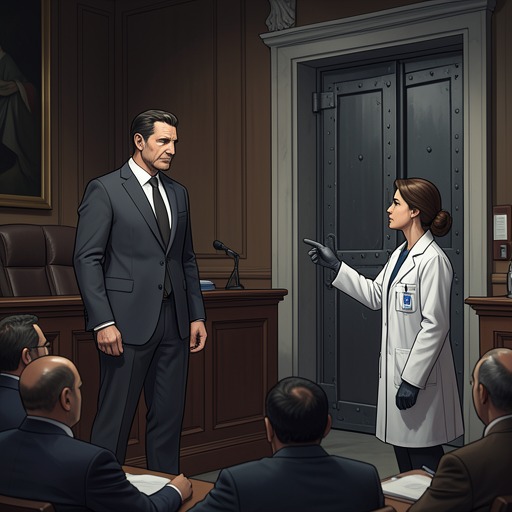
The prosecution’s principal witness was Reverend Virto C. Dameron, Andrews’s former religious counselor. Dameron testified about his conversations with the young man and his appeals to religious conscience. His testimony, together with Andrews’s confession, proved decisive. The judge retained the M’Naghten standard, and the jury imposed the death penalty. The diagnosis therefore did not determine the legal outcome: the court accepted that Andrews had a mental disorder while treating his awareness of the nature and prohibition of his actions as sufficient for criminal responsibility.
Condemnation and the Row
Andrews’s case continued through appeal. It reached the United States Supreme Court twice, but the legal effort did not prevent his execution. In his report to the Kansas Supreme Court, Judge Walter G. Thiele found that the petitioners in the other case under review had received a constitutionally fair trial; the court denied the writ sought to overturn their verdict and set a new execution date. Andrews, meanwhile, was scheduled to die one month later. The contrast underlines how prolonged litigation could alter the timing of execution without necessarily changing a conviction or sentence.
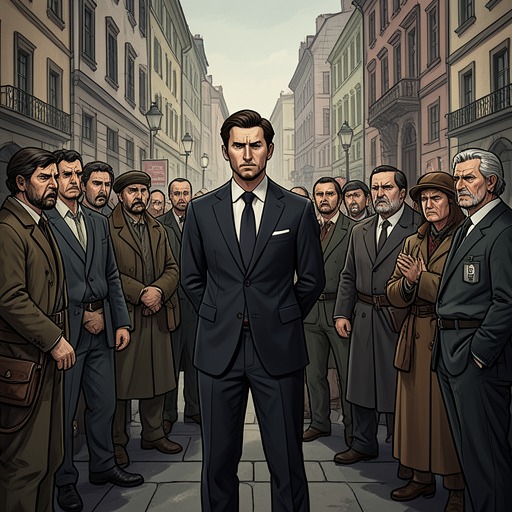
On November 2, 1961, Andrews met new fellow prisoners, including Dick, Perry Smith, George Ronald York, and James Douglas Latham. The introductory exchange turned quickly to arithmetic: Andrews began adding the number of victims attributed to the men, while Dick corrected his calculation and disputed the label of killer. Andrews’s response shows the prison community sorting its members through counts, accusations, and denials. He was also the prisoner whose previous public identity as the nicest boy in Wolcott could be repeated inside the Row as a grimly ironic epithet.
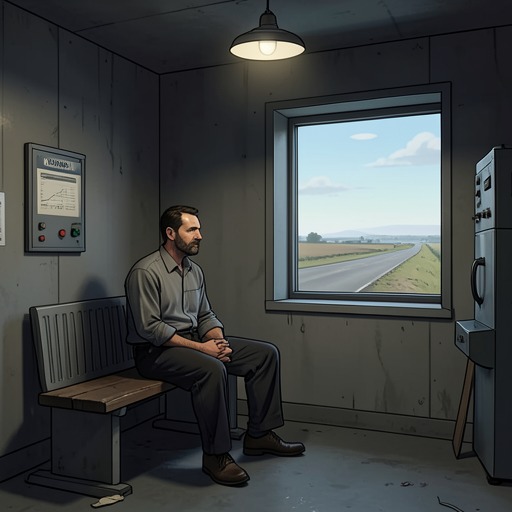
Andrews was executed on November 30, 1962. Dick later described watching from a cell window as guards escorted Andrews toward the execution building; the gallows itself was out of sight, though its shadow could be seen. The removal of Andrews’s glasses before he entered the building remained, in Dick’s recollection, a mark of his vulnerability. His death, after the legal process had rejected the insanity defense, closes the account of a student whose composed, planned acts were treated by the law as punishable despite psychiatric evidence of profound emotional detachment.