Mexico
In Cold BloodMexico is less a visited setting than a destination Perry Smith repeatedly invests with the promise of escape, adventure, and a life remade. Its place in his maps and plans gives the country a double role: it is a specific point on the route he imagines, and a broad horizon onto which he projects freedom, treasure, and companionship. Although Dick’s proposed score brings Perry back to Kansas, Mexico remains the future they discuss rather than a place the narrative shows them reaching.
A destination carried on the map
When Perry waits for Dick in a café in Olathe, Kansas, a Phillips 66 map of Mexico lies open before him. It is ragged from handling and supple from being thumbed, part of an extensive collection of worn maps covering every state, Canadian provinces, and South American countries. The map is not an incidental possession: Perry has organized his imagination around possible journeys, some of which he has actually taken. Mexico belongs to this portable geography of departure.
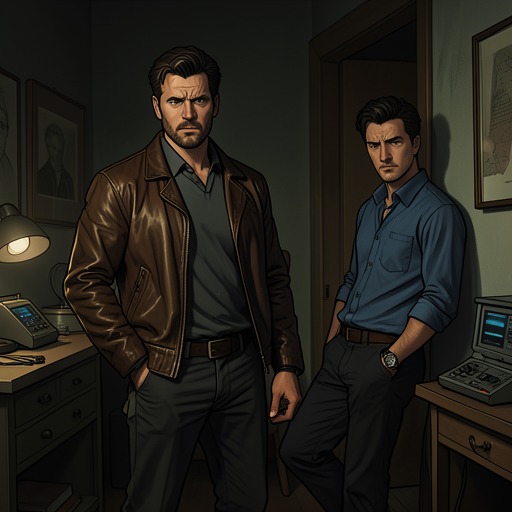
The scale of that imagined life contrasts with the small amount of luggage Perry has brought to Olathe: a cardboard suitcase, a guitar, and two heavy boxes of books, maps, songs, poems, and old letters. He had sworn after parole that he would not return to Kansas, yet Dick’s invitation has brought him there for a score he expects to be temporary. Mexico stands beyond that immediate errand as the place toward which the pair might move once it is settled. The worn map therefore joins an immediate criminal scheme to Perry’s much larger habit of planning voyages.
The promises marked on the map
Perry’s map is populated with names circled in ink, each carrying a different attraction. Cozumel, an island off the coast of Yucatán, appeals to him through a men’s magazine’s picture of cheap, relaxed living, personal independence, and annual flights of parrots arriving from the mainland to lay their eggs. These are reported claims that Perry has memorized, not observations from a visit. The detail matters because his image of Mexico is assembled from reading as much as from experience: a printed description becomes a ready-made promise of a place where ordinary pressures might not reach him.
Acapulco suggests deep-sea fishing, casinos, and wealthy women. The Sierra Madre, in turn, means gold to Perry, who has learned prospecting from his father, a professional prospector. His interest is not merely a passing daydream: he proposes that he and Dick buy pack horses and search for gold there. The imagined destination draws on inherited knowledge as well as popular culture, joining his father’s instruction to the appeal of a movie about prospectors that Perry has seen repeatedly.
Dick punctures the prospect without erasing its attraction. He recalls the story’s fever, bloodsuckers, harsh conditions, and wind scattering the gold after it has been found. His practical objection turns the dream into a revealing contrast between the two men: Perry treats Mexico as a field of possible reinvention, while Dick tests each scheme against its dangers and likely outcome. The exchange leaves the fantasy alive but unsettled; the Sierra Madre remains alluring precisely as a possibility the pair has not tried.
Mexico as an unfinished plan
Perry’s interest in Mexico is connected to a longer pattern of movement after parole. He spends months drifting in a cheap, fifth-hand Ford, traveling from Reno to Las Vegas and from Bellingham, Washington, to Buhl, Idaho, where he finds temporary work as a truck driver. Dick’s letter reaches him there with an invitation to participate in a supposedly excellent score. Perry had not expected to see Dick again, but the invitation brings him to Kansas and revives a partnership that can also support his plans for travel.
The criminal errand and the projected journey are distinct but entangled. Perry expects the meeting with Dick to lead to Mexico; beyond Mexico, he imagines further voyages and a life among distant places. On another occasion he proposes buying a cheap but sturdy boat there and sailing across the Pacific to Japan. He presents the idea as feasible and imagines Dick would be drawn to Japan, including its people and women. Mexico thus serves not only as a destination in itself but as a launch point in an expanding itinerary. The evidence records the proposal, not a purchase, departure, or arrival.
A shared horizon, not a reached place
Mexico also gives the partnership between Perry and Dick an imagined future beyond their immediate criminal plans. Perry wants to search for treasure or travel among islands and coasts south of the border with Dick beside him. Even when their confidence in one another falters, those prospective journeys remain among the plans Perry finds attractive. Their shared future is therefore both practical in its proposed steps—buying a boat or pack horses—and speculative in its promise of escape.
The narrative’s treatment of Mexico depends on the gap between mapped possibility and actual movement. Perry can name destinations, memorize descriptions, draw routes, and imagine the next leg of travel; meanwhile, the action shown places him back in Kansas, waiting on Dick and tied to the score that brought him there. The country’s significance lies in that tension. Mexico is a concrete place on Perry’s map, but in these passages it is chiefly the future he keeps projecting: a refuge from confinement, a setting for treasure-seeking, and the threshold to another imagined voyage.