Perry Smith’s hunger strike in death row
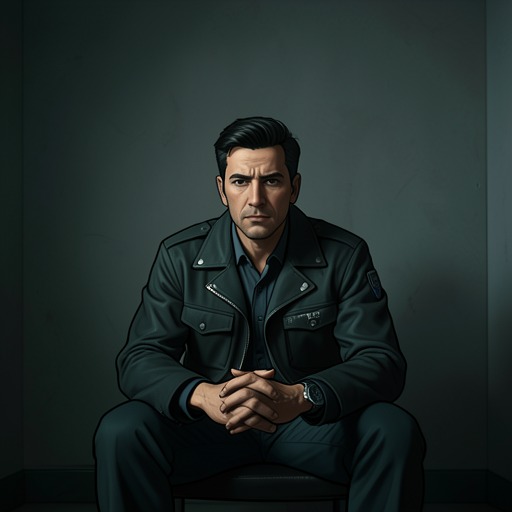
In Cold BloodPerry Smith’s hunger strike in death row turns a private refusal into a contest over whether his body will be allowed to die. Beginning in early June after repeated humiliations by Lowell Lee Andrews, the fast leaves Perry gravely weakened and dependent on forced feeding. Its course is altered not by prison intervention but by a postcard from his father, Tex John Smith: Perry destroys the card, yet its few words bring him back to eating and to a deliberate claim on his own survival.
Conflict in the adjoining cells
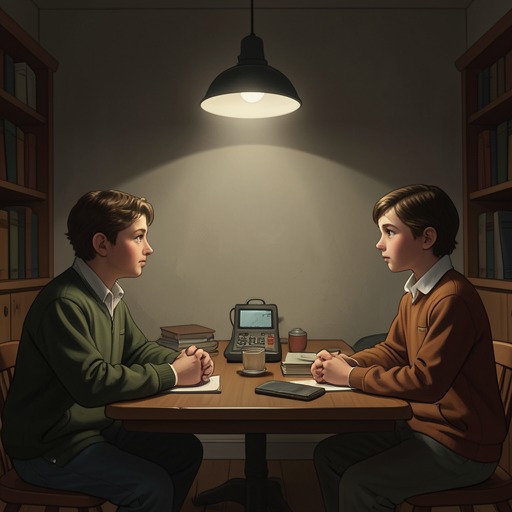
Perry’s cell adjoined Dick’s, close enough for the men to talk although they could not see one another. Their partnership had cooled into mutual toleration after a few mild reproaches; the narration compares their situation to that of uncongenial Siamese twins who could not escape each other. Perry rarely spoke to Dick, not because of an open quarrel, but because he guarded his private business from the ears of guards and inmates. He was especially wary of Lowell Lee Andrews, known on death row as Andy.
The source of Perry’s resentment was a repeated reversal of status. Though he had left school after the third grade, he imagined himself more learned than most people around him and took pleasure in correcting their grammar and pronunciation. Lowell Lee Andrews, a college-educated young man, corrected Perry instead. One correction, “Don’t say disinterested. When what you mean is uninterested,” exemplified the humiliation: Lowell Lee Andrews meant no harm, but Perry experienced his corrections as condescension. He concealed the reason for his anger, sitting apart and ignoring meals delivered three times a day after such incidents. The fast thus grows from a silence already shaped by shame, suspicion, and the effort to keep others from seeing what affected him.
At the beginning of June, Perry told Dick, “You can wait around for the rope. But not me.” He then stopped not only eating but drinking and speaking. The statement cast his refusal against the expected execution, but the account does not settle his intention in a simple way. Dick, impressed by Perry’s will, denied that he meant to kill himself and insisted to Lowell Lee Andrews that Perry was pretending to be insane. Lowell Lee Andrews considered genuine madness possible, while Dick argued that Perry wanted to be sent to a psychiatric institution. Their disagreement makes the fast legible to the other prisoners as both a bodily emergency and an act whose purpose they could not confidently determine.
The body under compulsion
The fast lasted five days before the warden treated it as a serious crisis. On the sixth day, Perry was transferred to the prison hospital, but the change in location did not change his resolve. When staff tried to force-feed him, he fought back, tossing his head and clenching his jaws until they were described as rigid as horseshoes. He had to be restrained and fed intravenously or through a tube passed into a nostril. The struggle made the conflict physical in the starkest sense: the prison could control where Perry was held and how he was fed, but each intervention met active resistance.
Forced feeding did not prevent a steep decline. Over the next nine weeks, Perry’s weight fell from 168 pounds to 115, and the warden was warned that feeding him by force could not keep him alive indefinitely. Throughout the summer, Perry moved between half-awake stupors and sleep drenched in sweat. Voices roared through his head, including one that repeatedly asked, “Where is Jesus? Where?” On one occasion he woke shouting, “The bird is Jesus! The bird is Jesus!” These episodes accompany the fast’s physical deterioration; the narrative presents them as part of his distressed condition, not as an explanation that resolves why he stopped eating.
The dream of the scaffold
Perry’s old theatrical fantasy returned during this period as a recurring dream in which he became “Perry O’Parsons, The One-Man Symphony.” The dream placed him in a Las Vegas nightclub, dressed in a white top hat and white tuxedo beneath a spotlight. He performed on a harmonica, guitar, banjo, and drums, sang “You Are My Sunshine,” and tap-danced up gold-painted steps. At the top he bowed before a packed room, but the audience gave him no applause.
The silence changes the scene from showmanship into recognition. Perry realizes that the spectators are ghosts of people who have been legally killed—hanged, gassed, or electrocuted—and that he is there to join them. The gold-painted steps become a scaffold, and the platform beneath him opens. His hat tumbles as he enters eternity. The dream gives the anticipated execution a theatrical shape, but strips the performance of its promised reward: the performer receives no applause, only the knowledge that he is next. Its imagery echoes the fast’s governing uncertainty, as Perry’s body approaches death while those around him dispute what he intends.
The postcard and the return to life
One afternoon Perry woke from a dream to find the warden beside his bed. The warden asked if he had been having a nightmare; Perry did not answer. The warden, who had visited before to urge him to stop fasting, then offered something from Perry’s father. Perry continued staring at the ceiling as the warden placed a postcard on the bedside table and left. Only that night did Perry read it.
The card, postmarked Blue Lake, California, was addressed to the warden and written in Tex John Smith’s familiar, crude handwriting. Perry’s father asked what his son had done wrong and whether he could visit if he came to the prison. Perry tore up the postcard, but the message remained with him. It revived love and hate at once and reminded him that, despite his attempt to refuse life, he was still alive. He later told a friend, “And I just decided that I ought to stay that way. Anybody wanted my life wasn’t going to get any more help from me. They’d have to fight for it.” The turn is decisive without being sentimental: the card does not erase the history between father and son, but it changes Perry’s decision about whether others will get his life without a struggle.
The next morning, after fourteen weeks without voluntarily accepting sustenance, Perry asked for a glass of milk. He gradually regained weight on eggnogs and orange juice. By October, the prison physician, Dr. Robert Moore, considered him strong enough to return to death row. Dick greeted him with, “Welcome home, honey.” The remark restores their familiar, teasing exchange after months in which Perry had refused even to speak; the return to the Row marks the fast’s end, not a release from confinement or the prospect of execution.