Susan Kidwell
In Cold BloodSusan Kidwell is Nancy Clutter’s confidante and closest friend, a young woman whose life after the murders is marked by the loss of the future the two girls had planned together. She is more than a witness to the crime’s aftermath: her friendship with Nancy gives private, enduring form to a tragedy that also changes the community, the family home, and the lives of those left behind.
Identity and Friendship
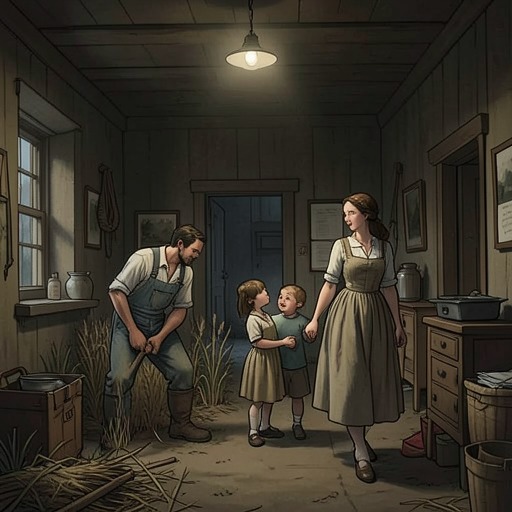
Susan lives with her mother in the Teacherage, an old school-faculty residence opposite the modern school. Their three-room ground-floor apartment is small but made cozy with an organ, a piano, flowering plants, a little dog, and a large cat. Susan is described as tall and languid, with a pale oval face, pale-blue-gray eyes, and long, flexible hands. The portrait locates her in a domestic world of music, pets, and close companionship, rather than in the public institutions that later surround the case.
Her friendship with Nancy includes the ordinary confidences of teenage life. When Nancy answers Susan’s call in the kitchen, Susan begins with her customary demand to be told everything, asking why Nancy had seemed to flirt with basketball player Jerry Roth. Nancy explains that he held her hand backstage because she was nervous. The exchange presents Susan as someone to whom Nancy readily explains herself, and their intimacy is established before the murders interrupt their daily routines.
The closeness was, in Susan’s own account, sisterlike: “We were like sisters. At least, that’s how I felt about her—as though she were my sister.” They shared rides on Babe, Nancy’s large gray horse, and went through the wheat fields to the river on summer evenings. There, Babe waded into the water while the girls played flutes and sang. Susan remembered the three of them as “cool as fish.” These recollections make their friendship inseparable from particular places and habits: the horse, the fields, and the river are not incidental scenery but the setting of a life they expected to continue sharing.
The Discovery and Its Aftermath
On the Sunday the Clutter family’s absence from church became alarming, Susan was at home dressed for services and waiting for the Clutters’ Chevrolet. She normally attended church under the Clutter family’s chaperonage. Instead, the Ewalt family arrived with an account that something was wrong. Susan and her mother could offer no explanation; at her mother’s suggestion, Susan was to call the Clutter house. The interruption of the expected Sunday routine places Susan among the first people in the community confronted with the unexplained absence.
Susan later testified about what she and Nancy Ewalt saw when they entered the Clutter house on November 15: quiet rooms, a purse lying empty on the kitchen floor, sunlight in a bedroom, and Nancy surrounded by blood. At trial, her testimony followed Nancy Ewalt’s, making Susan one of the young witnesses through whom the discovery entered the courtroom record. Her role joins personal loss to public evidence: she was not merely reporting what happened to a schoolmate, but describing the home of the family that had formed part of her everyday life.
In the first days after the murders, Susan could not return to school and stayed away until after the funeral. Bobby Rupp, Nancy’s boyfriend, also withdrew from school. The two spent time together, often driving aimlessly in his old Ford or sitting at the Cree-Mee drive-in with the radio playing because neither had much to say. Bobby sometimes spoke of how much he loved Nancy and said he could never care for another girl. Susan told him she did not think Nancy would have wanted him to remain bound to that grief. Her response shows care for Bobby as well as loyalty to Nancy: she tries to honor the dead friend without asking the living to stop living.
Their drives took them past reminders of the crime. From a bridge over the river they could see the Clutter house, the orchard, and the wheat fields; a bonfire burned material from the house, while men searched the riverbanks for the knife and gun. Susan also worried about what would happen to Nancy’s horse. Kenyon’s dog Teddy had run away after being taken to Garden City, and a woman had retrieved him and taken him again. Susan herself had Nancy’s cat, Evinrude. Babe, however, could not be kept by Susan, who had nowhere to stable a horse. The future of these animals made the dismantling of the family’s life concrete: even the pets and familiar routines needed new homes.
Grief, Bobby Rupp, and the Farm Sale
Bobby’s grief was compounded by the crime, police interviews, and the painful irony that he was for a time a principal suspect. Susan’s nearly constant company helped him withstand these shocks. Before Nancy’s death, he had not felt entirely comfortable with Susan; he considered her different, serious about painting, poetry, and piano music, and had been jealous of the important place she held in Nancy’s esteem. Loss changed that understanding. Susan could recognize what Bobby was suffering because she had lost Nancy too, and because the two of them had shared a life that Bobby could not fully replace.
After about a month, the friendship between Susan and Bobby waned. He visited her family’s small parlor less often, and she seemed less welcoming when he did. Their closeness had brought comfort, but sitting together also required them to remember what both wanted to forget. Bobby sometimes found relief in basketball, fast drives on country roads, and long runs across the flat fields. The account does not present their separation as a repudiation of Nancy or of each other; it shows instead that shared grief could help them endure the first shock without making it possible to live indefinitely inside it.
At the auction of the Clutter estate, Susan was among the schoolmates watching as Babe became the last item from the livestock corral to be sold. She wished she could give the horse a home because she loved Babe and knew how much Nancy had loved her, but she had no place to keep her. The bidding was slow. A Mennonite farmer bought Babe for seventy-five dollars, saying he might use her for plowing. As he led the horse away, Susan ran forward and raised a hand as if to wave goodbye, then clasped it over her mouth. The gesture concentrates the loss into a final, visible separation: the shared horse is gone from Susan’s keeping and from the world Nancy knew.
Trial and Later Life
Susan’s presence at the trial links the intimate history of the girls to the legal account of the murders. She and Nancy Ewalt described the scene they had encountered in the Clutter home, while other witnesses added accounts of the discovery and the cause of death. Susan’s testimony does not erase the friendship behind it; rather, the courtroom requires her to speak publicly about the home and the friend whose absence is private and permanent. The surviving evidence gives no extended account of her testimony beyond its place among the first witnesses, but that place is significant: her memory becomes part of the trial’s reconstruction of the morning the family was found.
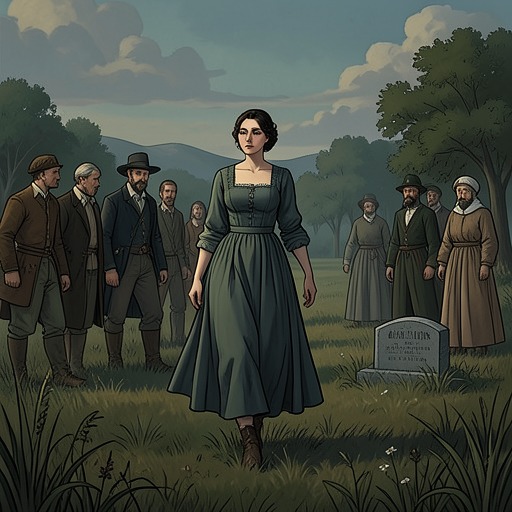
Years later, Susan meets Alvin Adams Dewey beside the four Clutter graves, gathered under a single gray stone at the cemetery’s far corner near the wheat fields. Dewey does not recognize her at first; she identifies herself, and he remembers the child who had been at the trial. Susan is now a junior at the University of Kansas, home for a few days, studying many subjects and art especially. She tells Dewey that she is happy, then explains the lingering ache within that happiness: “Nancy and I planned to go to college together. We were going to be roommates. I think about it sometimes. Suddenly, when I’m very happy, I think of all the plans we made.”
The meeting gives Susan’s story neither a return to the past nor a clean resolution of it. She has continued into college and describes herself as happy, but the friendship remains part of how she understands that happiness. She asks Dewey the time, realizes it is past four, and hurries away; he calls good luck after her as she disappears down the path. The scene closes on movement rather than reunion: Susan’s life has carried her beyond the town and the trial, while the plans she and Nancy made remain vivid enough to surface at the moment she feels most content. Through Susan, the narrative holds those two truths together—the possibility of a future and the persistence of a friendship that death prevented from reaching it.