Valley View Cemetery
In Cold BloodValley View Cemetery, above Garden City, is both a formal burial ground and a quiet refuge amid the surrounding plains. In the book’s closing scene, its graves bring Alvin Dewey and Susan Kidwell together, linking the aftermath of the Clutter case to the ordinary lives and plans that continued beyond it.
Setting and Landscape
The cemetery occupies a modest plateau above town. Its founders worked against arid soil and the difficulty of transporting water to create a green contrast to the dusty streets and open plains. Generations-old trees shade quiet paths, while the cemetery’s dark mass appears amid the surrounding wheat fields. The setting offers cool shelter and a marked change of scale from the exposed farmland around it.
Graves and Visitors
During an afternoon visit in May, Alvin Dewey weeds his father’s grave, an obligation he had neglected for too long, then walks the cemetery paths. He passes the grave of Judge Tate, who died of pneumonia the previous November, and that of Bonnie Jean Ashida, the Ashidas’ elder daughter, killed in a car collision while visiting Garden City. The contrasting signs of mourning and renewal around the graves lead Dewey to reflect on the succession of deaths, births, and marriages; he has recently heard that Bobby Rupp, Nancy Clutter’s boyfriend, has married.
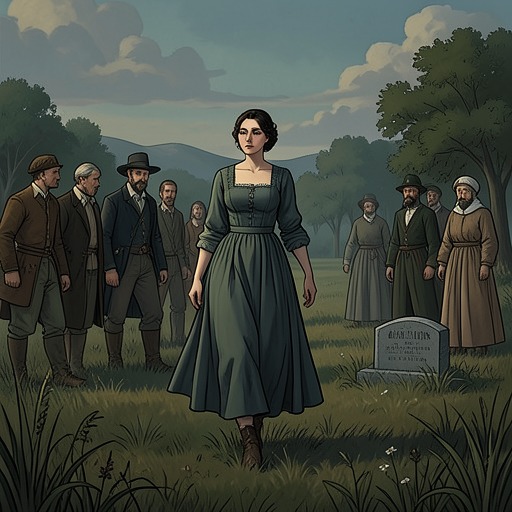
The graves of the Clutter family lie in a far corner, beyond the trees and out in the sun near the bright edge of a wheat field. When Dewey approaches, he finds Susan Kidwell there. He has not seen her since the trial, when she was still a child; now she is a college student visiting home for a few days. Their reunion makes the graveside a place not only of remembrance but also of renewed contact between people whose lives were changed by the murders.
Memory and Narrative Significance
At the graves, Susan tells Dewey that she and Nancy had planned to attend college together and share a room. She still thinks of those plans when she is happy, an abrupt return of grief within an otherwise content account of her life. The cemetery thus gives a specific, enduring form to the future Nancy lost: the four names and their shared date of death stand near the living friend who remembers what they expected to do together.
The scene also redirects Dewey’s sense of closure. After the deaths of Perry Smith and Dick, he had expected a climax and release, but instead recalls this earlier cemetery encounter as the moment when, in retrospect, the Clutter case had more or less ended for him. Valley View Cemetery closes the narrative not by erasing the crime, but by placing it among ongoing memory, changed lives, and the unfulfilled plans carried by the living.