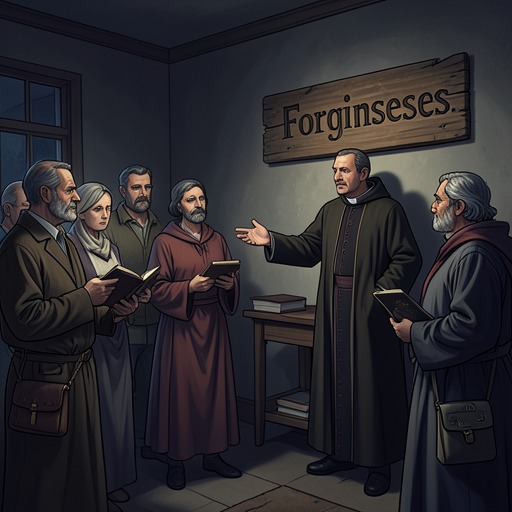
Varieties of theft
In Cold BloodVarieties of theft is an aphorism Willie-Jay used to describe crime as a single moral category: taking something that belongs to another person. Perry Smith recalls the idea while talking with Don Cullivan, then applies its starkest version to murder, which he describes as stealing a person’s life. The phrase gives Perry a framework for naming his crime, but it does not resolve his uncertainty about why he committed it or produce the remorse Cullivan expects.
Origin and Meaning
Perry introduces the expression over cigarettes and coffee, recalling that Willie-Jay used to say that all crimes were only “varieties of theft.” Its logic is clearest in the extension Perry supplies: “When you kill a man you steal his life.” The formulation collapses the distance between offenses against property and the ultimate taking of a life. It is not presented as a formal theory; it is a saying Perry remembers from a friend and uses to interpret his own conduct.
The conversation also gives the aphorism a more ordinary context. Earlier, Perry distinguishes his stealing from Dick’s: he says he steals when he lacks money to pay, whereas Dick would steal even with a hundred dollars in his pocket. During their time on the road, they often went hungry and ate stolen canned food cold in the car. Perry calls their way of living animal-like, but characterizes Dick’s habitual stealing as an emotional sickness. The contrast makes theft more than a legal category in Perry’s account: it can be driven by deprivation, or pursued as a compulsion.
Perry’s Application to Murder
Perry uses Willie-Jay’s saying to name himself a thief on a much larger scale. He acknowledges that he killed the Clutter family and disputes the impression he says Alvin Dewey gave in court. In Perry’s account, Dick assisted by holding the flashlight and picking up the shells, and the idea had been Dick’s; Perry insists that Dick did not shoot. The aphorism therefore accompanies a specific allocation of responsibility, not a denial of the killing.
Yet Perry cannot settle on a motive. He first says he was angry with Dick, then rejects that as the explanation. He also says the fear of being identified was not the cause, and that the Clutters had never harmed him. He wonders whether they were simply the people made to pay for the harms others had done him throughout his life. The metaphor identifies what murder took, but Perry’s own account leaves its cause unresolved.
Moral Tension and Its Limits
Cullivan’s religious concern makes the saying’s moral implications especially pointed: after asking about Perry’s remorse, he hears that Perry feels none and wishes he did. Perry says the killing does not trouble him, though he feels sorry for himself because he cannot leave when Cullivan does. His description of murder as theft thus does not amount to a confession of contrition. It is an acknowledgment of the act’s consequence for its victims, set against his report of emotional detachment.
Perry further challenges the moral distinction between condemned murderers and socially sanctioned violence by comparing his actions with soldiers’ killing and the public’s desire to see him killed. The comparison extends the aphorism into an accusation about who is permitted to take life. But it does not erase Perry’s responsibility in his own account; instead, it leaves the expression suspended between recognition and evasion. He can name murder as the theft of a life while remaining unable to explain why he committed it or to say that he is sorry.