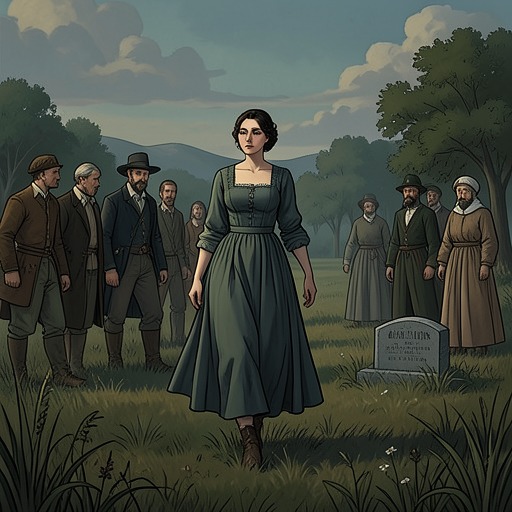
Wilma Kidwell
In Cold BloodWilma Kidwell is a visitor to the Clutter farm whose encounters with Bonnie Clutter reveal the loneliness concealed behind the household’s ordinary social life. As Susan Kidwell’s mother, she also becomes a witness to the aftermath of the killings: her repeated recollection of Bonnie’s recent hope makes the later discovery more devastating by placing it beside a moment when Bonnie believed she might be well again.
Identity and Connection to the Clutters
Wilma was among the friends invited to the farm for a mulberry-picking party. She was described as city-bred and easily fatigued, and chose to remain indoors while the others went to the orchard. Like the Clutters’ other frequent visitors, she had become accustomed to Bonnie’s absence from social occasions; guests generally assumed that Bonnie was indisposed or away in Wichita. Wilma’s decision to stay inside, rather than join the pickers, placed her alone in the house when Bonnie’s distress became audible.
Witness to Bonnie’s Isolation
While waiting for the pickers to return, Wilma heard someone weeping and called out before hurrying upstairs to Bonnie’s room. The room had grown stiflingly hot, so Wilma tried to open a window. Bonnie protested that she was cold, flailed her arms, and pleaded that no one see her in that condition. Wilma sat on the bed, wanting to hold her; eventually Bonnie allowed herself to be held.
In that embrace, Bonnie described hearing Wilma and the other guests laughing together and feeling that she was missing everything. She feared that the children’s best years were passing while she remained apart from them, and that Kenyon Clutter would grow into a man before long. Her worry culminated in the fear that he would remember her as a kind of ghost. Wilma’s presence gave Bonnie an occasion to voice what her recurring withdrawal from the household had cost her: not simply company, but participation in her family’s life.
Recollection After the Killings
On November 15, 1959, after the Clutter household’s condition had been discovered, Wilma was among those at the Kidwell home as the news overwhelmed the women and girls there. Teacher Larry Hendricks later recalled that Wilma was in poor health and high-strung, and that she kept asking what had happened to Bonnie. She also repeated that Bonnie had been happy and had said her illness was over, that she would not be sick again.
The remembered mulberry-party encounter gives that repetition particular force. Wilma had seen Bonnie in a moment of despair, pleading to be hidden from view; later, she could only hold on to Bonnie’s more recent promise of recovery. The contrast does not resolve what Bonnie’s illness meant or how durable her improvement was. Instead, Wilma’s recollection preserves the painful gap between Bonnie’s brief hope and the family’s violent end.
Narrative Role
Wilma’s role is modest in the action but important to the book’s movement between private life and public catastrophe. At the farm, she is the person who hears Bonnie weeping, enters the closed room, and offers physical comfort. After the killings, she becomes one of the people whose words convey how abruptly that intimate knowledge was overtaken by shock. Through her, Bonnie is presented not only as an absent hostess or a victim, but as a mother conscious of time passing and of the memories her children might keep of her.