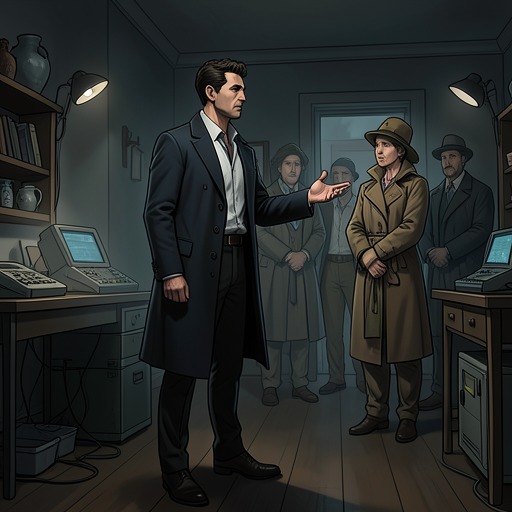
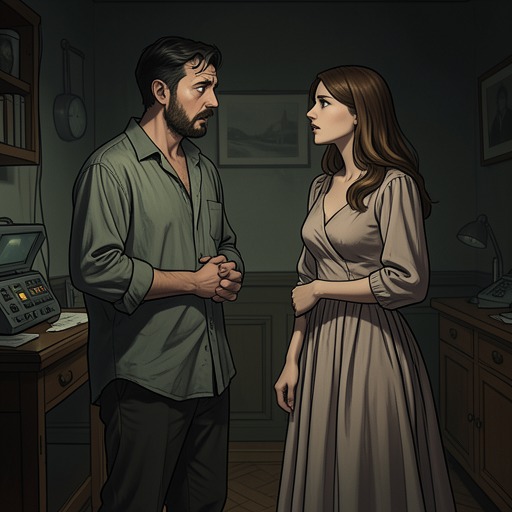
Albertine agrees to leave Balbec for Paris with the narrator
In Search of Lost TimeAlbertine agrees to leave Balbec for Paris with the narrator when his fear that she may meet Mlle Vinteuil’s friend or other women makes remaining at Balbec intolerable. Her consent is secured through a mixture of emotional appeal, a lightly invoked engagement, and practical arrangements; it brings her within reach while exposing how little that closeness can settle his suspicion. The departure is both an action and a revealing turn in their relationship: he seeks safety in keeping her near, but the desire to possess her time is driven by knowledge he cannot verify.
Causes and Background
The immediate pressure is the narrator’s increasingly fixed jealousy. He imagines Albertine in Trieste with Mlle Vinteuil’s friend, and the city becomes not simply a place she might visit but an emblem of an unknown life—her memories, friendships, and earlier attachments—from which he feels excluded. He recognizes that this localization is arbitrary: Albertine’s desires, if real, could be fulfilled elsewhere. Yet the knowledge does not loosen the fear. Trieste settles in his mind as a permanent point of threat, and he comes to regard Balbec itself as unbearable because she might see the Bloch girls there while he is absent.
The narrator’s fear has recently intensified because Albertine’s intimacy with Mlle Vinteuil’s friend has come to seem almost certain to him. He believes that even periods when Albertine is not with him—sometimes whole days when her aunt prevents a visit—may leave her free to meet other women. The possibility that she might see the Bloch girls that evening makes his anxiety immediate. When Albertine says she will stay with him for the next few days, he answers by proposing a return to Paris and asking her to live with him there for a while.
The Proposal and Albertine’s Hesitation
The narrator presents Paris as a place where he will feel calmer because he knew Mlle Vinteuil’s friend there, whereas Balbec has begun to seem hostile. Albertine initially says that leaving is not possible just then and asks why he must return so soon if the woman has gone. When he asks whether she will therefore decline his invitation, she explains that her aunt would not want her to leave at that moment and worries that arriving at his Paris home would look strange because people there would know she was not his cousin.
He proposes that they say they are more or less engaged, while privately acknowledging that this description is not true. He makes only a vague allusion to marriage and privately doubts that marriage between them is practicable because their characters differ too much. His reluctance is bound up with his own pessimism: recalling Saint-Loup’s relationship with Rachel and Swann’s with Odette, he suspects that a woman may be attached to him only by financial interest. He recognizes that this may be an unfair way to judge Albertine, but says that his jealousy is directed less at her than at the feelings he believes himself capable of inspiring. He sees this misjudgment as a possible source of future calamities.
Consent and Arrangements
Albertine’s response changes when the immediate obstacle of her aunt is addressed. She has not gone home the previous evening and says that there may be letters waiting for her, as well as concern from her aunt. The narrator suggests sending the lift-boy to inform the aunt that Albertine is with him and to collect her letters. Albertine briefly frowns, apparently displeased at being tied down, but then agrees and sends the boy. Through him, the narrator learns that she has written to her aunt and can leave for Paris that very day. Her assent is therefore concrete, but the scene also records the strain beneath it: earlier she had promised not to leave him for a second; now she had said she wanted to go to Maineville and return later. The narrator already doubts that her devotion will last.
The narrator’s urgency is not disclosed to the hotel staff. He wants Albertine out of Balbec before the Bloch girls take the air, particularly because Andrée, who might have protected her, is absent. The hotel manager, hearing that the narrator may be leaving, tries to persuade him to stay a few more days, citing the weather. The narrator fears that the manager will disturb his mother and sends him out without explaining that the departure is meant to prevent Albertine from meeting the Bloch girls. For him, leaving is not a considered change of plans but an attempt to interrupt a feared encounter before it can occur.
Departure from Balbec
The decision draws a series of farewells and appeals that the narrator experiences as obstacles. At the hotel, Marie Gineste is crying and Céleste Albaret tries to calm her; when Marie murmurs the only line of poetry she knows, Céleste also begins to cry. The narrator anticipates that by evening they may have forgotten him. Later, on the local railway, M. de Cambremer sees his luggage and turns pale, having expected the narrator to remain for an engagement two days later. He urges him to postpone the departure by a week and attributes his breathlessness to the weather. The narrator is enraged by the advice, which he experiences as an attempt to keep him in a place he can no longer endure.
Even on the train, his attention remains governed by apprehension. At each station he fears encountering M. de Crécy asking to be invited, or Mme Verdurin intent on inviting him. These social interruptions do not alter the central cause of his haste: he wants Albertine away from Balbec, and he wants to leave before the feared meeting with the Bloch girls. The departure thus carries two pressures at once, private jealousy and the ordinary social claims that keep trying to delay him.
Meaning of the Departure
The room the narrator leaves gathers earlier versions of his life into one unchanging setting. It is the room in which he was unhappy on his first arrival, longed for Mlle de Stermaria, watched for Albertine and her friends, and later experienced his grandmother’s kindness before realizing that she had died. He remembers opening the shutters to see the sea’s ramparts and remembers Albertine asking him to close them so that no one would see them kissing. The same room has held different desires, losses, and forms of intimacy; its permanence makes the narrator’s own transformations newly apparent.
The move to Paris does not establish that Albertine has met, or will meet, the women he fears. Indeed, the narrator later wonders whether she ever realized that the other woman he invoked that morning did not exist, and whether she understood that his despair arose from her disclosure of intimacy with Mlle Vinteuil’s friend. At the time, Albertine believed in the existence of that other woman. The departure therefore rests on a mixture of genuine fear and a misleading pretext. It secures proximity for the moment, but it cannot give the narrator reliable knowledge of Albertine’s private life; instead, it makes the limits of his knowledge—and the consequences of his jealousy—part of the event itself.