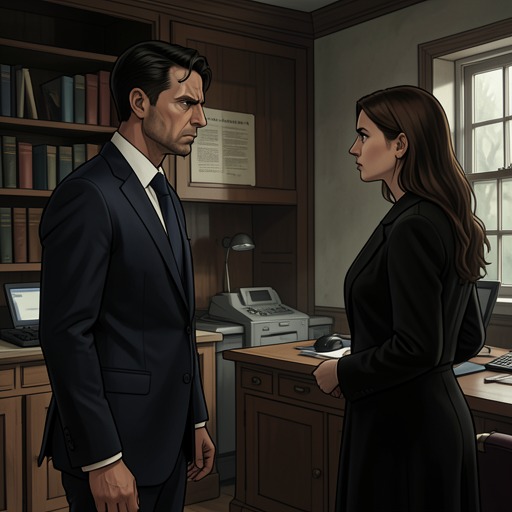
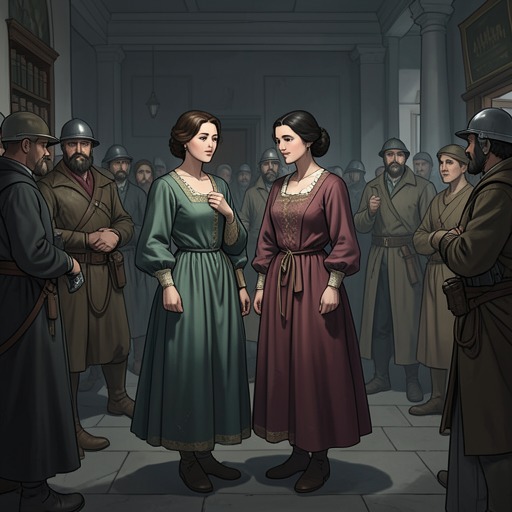
Cottard’s observation of Albertine and Andrée dancing
In Search of Lost TimeCottard’s observation of Albertine and Andrée dancing is a pivotal episode in the narrator’s second visit to Balbec: a casual, intrusive remark transforms a dance he had enjoyed watching into evidence around which he organizes suspicion. Its force is not that it proves what Albertine feels or does, but that it alters the narrator’s way of seeing her. The incident’s consequences arrive belatedly, as he recalls it as the beginning of a change that spreads through his perceptions and relationship with Albertine.
Circumstances and the Casino
The episode occurs at Incarville after the narrator encounters Cottard beside a train delayed by a breakdown. Cottard explains that he has received the narrator’s letters and urges him to visit the Verdurins, even offering to accompany him. While they wait, the narrator takes him to the casino, where girls are dancing together in the absence of male partners. Andrée approaches, and the narrator is about to leave with Cottard when he hears Albertine laugh. The sound draws his attention back to her, and he decides to stay.
The narrator describes that laugh as seeming to carry a sensual suggestion, but this is his own immediate association, not independent knowledge of Albertine’s experience. The distinction matters: even before Cottard speaks, the scene is being filtered through a narrator whose response to Albertine is shaped by desire and imagination. His decision to remain at the casino also turns an ordinary social encounter into a scene he will later revisit as the origin of mistrust.
The Remark and Its Immediate Effect
A girl unknown to the narrator sits at the piano, and Andrée invites Albertine to dance. Pleased to be staying with the young women, the narrator remarks to Cottard on how well they dance together. Cottard responds as a doctor, commenting on the closeness of their dance and interpreting their physical proximity as a sign of excitement. His observation is tactless: he makes it in front of the narrator, despite knowing that Albertine and Andrée are his friends.
The two women do not continue quite as before. They draw slightly apart, then Andrée says something to Albertine, who laughs again. The narrator now experiences the laughter differently: it seems to him to convey a secret pleasure shared between the women. What had first attracted him to remain at the casino becomes a source of pain. He leaves with Cottard, though the scene occupies his thoughts only intermittently while they talk. The episode therefore turns not on a confirmed disclosure, but on a shift in interpretation prompted by Cottard’s comment and the narrator’s attention to a gesture and a laugh.
Delayed Consequences and Retrospective Meaning
The narrator says that Cottard’s remark did him considerable harm, but that its worst effects were not felt immediately. He compares its action to a poison whose effects begin after a delay. This retrospective account separates the date of the casino scene from the later growth of suspicion: at the time, he does not yet recognize the remark as the start of his painful, persistent mistrust of Albertine.
In looking back, he identifies the encounter as the moment after which Albertine seemed different to him—and acknowledges that he, too, had changed. His feelings turned hostile enough that he spoke of her in wounding terms, including when he thought his words might be repeated to her. This change is not presented as the result of new proof. Cottard’s remark has instead supplied a framework through which later details can appear incriminating, while the narrator’s own altered feelings intensify his scrutiny.
Knowledge, Jealousy, and the Limits of Evidence
The event’s central uncertainty is explicit in the later account: the narrator’s view is only his side of a barrier that is not transparent, and he has no means of establishing what lies on the other side. Cottard’s remark concerns a visible dance and his interpretation of it; it cannot establish Albertine’s motives or settle the nature of her relationship with Andrée. Yet the narrator’s emotional response makes the observation difficult to dismiss and encourages him to treat suggestive details as evidence.
The wider significance of the episode lies in this gap between observation and knowledge. A physical detail, interpreted by another person and then absorbed into the narrator’s jealousy, changes how he sees Albertine without resolving what she is actually thinking or doing. The remark’s power is thus psychological and narrative: it initiates a durable suspicion, but leaves the truth the narrator seeks beyond his reach.