Habit
In Search of Lost TimeHabit is the force that makes sleep predictable and waking continuous, yet the passage shows what happens when those protections fail: the sleeper returns to consciousness without a settled identity, and memory must rebuild the self. Sleep becomes an interval beyond ordinary time; awakening is a sudden, vulnerable passage back into it.
Habit and the Uninterrupted Sleep
Habit keeps watch over what it has ensnared, including sleep. To experience a truly deep and disorienting slumber, the sleeper must evade its supervision and fall asleep at a moment when sleep was not anticipated, outside the company of conscious reflection. Sleep governed by habit is thus distinguished from sleep that arrives without foresight: only the latter can carry the sleeper wholly away from familiar awareness.
Awakening and the Return of the Self
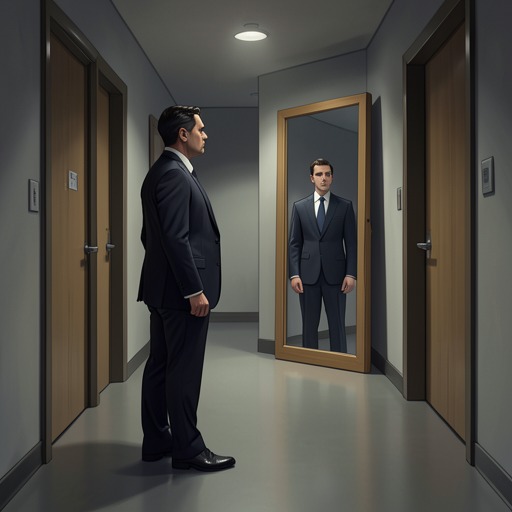
In an awakening of this kind, consciousness does not simply resume where it left off. A person may emerge from profound sleep as nobody, newly born and ready for anything, with the brain emptied of the past that had constituted life. If waking comes too abruptly for the thoughts of sleep to return gradually, the sleeper surfaces as a self without content. Memory then floods back, restoring consciousness and personality. The passage makes identity feel less like a constant possession than something that can disappear and be reconstituted.
Memory, Grief, and Ordinary Time
The narrator recalls experiencing these awakenings after dinners at La Raspelière. As he begins to wake, an inward voice proposes attending a dinner that evening; with fuller consciousness comes the remembered fact that his grandmother has only weeks to live. The imagined social pleasure collapses against the impending loss. He rings for assistance and weeps, mourning not only his grandmother but the change in the familiar ritual of waking: an indifferent valet, rather than his dying grandmother, will answer.
During sleep, the narrator has been outside the range of time and its measurements. On waking, the valet is present, but the narrator cannot ask the time because he does not know how long he has slept; his weariness, mental rest, and homesickness make the interval feel as though it might have lasted days. Habit’s loosening has made waking a return not merely to consciousness but to a world where time, grief, and altered relationships resume their force.
The Passage’s Image of Habit
The account figures sleep as a journey interrupted by an external impact: the sleeper is carried through a region bordering on life, where sounds become perceptible before awakening brings a sudden landing. Against that movement, habit represents the ordinary framework that keeps sleep attached to expectation and reflection. The contrast gives the passage its central insight: when habit’s continuity is broken, the self does not return intact by itself. It must be recovered through memory, and what memory restores may be inseparable from loss.