Involuntary memory
In Search of Lost TimeInvoluntary memory is the unplanned recovery of a past experience when a present sensation or context unexpectedly restores it. Its decisive instance at Balbec brings the narrator’s grandmother back not as a recollected fact but as a living presence: only when this recovered tenderness makes her loss emotionally real does he understand that she has died. The episode shows memory reshaping both grief and the self, while later returns of the past—through the view of the sea, the wall beside the bed, and sleep—reveal how much depends on the circumstances that call a memory forth.
The Return of the Grandmother
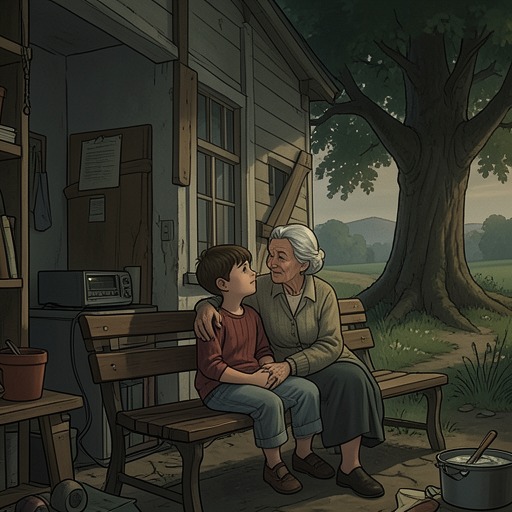
On his first night after arriving at Balbec, the narrator, exhausted and suffering from cardiac fatigue, bends to remove his boots. The small, familiar action unexpectedly releases a profound emotional response: he begins to sob, and his grandmother’s face returns to him as she had been on an earlier first evening at Balbec, stooping to help him. This is not the grandmother he has lately spoken of or thought about in the abstract. The recollection restores the particular, living person whose tenderness had once comforted him.
That distinction makes the memory painful as well as consoling. The narrator has often mentioned his grandmother since her death, but those thoughts had not recovered her reality. Now, more than a year after her burial, the recovered experience allows him to feel that she is gone. He discovers the loss at the very moment he recovers the person he has lost: the memory’s warmth and the knowledge of death arrive together, rather than as separate stages of remembrance and mourning.
Context, Sensation, and the Returning Self
The recollection also restores an earlier version of the narrator. The self who had needed his grandmother’s arms and kisses on that first evening had disappeared from his later consciousness; the sensation-context of the present moment makes that self available again. In the narrator’s account, memories do not necessarily vanish, but may remain in an inaccessible region, unable to act on consciousness until the context in which they were preserved is recaptured. Once recalled, they can displace incompatible concerns and install the self that originally lived them.
This return does not simply place an image from the past inside the present. The narrator experiences the remembered moment as if it followed directly after the original evening, with no intervening stretch of ordinary time. The episode therefore separates factual chronology from emotional time: the calendar records more than a year since the burial, while feeling makes the earlier dependence and tenderness immediate. The past returns with its own self and its own emotional logic, not merely as information about what once happened.
A Grief Arriving Late
The memory exposes why the narrator’s grief had been delayed. While his grandmother was ill, familiarity with her suffering, frivolity, and preoccupation with pleasure had left the true force of his attachment unrealized. He had retained the memory only in a potential state; thinking and speaking about her had not made her living presence available to him. Involuntary recollection changes that condition, turning what had remained emotionally dormant into an experience he can no longer evade.
The resulting grief is particular to the way the memory arrives. The narrator recognizes the contradiction between an affection that survives vividly within him and the annihilation of the person to whom it was directed. In memory, their relationship seems to recover its unique intimacy; in the certainty of death, he confronts the possibility that she has become a stranger whom chance allowed to share his life for only a few years. The memory neither cancels death nor offers a settled consolation. Its force lies in making both survival and loss present at once.
The narrator insists on preserving the impression in its original form rather than using forgetting to evade its pain. He does not yet know whether it will yield a truth, but believes that any truth must come from this spontaneous, sharply particular experience, not from the neutral images that had substituted for a real moment of life. In this account, involuntary memory is not simply a pleasant return to the past: it can expose an emotional reality that conscious recollection and self-protective habits have kept out of reach.
Sensory Reminders and Their Absence
After waking, the narrator finds the sea vistas before him unbearable. His grandmother had gazed at them for hours, and their beauty now emphasizes that she cannot see them. The landscape seems to tell him that she is absent; the view does not restore her but makes the distance between her former presence and her present nonexistence more painful.
Turning toward the wall beside his bed brings another remembered channel of communication into view. When he was young, the wall had carried the small sounds by which he and his grandmother understood whether she was awake and coming to him. It now prompts him to imagine their familiar exchange, but he knows that knocking will bring no answer. The wall’s former responsiveness survives as a memory, while the present silence makes her absence unmistakable. Together, sea and wall show that a sensory context can either awaken tenderness or sharpen the recognition that the person associated with it is no longer there.
Sleep, Family Grief, and Narrative Time
Sleep gives the contradiction of survival and annihilation another form. In a dream, the narrator searches for his grandmother and fears that he has forgotten to write to her, even though she is dead. Within the dream’s altered logic, he longs to find her and worries about her solitude; on waking, those words and meanings no longer retain their former coherence. The episode extends the account of memory beyond deliberate recall: emotional experience can reappear in sleep, where ordinary time and conscious control no longer organize it in the same way.
The narrator’s newly awakened grief also changes how he understands his mother. When she arrives at Balbec, he recognizes that her sustained sorrow has transformed her, and that she now resembles the dead woman whose loss she mourns. His own belated recollection briefly lets him apprehend the depth of his mother’s suffering, though he distinguishes his grief, which arrived long after the death and may pass, from hers, which has weighed upon her for years. The return of his grandmother therefore alters not only his relation to the past but also his understanding of another person’s continuing bereavement.
The episode’s narrative movement—from habitual acts and surroundings, through a sudden recovery of the past, and onward into dream and family mourning—makes involuntary memory a principle of structure as well as a subject. The past does not return on command or in chronological order. It becomes real when an experience restores its context, and its arrival can reorder the narrator’s sense of time, expose the self he had ceased to be, and make a loss emotionally present long after its factual occurrence.