La Raspelière dinner with the Cambremers
In Search of Lost TimeThe dinner at La Raspelière is a collision between the Verdurins’ cultivated “little nucleus” and the aristocratic neighbors from whom they rent the house. Arranged as a social obligation and anticipated as a possible accession of prestige, the gathering turns dinner into a sequence of tests: who may be admitted, who sits beside whom, what a family may claim, and which version of a person’s background can safely be told. The arrival of Morel and Palamède de Charlus makes the evening more than a meeting of social circles, revealing how patronage and private identity are also managed through its public rituals.
The invitation and its stakes
The immediate occasion is the Verdurins’ first dinner for the Marquis and Marquise de Cambremer, the landlords of La Raspelière. Brichot points out that the timing may be awkward: the hostess’s favorite violinist has already failed to appear, and a further defection on the evening of her important guests would be especially mortifying. Cottard, meanwhile, delights in the prospect of the Cambremers dining alongside Princess Sherbatoff, treating the guest list as proof that the company is moving in distinguished circles.
The Verdurins present the invitation as a reluctant concession to practical necessity. Mme Verdurin says the dinner is required to secure better terms the following year, and claims to dread introducing outsiders into the “little nucleus.” Her anxiety has a real basis in her attachment to the group’s established habits and artistic conversational codes, but the narrator also identifies a private pleasure in the prospect: receiving the Cambremers offers a form of social distinction she would rather not acknowledge. The invitation thus serves both economic and social purposes, even as the hostess disguises the latter behind professed reluctance.
The feared disruption is not simply that the Cambremers might hold different political opinions. The Verdurins worry that guests unfamiliar with the group’s musical references will not know how to take part in its conversation and might disturb the delicately maintained character of its Wednesday gatherings. Mme Verdurin is a sincere Dreyfusard, yet she would welcome some social counterweight to the salon’s prevailing Dreyfusism. Political agreement and social usefulness do not coincide neatly: the invitation is at once a test of the group’s boundaries and an opportunity to broaden its standing.
Arrival at La Raspelière
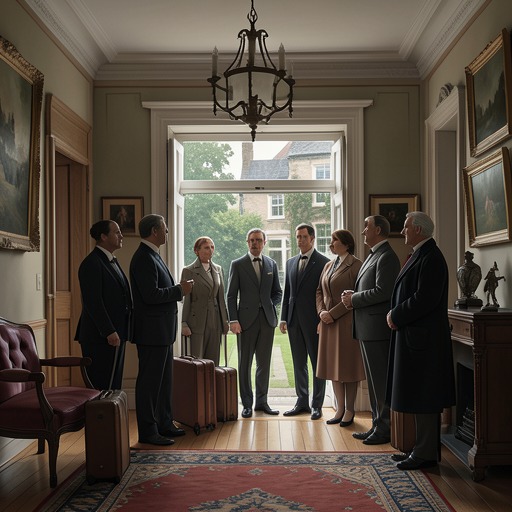
As the carriage enters the drive, the sound of its wheels on the village street gives way to arrival at the house, where M. Verdurin waits on the steps. He is pleased that the faithful have dressed for dinner and tells the narrator that he would lend him a dinner jacket if it would fit. The welcome turns a potentially formal occasion into a performance of intimacy: the host can display his smart company while insisting that everyone is among friends.
M. Verdurin’s response to the news of the pianist Dechambre’s death complicates that convivial display. Brichot offers a condoling handclasp, but the host does not respond in kind. He rejects the idea that death should inflate Dechambre’s reputation, argues that the pianist’s talent depended on the setting of the Verdurin circle, and remarks that he had recently needed to practise scales before performing. He then redirects attention to Morel, whom he calls a far greater artist, and explains that the young violinist is expected to arrive with an old family acquaintance, Palamède de Charlus. The contrast shows the host treating artistic reputation as something shaped by the salon as well as by a performer’s ability.
When Morel and Palamède de Charlus enter, the Baron approaches the hostess with marked deference. In the unfamiliar drawing room, the manner he usually cultivates as virile and cold gives way to an instinctive politeness. His entrance establishes a tension that will recur through the evening: the public forms available to a person may not match the identity or attachments that the narration discloses beneath them.
Morel’s request and the management of identity
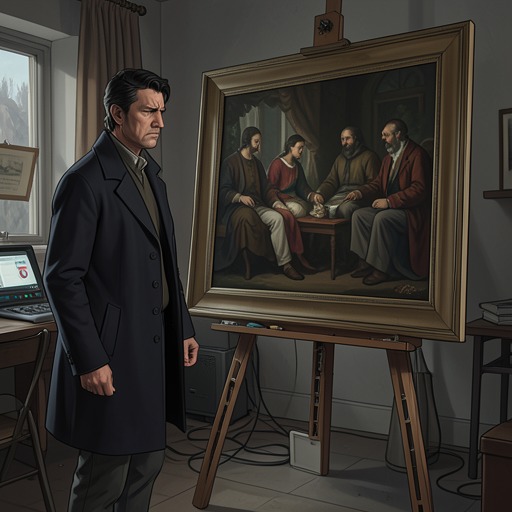
Morel greets the narrator with a striking change of manner. On a previous occasion he had treated him with supercilious familiarity; here he bows low and addresses him with conspicuous respect. The narrator immediately suspects that Morel needs a favor, and Morel confirms it by asking him to conceal the nature of his father’s former employment in his uncle’s household.
Morel wants the narrator to describe his father as a steward of estates so vast that he would have stood almost on a level with the narrator’s parents. The request does not merely elevate Morel’s family: it also requires the narrator to exaggerate his own family’s apparent wealth. The narrator is irritated by that implication, but Morel appears so distressed and insistent that he agrees to speak to Mme Verdurin before dinner and present a more favorable account.
The attempt succeeds, though Mme Verdurin is surprised because she has some prior acquaintance with the narrator’s family. Her response makes the social cost of Morel’s request plain. She disparages the narrator’s great-grandfather, recalls his stinginess, and treats family history as an obstacle to belonging in the salon. The episode places two kinds of self-presentation side by side: Morel’s anxious attempt to recast his father’s position, and Mme Verdurin’s claim that inherited family ties are tedious and incompatible with the cohesion of her circle.
Seats, rank, and aristocratic precedence
Before dinner, Mme Verdurin asks her husband whether she should offer her arm to Palamède de Charlus. M. Verdurin answers that the Baron is inferior in rank to the Marquis de Cambremer, so she instead places him beside Princess Sherbatoff. She introduces the two with no more than a silent bow from either side; their exchange suggests mutual recognition accompanied by discretion. The arrangement makes rank operative without requiring an explicit debate: the seating plan quietly sorts the guests before conversation can begin.
Later, when M. de Cambremer seems ready to offer his chair to the standing Baron, Palamède de Charlus interprets the gesture as acknowledgment of a precedence owed to a prince. He declines it emphatically, pressing the Marquis to remain seated and remarking that such a courtesy should be reserved for princes of the blood. The refusal is a display as much as a courtesy: he asserts the high status he claims while avoiding the appearance of accepting an honor that, in his view, would confirm it.
The Baron subsequently gives Morel an extended account of his family’s precedence. He cites the Duchy of Aumale, a dispute over a kneeling-stool at the burial of Monsieur, and a royal order requiring the Princess de Croy to apologize to his ancestor. He recalls another occasion on which his family obtained permission to have the ushers of the Duc de Bourgogne lower their batons. These anecdotes turn dinner conversation into a recital of inherited claims, with Morel as the intended audience. The family’s precedence is presented not as an abstract title but as a history of enforced recognition at court.
The dinner as social theatre
The evening gathers several distinct forms of performance into one room. The Verdurins frame their invitation as reluctant duty while enjoying its potential prestige; the seating arrangements translate aristocratic rank into physical proximity; and the Baron’s stories dramatize the authority of his lineage. Morel’s request, meanwhile, makes visible the less ceremonious labor of social presentation: a family occupation must be recast so that he can appear at ease among people who may judge inherited status.
The narrator’s account also sets the guests’ conduct against what they know, misunderstand, or choose not to say. Palamède de Charlus arrives as Morel’s family acquaintance, but the context identifies their connection as part of the Baron’s private attachment and patronage. Morel’s deferential behavior toward the narrator is not simply a change in temperament; it accompanies a request that he protect a family secret. The dinner’s social rituals therefore do not disclose everything they manage. They make rank visible, regulate inclusion, and offer cover for relationships and vulnerabilities that cannot be stated openly.
The Cambremers’ first dinner at La Raspelière remains poised between hospitality and competition. The guests are welcomed into the Verdurins’ circle, but they enter a setting whose host controls its customs and whose occupants are already negotiating what the gathering should mean. By the time the conversation reaches family precedence, the occasion has exposed its underlying stakes: social standing is inherited, performed, and sometimes strategically rewritten, while the seemingly minor arrangements of an evening can determine who is recognized and on what terms.