Memory and the superimposition of past and present
In Search of Lost TimeMemory’s superimposition of past and present is the sudden re-entry of an earlier scene into present experience, not as a detached recollection but as a change in the self who is living the moment. At Balbec, a sensation restores the narrator’s lost grandmother to felt reality and makes him understand, belatedly, that she is dead; later, while watching the sunrise with his mother, a remembered scene at Montjouvain overwhelms the landscape before him. These episodes show how memory can collapse chronology, alter perception, and make grief newly present.
Memory as a return of the past
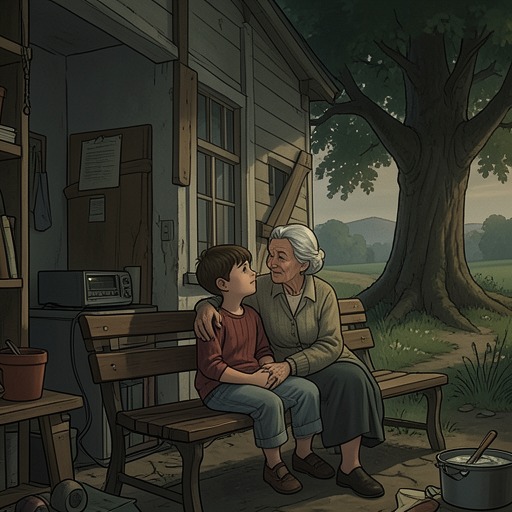
The narrator’s understanding of memory is bound to the conditions in which a past experience was formed. His grandmother’s kindness had not remained continuously available to him after her death: he had spoken and thought about her, but those thoughts had not restored her living presence. On his first night at Balbec after returning there, as he bends to remove his boots while suffering from cardiac fatigue, an involuntary recollection brings back her face as she stooped to help him on an earlier arrival. The bodily circumstance recalls the earlier scene with such force that a former self seems to return along with it.
This recovery makes the narrator recognize the gap between the calendar of events and the calendar of feeling. More than a year has passed since his grandmother’s burial, yet only now, when memory makes her seem alive again, does he fully experience having lost her. The recollection does not undo her death; it changes the present by bringing back the love and dependence that had been inaccessible to his intervening self. Memory’s return is therefore both restorative and painful: the grandmother becomes emotionally real at the very moment the narrator understands that she cannot return.
Sensation, memory, and successive selves
The narrator describes the past as remaining within a person in forms that ordinary consciousness cannot necessarily reach. Memories are preserved in an unknown region and may be crowded out by other memories; when the original context of sensation is recovered, a particular past self can again occupy consciousness. The self revived at Balbec is not simply the narrator as he has been throughout the intervening year. It is the earlier person who sought refuge in his grandmother’s arms, and it follows the time of that remembered evening rather than the chronology of the day just lived.
The container image gives this account a further dimension: bodily existence encourages the belief that inner wealth and past feeling are always in one’s possession, although much of it may be inaccessible. A recovered sensation can make an apparently absent emotional life present again, but it does not create a seamless continuity between selves. Instead, one self replaces another in consciousness, and the returning past carries its own knowledge, needs, and grief. The episode thus links memory’s disturbances to what the narrator calls the intermittencies of the heart: feeling changes as different parts of the past become available.
Sleep and the dislocation of time
Sleep provides a contrasting case in which experience cannot easily be placed within ordinary chronological time. After dinners at La Raspelière, the narrator sometimes wakes believing he has rung the bell repeatedly, only to discover that ten imagined rings belonged to the lingering world of sleep and that his hand had not moved. The actual eleventh ring is the first real one. The mistake shows how an experience may seem to have duration and sequence without having occurred in waking time.
To wake, the narrator must try to fit the obscure mass of sleep into the framework of time, but sleep supplies no reliable measure: it does not know whether two hours or two days have passed. Without an external point of reference, he may fall asleep again, while a short interval seems much longer. The episode clarifies that the temporal confusion of memory is not merely a confusion of dates. Different modes of experience possess different measures, and the returning past can feel continuous even when the ordinary calendar records a break.
A remembered scene over the present landscape
At Balbec, the superimposition of past and present takes a more disruptive form. After Albertine has left the narrator alone with his suspicions, the remembered words identifying her with Mlle Vinteuil’s friend return to his mind. While Albertine is present, kissing her can temporarily quiet his anguish and allow him almost to believe in her innocence; when he is alone, the words ring out again and his certainty about her becomes dominant. The shift in attention changes the emotional meaning of the same relationship, exposing how feeling depends on what memory brings forward.
The next morning, the narrator’s mother wakes and finds him in tears. When she points out the sunrise over the beach at Balbec, he sees instead the remembered Montjouvain scene: Albertine in the place of Mlle Vinteuil’s friend. The remembered scene is not simply recalled alongside the view; it lies over the seascape and cannot be cancelled by it. The memory of the landscape itself also carries another time: the wood at Parville and the sea evoke earlier evenings spent there with Albertine, so that the present dawn becomes layered with recollections of past excursions as well as with the distressing image from Montjouvain.
The room as a measure of change
The room at Balbec makes personal change visible through the contrast between a setting that remains and a person whose meanings and feelings have altered. The narrator recalls its different associations: longing for Mlle de Stermaria, watching for Albertine and her friends, the intimacy he later experienced with Albertine, and the return of his grandmother’s kindness in memory. The same room, ceiling, and glazed bookshelves have contained different episodes and different versions of the narrator. Their apparent permanence sharpens rather than erases the changes in his inner life.
Together, these scenes present memory as neither a complete archive nor a voluntary act of looking backward. A sensation can recover an earlier self; sleep can unsettle the measure by which experience is dated; and a remembered image can transform what the present seems to show. Past and present remain distinct in fact, but in consciousness they may be superimposed, with consequences for love, grief, and the narrator’s sense of who he is.