Sleep as an alternate life
In Search of Lost TimeSleep as an alternate life is the narrator’s account of a second mode of existence, governed by its own sensations and uneven sense of duration. Sleep does not simply interrupt waking life: it loosens the ordinary links between memory, identity, and clock time, while bodily feeling can carry sorrow into this other life with heightened force. Its uncertain return to wakefulness makes the sleeper’s self seem newly formed, and its dreams can bring the past back in a form the waking mind had not been able to reach.
A Second Dwelling
After evenings at La Raspelière, the narrator describes sleep as a dwelling entered for a particular purpose. It has sounds of its own: bells may seem perfectly audible even though no one has rung them. It has visitors who appear to summon the sleeper out, only for waking to reveal an empty room. Within this realm, identities and relations are unstable: a man may appear as a woman, while things become men, and men become friends or enemies. The transformations are not presented as orderly developments in a remembered story; they belong to a state in which familiar distinctions shift before the sleeper can secure them.
Sleep’s inhabitants also move according to a duration unlike that of waking. A quarter of an hour may seem like a day, while a sleeper may believe a brief nap has lasted only moments when in fact the day has passed. In deeper sleep, the journey descends beyond the point where memory can follow, leaving the mind to turn back at the edge of what it cannot retain. Sleep is therefore an alternate life not only because its contents differ, but because the ordinary measures by which experience is placed in sequence cannot reliably be carried into it.
Awakening and the Return to Time
The narrator figures regular sleep as a steady journey that continues until some disturbance turns it back toward waking. Sounds from the waking world begin to reach the sleeper, at first indistinct or distorted, and the return ends in a sudden landing at the point of awakening. Sometimes the sleeper emerges without knowing who he is, as if newly born and emptied of the past that had constituted his waking life. Memory later restores a sense of consciousness and personality, but the interval exposes how much that continuity depends on recollection returning.
The contrast between the two states is clearest in the difficulty of measuring sleep from outside it. A clock can establish that an apparent day lasted only a quarter of an hour, but that measurement belongs to the waking person who has already left the other state. The pleasures and pains of sleep likewise do not enter the narrator’s ordinary accounting of experience. A pleasure may have occurred, yet on waking it belongs to a life that feels not to be one’s own; its disappearance can seem like a waste because it cannot simply be resumed in waking life.
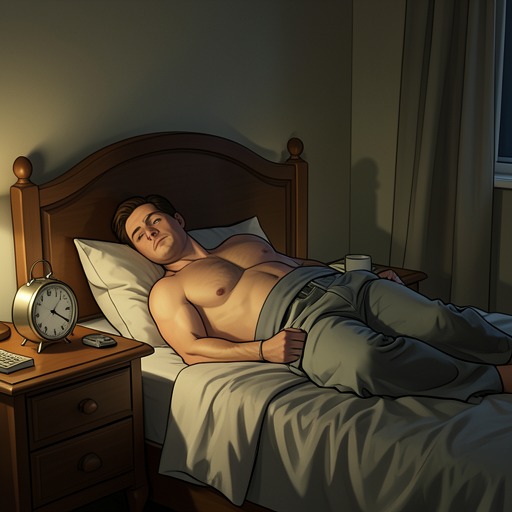
After the dinners at La Raspelière, the narrator’s own repeated attempts to summon the valet make this problem practical. On waking, he can despair that the valet has not answered, even though he has only just begun ringing. Ten apparent calls prove to have been dreamlike anticipations; only the eleventh is the first actual ring. The hands that seemed to act in sleep had not moved. Waking therefore requires more than opening one’s eyes: the narrator must bring the undefined mass of the other life into a temporal framework, usually by finding an external point of reference. Without one, he may slip back into sleep, where five minutes can seem like three hours.
Sensation, Memory, and Grief
The alternate life of sleep is also a bodily one. The narrator describes inner consciousness as subject to disturbances of the organs: terror, sorrow, or remorse can act with greatly magnified force when they enter the body’s rhythms. Sleep’s images and feelings are not merely ideas recalled at leisure; they are bound to changes in bodily experience. The self in sleep may therefore undergo an emotional reality that waking thought cannot easily measure or contain.
This account connects with the narrator’s involuntary recovery of his grandmother’s living presence at Balbec. As he bends to remove his boots, a remembered sensation and posture bring back the tender face of his grandmother as she had appeared on his first evening there. For the first time since her death, he experiences her not as a fact he knows about but as a living person restored by memory. That restoration makes the loss newly present: the self who once sought comfort in her arms returns, and with it the knowledge that she will never again be beside him. The recovered love and the certainty of her death coexist, making memory an encounter with both survival and annihilation.
The narrator distinguishes this sudden, involuntary grief from the blankness that preceded it. The feelings and sorrows of the past may remain within a person without being available to consciousness; when the sensory context that preserved them is recovered, they can displace whatever self had occupied the foreground and reinstate the self that originally lived them. In this way, the self is not a single continuous possession. Different selves, linked to different past experiences, can come forward or recede as memory changes what is present.
Sleep’s Unreliable Measure
The boundary between sleep and waking remains difficult to police because the sleeper’s sense of elapsed time cannot provide its own reliable evidence. The narrator considers whether there are two times, or whether the life of sleep is more deeply outside the category of time altogether. Waking measurement can correct a sleeper’s estimate, but it cannot make the remembered duration of the dream and the measured interval equivalent. The clock reports how long the body was asleep; it does not settle what kind of time the sleeper inhabited.
The narrator’s account thus makes sleep a test of the assumptions by which waking consciousness treats memory, pleasure, and personal identity as stable possessions. The sleeper may inhabit relationships and experiences that vanish on awakening, return from sleep without a recognizable self, or recover a grief that waking life had left unrealized. Sleep is neither a simple escape from reality nor a dependable extension of it. It is an alternate life whose effects become legible only at the unstable moment of return.