The Calendar of Facts and the Calendar of Feelings
In Search of Lost TimeThe Calendar of Facts and the Calendar of Feelings describes the divergence between what has happened in chronological time and what a person has emotionally lived through. Its central instance is the narrator’s belated recognition of his grandmother’s death: more than a year after her burial, an involuntary memory restores her as a living presence, and only then does he feel the loss. The phrase also illuminates how waiting, sleep, and love unsettle ordinary measures of duration and certainty.
Chronology and emotional recognition
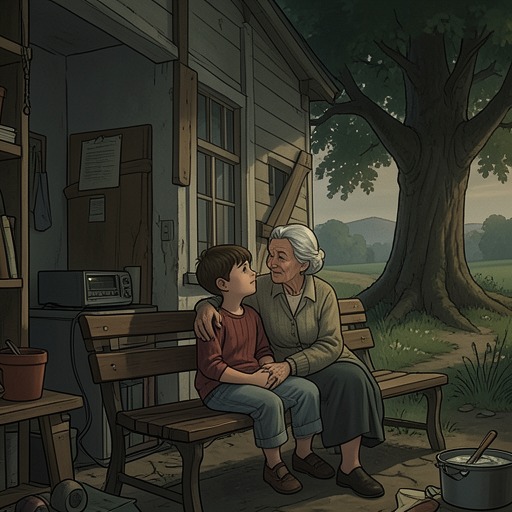
The narrator’s grandmother had been dead for over a year, yet he had not truly experienced her death. He had spoken and thought of her, but those thoughts belonged to a version of himself unable to recover her living reality. On his first night back at Balbec, while tired and carefully taking off his boots, he suddenly remembers the tender, preoccupied face she had turned toward him on their first arrival there. The memory is not a deliberate act of reflection: it breaks through with sobs and tears, restoring the grandmother he had known rather than the diminished, abstract figure preserved in his ordinary thoughts.
That restoration makes the fact of death newly intelligible. The narrator discovers that he has lost her forever precisely when he seems to find her again. In the returned memory, her love remains complete and directed toward him; at the same time, the knowledge of her death makes that love seem irretrievably severed, as though the person recovered in memory were now a stranger whom chance had once brought close to him. The contradiction is not resolved. It is the emotional event itself: attachment becomes vivid at the instant its permanent absence is recognized.
The interval between burial and grief is not presented as indifference simply changing into sorrow. Before this moment, the narrator’s memory of his grandmother existed only potentially, crowded out by other recollections and inaccessible to the self he had successively become. He describes past experiences as remaining in unknown regions within a person, unable to enter consciousness together. When the sensations that preserved one memory are recovered, that memory can displace incompatible ones and restore the self that originally lived it. Emotional time therefore depends not only on the date of an event but on which remembered self can become present.
Involuntary memory and parallel selves
The scene at Balbec makes a physical circumstance the occasion for a temporal return: the narrator’s fatigue and the familiar action of undressing recall the earlier evening when his grandmother helped him after their arrival. The recovered self does not first proceed through the intervening year and then look backward. Instead, the narrator feels himself returned to the earlier moment, as if the intervening time had not separated the two experiences. He compares time to different, parallel lines: the remembered self resumes its own continuity, while the later self and the day just passed are temporarily absent from its knowledge.
This experience explains why the calendar of facts cannot by itself measure grief. The death occurred once, but its emotional reality was not continuously available to the narrator. The memory reconstructs a moment that ordinary recollection had left unrealized, and in doing so it changes the meaning of the past: what had seemed to be a loss already absorbed becomes a loss newly suffered. The narrator’s remorse over his earlier failure to miss his grandmother is thus bound to a shift in consciousness, not simply to a change in what he knows.
The book also makes the body part of this temporal structure. The narrator imagines it as a vessel enclosing the inner life, which encourages the belief that past joys and sorrows remain continuously at hand. Yet they may persist in an inaccessible region, or be crowded out by other memories. Recovered sensation brings one of those dormant emotional worlds into dominance. In sleep, the relation between time, body, and memory becomes stranger still: ordinary awareness is suspended, while grief and remorse can return with force magnified by the body’s altered condition. The past is not merely recalled; it can be re-entered as an experience that reorganizes the present.
Grief carried between generations
The narrator’s belated grief also changes how he sees his mother. When she visits him at Balbec, still in mourning, he recognizes in her altered bearing not only his mother but the continuation of his grandmother. Her sorrow has subdued the gaiety and characteristic independence he associates with her; she appears shaped by the loss she carries. The narrator interprets this resemblance as one way the dead continue to act upon the living: bereavement can bring forward traits already present in a person and make the survivor a successor to the dead.
That inheritance is expressed through particular objects and repeated acts. His mother cannot bear to part with her mother’s bag, muff, and clothes, which intensify their physical resemblance, or with the copies of Mme de Sévigné that the grandmother had taken everywhere. In letters to her son, she quotes Mme de Sévigné as though her own voice were carrying her mother’s words onward. At the beach, she carries her mother’s sunshade and follows the path associated with her; she returns there daily to read the grandmother’s favorite books. These actions do not undo the death. They make the dead person’s habits and attachments part of the survivor’s present.
The scene also distinguishes the narrator’s newly awakened sorrow from his mother’s sustained grief. He understands that his own sorrow, though powerful, is delayed and transitory, whereas his mother’s loss has weighed on her for years. His sudden recognition gives him a clearer perception of her blank, tearless gaze, which he understands as fixed on the contradiction between memory and non-existence. The emotional calendar is therefore not shared even within a family: the same death reaches each person through different histories, memories, and durations.
The mismatch beyond bereavement
The book extends this temporal mismatch beyond grief. In a separate scene, the narrator waits anxiously for Albertine’s telephone call. He remains motionless beside the instrument, and the wait seems to pass directly from ear to mind to heart, with no perceptible delay. When the telephone finally sounds, relief and suspicion arrive together: Albertine says she is not coming unless he insists, and he suspects that she is lying. The clock’s duration, the call’s actual arrival, and the emotional time of expectation do not align. Waiting makes a short interval feel like an ordeal and invests a sound with the power to transform the night.
Sleep provides another contrast. After dinners at La Raspelière, the narrator sometimes believes he has rung repeatedly for the valet, only to discover that the imagined rings belonged to sleep and that his hand never moved. Waking requires him to bring an undefined experience of sleep into chronological order; without an external point of reference, a brief return to sleep can seem to last for hours. The distinction between events and felt duration is thus not confined to memory of the past: consciousness itself may fail to know how long it has been elsewhere.
The calendar of facts and the calendar of feelings are not competing records in which one must be correct and the other mistaken. Together they describe how human experience is distributed across successive selves: an event may be known before it is felt, and a past emotion may return so fully that it briefly displaces the present. At Balbec, the consequence is the narrator’s first real grief for his grandmother. More broadly, the idea explains why memory, love, and mourning can alter the felt order of a life without altering the dates on which its events occurred.