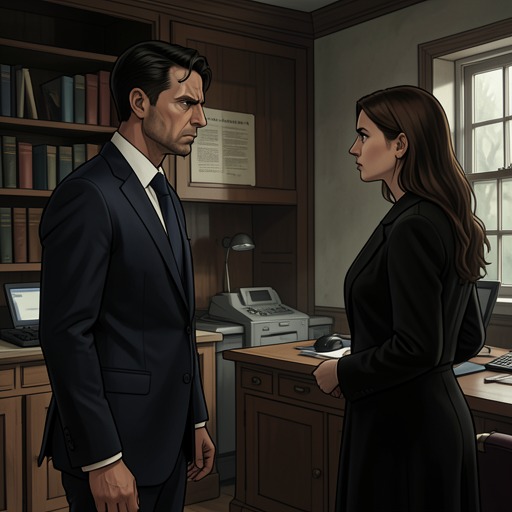
The narrator and Albertine argue over her plans
In Search of Lost TimeThe narrator and Albertine argue over her plans in a scene that turns a disputed evening outing into a study of jealousy, changing explanations, and the limits of intimate knowledge. Albertine says she must visit a woman at Infreville and meet friends there; the narrator, unwell and suspicious, asks her to stay. When he proposes going with her, her sudden effort to redirect their outing makes him suspect that the appointment conceals another purpose. The argument ends without resolving what Albertine intended, but it sharpens the narrator’s awareness that neither affection nor interrogation can give him transparent access to her life.
Setting and the disputed appointment
During the narrator’s second visit to Balbec, Albertine says she must call on a woman who is at home every afternoon at five in Infreville. The narrator is feeling unwell and asks her to remain with him. She says that the woman is difficult to offend, that her aunt expects her to make the call, and that she has arranged to meet other girls there. When he points out that the call could be cut short, Albertine changes her explanation: she is going for her friends’ sake and plans to bring them home in her trap.
The practical details become part of the dispute. The narrator notes that trains run from Infreville until ten at night and suggests that Albertine could dine there and return by train. She replies that they might be asked to stay for dinner and that leaving later would be cutting it fine. As each solution meets another objection, the question of transport and politeness becomes inseparable from the narrator’s suspicion that the stated arrangements do not explain why she is so determined to leave.
The offer that changes the argument
The narrator proposes accompanying Albertine to Infreville, while making clear that he will not visit the woman or meet her friends. Albertine looks as though she has been struck and is briefly unable to answer. She then says that the sea bathing has not been doing her good. Although she insists that she enjoys going out with him, she abruptly suggests that they go in the opposite direction and dine together, describing that side of Balbec as prettier and saying she is tired of the villages near Infreville.
The narrator tests this new proposal against the reasons she has just given. He reminds her that the woman may be annoyed if she does not call; Albertine replies that the woman has visitors every day and that she can go another time. She first says her friends need a ride, then says they have often let her down and that it is her turn. When the narrator points out that there is no train back after nine from the direction she now proposes, she says they can find a cart or a bicycle, or walk. To him, these reversals suggest that his offer to accompany her has disrupted an arrangement she had made in advance.
Suspicion, retreat, and farewell
The narrator imagines that Albertine is giving up a plan she will not explain, and that someone else may be disappointed by her decision. He also considers a pattern in which a person jilted for an evening may return, hurt and more attached, rather than disappear. But he says he does not want to hurt someone else, exhaust himself, or begin an endless investigation. His refusal to accompany her is therefore not simple acceptance of her account: he says he will not spoil her pleasure, while making clear that he thinks the woman is a cover for someone else and that Albertine has contradicted herself several times.
Albertine admits that she may have contradicted herself, attributing her confusion to the sea air and saying she sometimes calls things by the wrong names. The narrator reports that her admission wounds him because it seems to confirm something he had only faintly suspected. She says she will leave, accuses him of rejecting an evening she had altered her plans to spend with him, and announces that she will never see him again. When she threatens to throw herself into the sea, he answers by referring to Sappho; Albertine takes this as another sign that he distrusts her. The exchange turns an argument about a journey into an argument about whether her words and actions can be believed.
The appointment remains unresolved
Watching the time, Albertine hurries away with a brief, distressed farewell. The narrator understands that she may be trying not to miss her appointment, but he does not treat that as proof of what she meant to do. He is certain she will return the next day, as she does. She apologizes then for the abruptness of her departure; the narrator considers that the other person may not have been free that evening, but presents this as a possibility, not a certainty.
The episode leaves the narrator with no clear account of Albertine’s intended destination or companion. He believes that she was attached to him, and even allows that the person she had planned to see may have been more jealous than he was. That conjecture does not settle the facts. Instead, the scene shows how his jealousy supplies stories about other people while remaining unable to verify them; Albertine’s changing explanations intensify suspicion, but do not make the hidden arrangement fully knowable.
Narrative significance
The scene is narrated from the narrator’s limited perspective: he explicitly recognizes that he sees the events only from his side of a glass that is not transparent. That qualification matters. The argument gives the reader his observations—Albertine’s pause, her altered plans, the clock, her hurried departure—and his interpretations, but it does not confirm the identity or intentions of the person he suspects. The event’s tension rests on the difference between what is seen and what is inferred.
The dialogue also makes contradiction a form of evidence without turning it into certainty. Each practical explanation can be read as a response to the narrator’s pressure, while his own questions and proposed solutions narrow the evening into a contest over whether Albertine will go and whether he will follow. Her departure and next-day return resolve the immediate separation, not the underlying doubt. The episode thus gives concrete form to the narrator’s recurring difficulty: love makes him want an explanation of another person’s private life, but the search for one produces interpretation rather than secure knowledge.