
Memory, Identity, and the Lost Childhood
In the WoodsThis thread traces how Rob Ryan’s lost childhood returns in fragments, destabilizes his sense of identity, and finally recedes again without explaining what happened to the missing children.
increasing Bearing strength in each event
 decreasing
Bearing strength in each eventdecreasingA File Instead of a Memory
The past in official form
Records and absence
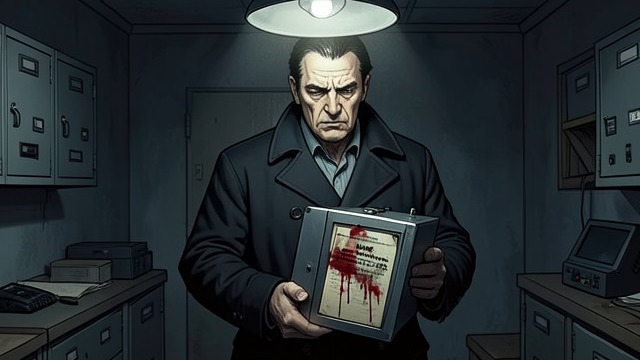
Rob first revisits the disappearance of Peter Savage and Germaine Elinor Rowan through a police file. Its details are precise: a search, a surviving boy found in the wood, blood in his shoes, torn clothing, and no memory of the hours after leaving home. The official record gives sequence and evidence where personal recollection is absent.
A divided identity
Rob explains that he has used his middle name since leaving for boarding school, in part to escape the publicity attached to his childhood. In the present he is known as a detective under a different name, while the boy in the file remains a separate public identity. The separation has helped him live, but it has not answered what happened.
The file becomes a substitute for memory and a boundary around it. Rob can read what investigators observed, yet those observations cannot tell him what he experienced or what he may have done. The distinction between a documented past and a remembered past will become increasingly unstable as the new case draws him back to Knocknaree.
Fragments Under Pressure
Recognition without recall
The returning place
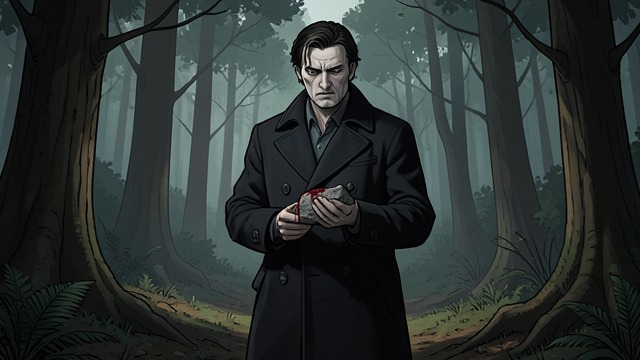
When Rob arrives at the archaeological site, familiar shapes begin to press against his official composure: a tower, the remains of the wood, the wall, and the former estate. These impressions are not stable memories. They arrive as bodily reactions, flashes of recognition, and moments when the present seems to overlap with a childhood scene.
A memory mistaken for evidence
The strawberry hair clip and an old smear of blood on the stone trigger associations with Germaine Elinor Rowan and the earlier disappearance. Rob initially cannot tell whether he remembers these details or recognizes them from the file. That uncertainty matters: personal memory, records, and the demands of the active investigation become difficult to separate.
Rob chooses to conceal the full extent of his connection from O'Kelly. As the case intensifies, he begins probing his memory while insisting to himself that it has little practical value. The effort exposes an uncomfortable possibility: the mind may retrieve vivid scenes without supplying a reliable explanation for them.
The Night Return
Entering the remembered landscape
A deliberate experiment
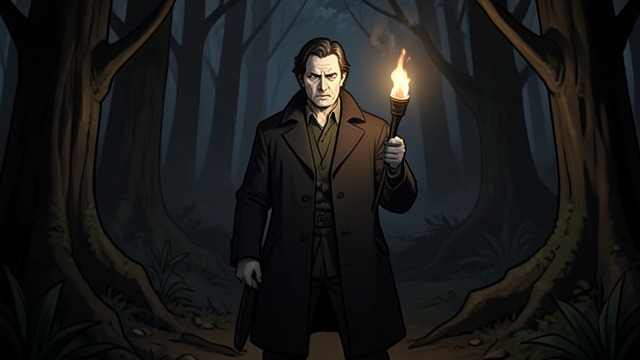
Rob returns to Knocknaree wood alone, bringing a sleeping bag, a torch, and alcohol-spiked coffee. He hopes that familiar surroundings will unlock what years of questioning and conscious effort have not. The choice is both investigative and personal: he wants useful knowledge, but also hopes to recover the childhood he has lived around rather than remembered.
Memory becomes threat
As darkness falls, the wood seems to answer his presence with sounds, movement, and sensations that he cannot confidently separate from fear, exhaustion, or hallucination. A fragment from the day of the disappearance begins to open, carrying him toward a remembered run with Peter Savage and Germaine Elinor Rowan. Before the scene can explain what happened, panic overwhelms him.
He escapes the wood convinced that he has recovered no useful answer. Yet the experience changes his understanding of the place: it is not merely scenery from an old file, but a setting bound to bodily terror and unresolved loss. His flight also deepens his dependence on Cassie Maddox, whom he calls to collect him.
A Childhood Scene Returns
Remembering the children’s plan
The last bright day
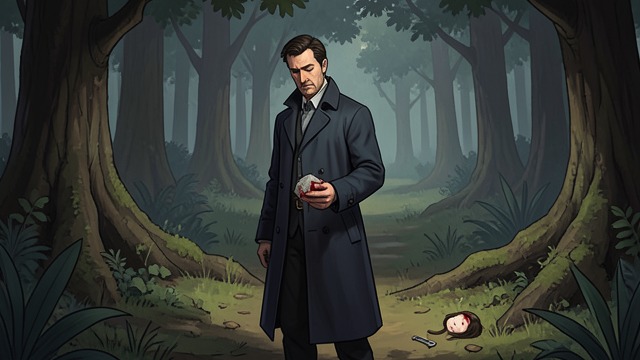
When Rob spends the night in the wood again, memory carries him back to the summer when Germaine Elinor Rowan learned she might be sent to boarding school. He remembers her distress and Peter Savage’s proposal that the three children hide in the wood until the departure can no longer happen.
A memory with a gap
The recovered sequence is vivid: the children plan supplies, imagine moving between hiding places, and run through the wood with exhilaration. The scene approaches the moment when the past should explain how Peter and Germaine disappeared and why Rob was found alone, but the memory does not reach a clear account. Terror and the sense of a pursuing presence interrupt it.
The fragment gives Rob intimacy with his lost friends, not an answer to the case. Its emotional force lies partly in the ordinary hope that precedes the disappearance: the children believe they can outwit the adult world together. Their plan becomes a lasting image of their bond, even as the event that ends it remains inaccessible.
Memory Withdraws Again
The return to absence
Loss after recovery
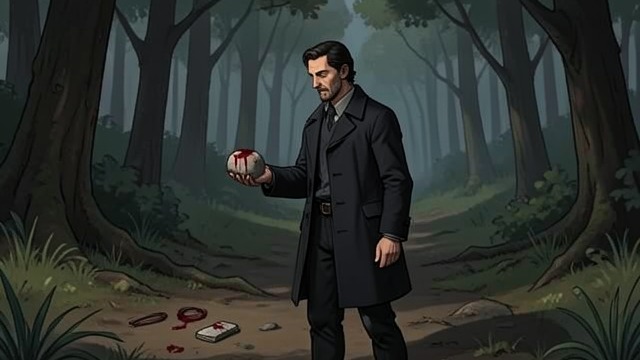
Once Operation Vestal ends, Rob Ryan discovers that the memories he had recovered have disappeared again. Peter Savage, Germaine Elinor Rowan, the wood, and the other children of that summer return to the same distant, secondhand status they had held before. He remembers having remembered, but cannot summon the scenes themselves.
One moment survives
A single memory remains: Peter and Rob working unsuccessfully on a periscope while the children are unhappy about the possibility of separation. It is a modest scene of boredom and frustration, not a revelation about the disappearance. Later, a joyful memory of Germaine announcing she will stay also holds fast, giving Rob one intact image of the friendship and summer he lost.
The persistence of these fragments does not resolve the mystery. Instead, it shows that memory may preserve emotional meaning while withholding factual explanation. Rob’s identity remains divided between the detective who reconstructs other people’s lives and the survivor who cannot recover the event that shaped his own.
The day after Rob Ryan becomes a detective
The first days after the discovery of Katharine Devlin’s body
A Saturday night during Operation Vestal
After Rob Ryan identifies Damien Donnelly’s crime scene
The months after Operation Vestal and the trial
