
Children’s Ideas of Harm and Protection
In the WoodsThis thread explores how children interpret danger through incomplete understanding, how adults exploit that vulnerability, and how imagined protection can become another source of harm.
increasing Bearing strength in each event
 decreasing
Bearing strength in each eventdecreasingThe World Children Believe
Childhood as a different logic
The story of the marbles
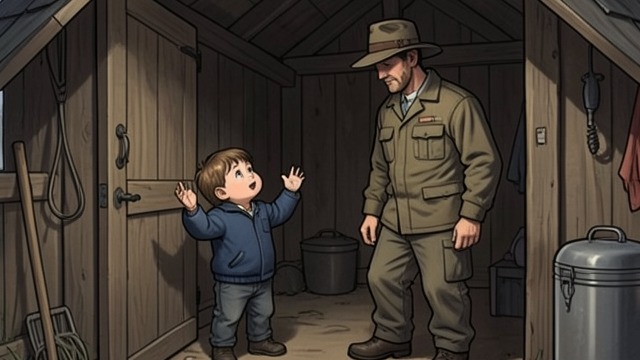
Cassie Maddox recalls that, as a child, she followed a groundskeeper into a shed after he suggested he could give her marbles. She sensed that something was wrong when he began undoing her shirt, but at the time she did not understand the event in the adult terms of sexual danger. Only years later did the memory become legible to her.
The lure of marvels
Cassie also remembers that she partly followed because the man’s accent made her wonder whether he had promised “marvels.” The possibility of a secret magical world outweighed caution. Her account helps explain why a child may approach danger not because she is foolish, but because adults and children interpret invitations through different assumptions.
That distinction becomes central to the investigation. A child may register unease without understanding its meaning, or accept a risky invitation because it is presented as kindness, play, or wonder. The novel asks investigators to listen for what a child experienced rather than impose adult explanations too quickly.
A Promise to Escape

An innocent plan with real stakes
The proposed refuge
When Germaine Elinor Rowan fears that she will be sent to boarding school, Peter Savage proposes that the three children hide in Knocknaree wood until the decision can no longer be enforced. They imagine food, sleeping bags, torches, and a sequence of places where they can avoid being found.
Their own moral reasoning
The plan is not a game to them, even though it has the buoyant energy of one. They believe their parents have been unfair and that disappearing briefly may restore their friendship and keep Germaine at home. Adam Ryan hesitates because he imagines his mother’s distress, but Peter argues that adults have already misled them.
The memory captures children inventing a solution from the limited tools they possess. Their confidence in the wood and in each other makes the scheme feel possible; the same confidence also places them beyond adult protection. The promise to run away becomes a fragile boundary between ordinary childhood defiance and an unknown danger.
An Invitation to the Dig
A gift shaped like magic
A story that fits a child’s hopes
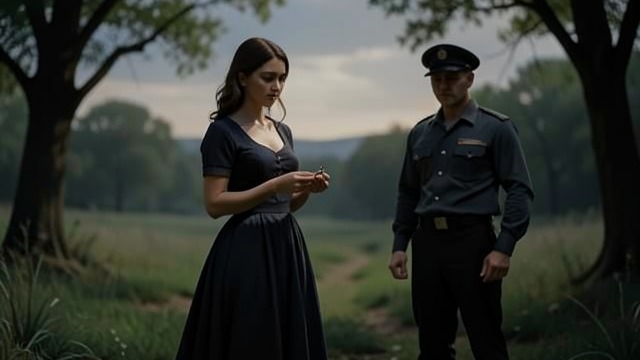
Rosalind Devlin tells Katharine Devlin that a friend at the dig has found an old locket with a miniature dancer inside it. The supposed gift will bring luck at ballet school, but Katharine must collect it at night and keep the exchange secret. The story is designed around what Katharine most wants: recognition of her dancing and a token for the future she is about to enter.
Trust turned into access
Katharine goes because the invitation appears to come from someone who admires her and can offer something meaningful. The lure does not require force at the outset; it uses her excitement and trust to bring her to Damien Donnelly. By the time danger becomes apparent, she is already isolated at the site.
The plan exposes the asymmetry between a child’s interpretation and an adult’s design. Katharine’s willingness to imagine a lucky charm is part of her hopeful character, not proof that she consented to what followed. The promise of wonder becomes a means of control.
A Rescuer’s Dangerous Story
Protection through a false explanation
A private account of abuse
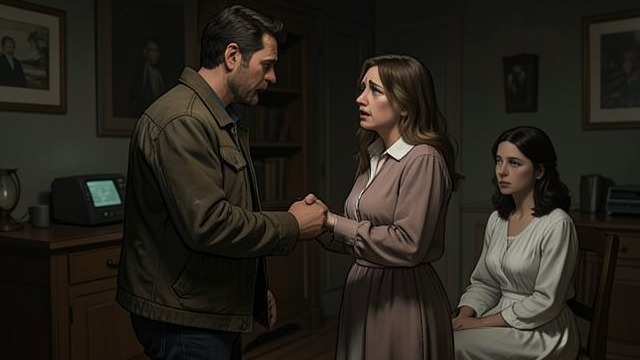
Damien Donnelly tells investigators that Rosalind Devlin described violence and sexual abuse within the Devlin family, claiming that Katharine Devlin had encouraged harm against her sisters. The story makes Damien’s crime seem like an attempt to protect Rosalind and Jessica Devlin rather than an act directed at a child who had done him no harm.
Belief without verification
Damien presents himself as the first person Rosalind trusted with the secret. His account carries the emotional logic of a young man who wants to rescue someone he loves, but the available medical records and autopsy findings contradict key claims. His devotion helps make him vulnerable to a story that gives his violence the shape of heroism.
The investigators must separate Damien’s sincere belief from factual truth. He can be both a killer and a person manipulated by an invented account; his willingness to protect Rosalind does not prove that the account was real. The episode shows how a desire to help can be redirected into terrible harm when compassion is attached to untested claims.
The Diary and the Child’s Voice
Evidence from the victim herself
Ordinary aspirations
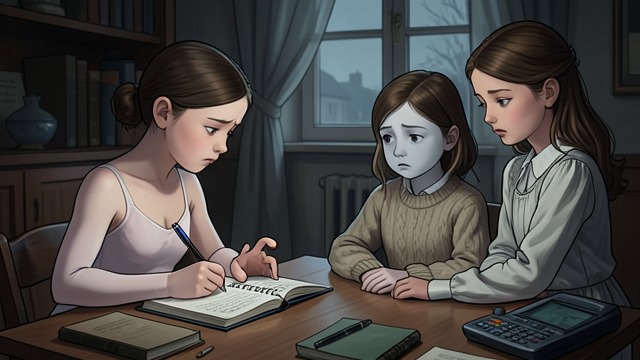
Katharine Devlin’s diary records her ballet training, friends, jokes, and plans. Its everyday voice shows a child who is serious about dance but also playful and ordinary. This record restores some individuality to a victim whom the investigation had often encountered only through medical reports, crime-scene images, and other people’s theories.
Fear inside the pages
The diary also contains entries about Rosalind Devlin pressuring Katharine to drink something that made her ill, threatening her relationship with Jessica, and distorting friendships by telling lies. Katharine’s writing reveals a child trying to understand coercion while still hoping that her sister may be sorry and that the family can remain intact.
The diary arrives too late to prevent the murder or provide a straightforward legal remedy. It nevertheless challenges the stories others tell on Katharine’s behalf, including Damien’s claim that she was cruel and deserved to be stopped. Her own words make visible how limited a child’s power can be when she is asked to choose between telling the truth and protecting the people she depends on.
During Cassie Maddox’s late-night conversation with Rob Ryan
The afternoon the three children plan to hide
The night Katharine Devlin is lured to the site
During Damien Donnelly’s second interrogation
A few weeks after the end of the trial
