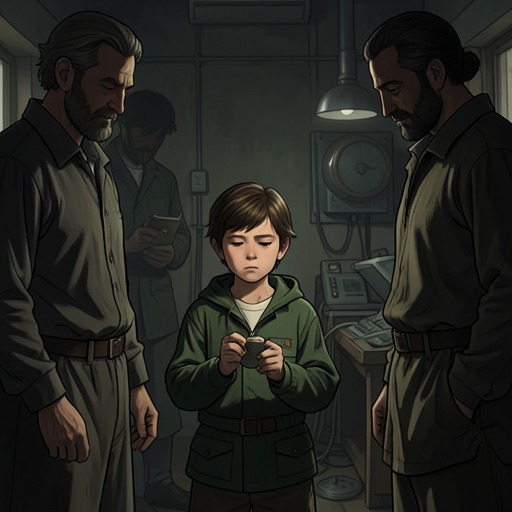
“Do you want marvels”
In the Woods“Do you want marvels?” is the question that crystallizes the lure of magic in the account of how Katy Devlin was brought to the archaeological site at night. Recalled through Cassie Maddox’s childhood, it connects her earlier encounter with danger to the deception that ensnares Katy.
The Childhood Echo
While hearing Damien explain the plan, the narrator thinks of Cassie as a child, hovering at the door of a groundskeeper’s shed, and recalls the question, “Do you want marvels?” The phrase belongs to a remembered moment whose speaker is not identified in this passage. Its force lies in the promise it offers: not an ordinary object or explanation, but the possibility of something extraordinary.
The Lure at the Dig
Rosalind Devlin used that promise to persuade Katy to go to the site. She told Katy that a friend working on the dig had found an old locket containing a little painting of a dancer. The locket was presented as nearly magical and as a good-luck gift for Katy’s ballet school; Katy had saved her money to buy it. The supposed seller—Damien—was said to want Katy’s autograph, but she had to collect the locket herself at night because he was not allowed to sell archaeological finds and the transaction had to remain secret.
The scheme makes the possibility of wonder part of the trap. Katy’s journey follows the same pattern the narrator recognizes in Cassie’s childhood: a child is drawn toward danger by the unmissable chance that something magical might be real. Damien also treats Katy’s belief in the promised autograph as foolish, but Sam counters that people had asked her for autographs after the fund-raiser. His correction complicates Damien’s account: the deception works not because Katy’s hope is baseless, but because it is attached to a possibility her recent experience has made credible.
Significance
The expression joins the two childhood scenes without claiming they are identical. In each, the promise of marvels draws a girl toward a place of danger; in Katy’s case, that promise has been deliberately fashioned into a lure. The phrase therefore carries both enchantment and menace: wonder is what makes the invitation compelling, while the secret nighttime meeting turns that hope into vulnerability.