Knocknaree children’s disappearance (1984)
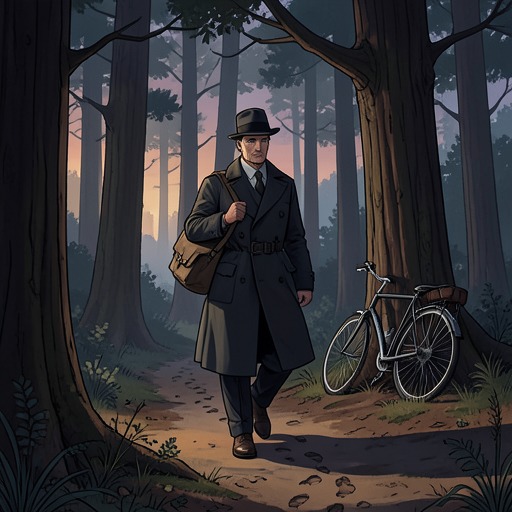
In the WoodsThe Knocknaree children’s disappearance (1984) is the unexplained vanishing of Germaine Elinor Rowan and Peter Savage after they entered the wood with Adam Ryan on 14 August 1984. Its decisive and enduring fact is that Adam was found, but could remember nothing of what had happened, while the other two children were never recovered. Recounted through a police file read by Rob Ryan the day after he became a detective, the case is assembled from witness accounts, physical traces, and a silence no search could resolve.
Background and the children’s last known movements
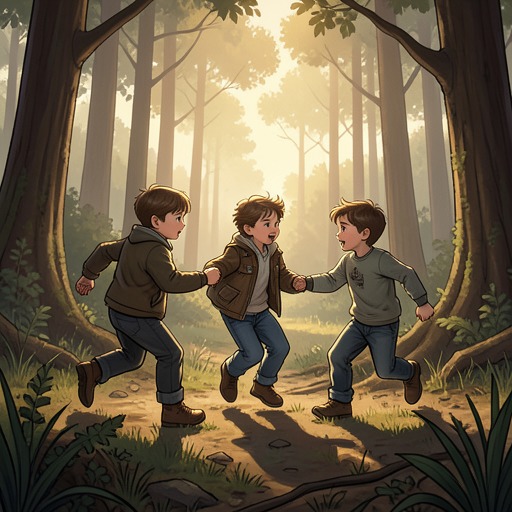
On the afternoon of Tuesday, 14 August, three twelve-year-olds were playing in the road where their houses stood in Knocknaree, a small town in County Dublin. It was hot and clear; residents were out in their gardens, and witnesses saw the children balancing along a wall, riding bicycles, and playing on a tire swing. The estate was then sparsely developed, with a sizable wood adjoining it beyond a five-foot wall.
At about 3 p.m., the children left their bicycles in the Savages’ front garden and told Peter’s mother, Angela Savage, that they were going to play in the wood. They often went there and knew that part well, so she did not fear that they would get lost. Peter had a wristwatch, and his mother told him to be home by 6:30 for tea. Her account was confirmed by her neighbor, Mary Therese Corry; other witnesses saw the children climb over the wall and enter the wood. These ordinary, publicly witnessed departures establish the children’s last known destination, but not what followed them inside.
The prospect of running away was considered during the first search. Germaine’s mother, Alicia Rowan, had arranged for her to attend boarding school in Dublin during the week and return to Knocknaree at weekends. Germaine was due to leave two weeks later, and all three children had been upset by the thought of separation. Yet a preliminary examination of their rooms found no missing clothes, money, or personal belongings. Germaine’s Russian-doll piggy bank, containing £5.85, was intact.
The search and Adam’s discovery
When Peter had not returned by 6:45, his mother checked with the other children’s mothers, assuming he might be at one of their homes. None of the three had returned. Peter was normally reliable, but at first the parents supposed that the children had become absorbed in a game and lost track of time. Shortly before 7 p.m., Angela Savage walked a short way into the wood and called for them. She heard no answer and noticed nothing to indicate that anyone was there.
After tea, Peter’s father, Joseph Savage, and Adam’s father, John Ryan, went farther into the wood and called again, still without response. At 8:25, as darkness began to fall, the parents became seriously concerned that the children might be lost. Alicia Rowan, who had a telephone, called the police. The search began that night and continued for weeks: volunteers combed fields and hills, explored known bog holes and drains, and sent divers into the river running through the wood.
At 10:20 p.m., a policeman using a torch found Adam in dense woodland near its center. He stood with his back and palms pressed against a large oak. His fingernails had dug so deeply into the trunk that they broke off in the bark. He appeared to have been there for some time, yet had not responded to the searchers’ calls. The Dog Unit followed the scents of the two missing children to a point not far from where Adam had been found; there the dogs became confused and lost the trail.
Physical evidence and interrupted memory
Adam was wearing blue denim shorts, a white T-shirt, white socks, and white lace-up running shoes. The shoes were heavily bloodstained, and the socks less so. Later analysis found that blood had soaked through the shoes from the inside out, while the lesser staining on the socks had passed from the outside in. Investigators inferred that the shoes had been removed, blood spilled into them, and the shoes put back on after the blood began to coagulate, transferring some to the socks. The T-shirt had four diagonal tears across the back, each between three and five inches long.
Adam had minor scratches on his calves, splinters beneath his fingernails consistent with the oak, and a deep abrasion on each kneecap. A five-year-old child, Aideen Watkins, said she had seen him fall from a wall earlier that day, but her account varied when retold and was considered unreliable. The file therefore preserves uncertainty even around injuries that might otherwise seem to offer a straightforward explanation.
The blood on the shoes and socks was type A positive. Adam’s blood was also A positive, but investigators judged that his knee abrasions were unlikely to have produced enough blood to account for the heavy staining inside the shoes. Germaine’s medical records showed that she was also A positive. Peter was excluded as the source because both his parents were type O, making it impossible for him to have another blood type. With no DNA analysis available in Ireland in 1984, the tests could not establish whose blood it was: investigators could not exclude either a fourth person or multiple sources.
Adam was physically uninjured apart from the described scratches and abrasions, but his response was profound. He made no voluntary movement for almost thirty-six hours and did not speak for another two weeks. When he did speak, he had no memory of the interval between leaving home that afternoon and being examined in hospital. The sole child recovered from the wood could thus provide no account of the disappearance; his condition became evidence of distress without becoming an explanation.
The watch, the unanswered search, and the case’s form
Fourteen months after the disappearance, local resident Andrew Raftery found a wristwatch in undergrowth about two hundred feet from the oak where Adam had been discovered. Its face showed a cartoon footballer in action, and a football tipped its second hand. Peter’s parents identified it as his, and his mother confirmed that he had worn it on the day he disappeared. The plastic strap appeared to have been torn forcefully from the metal face, possibly after catching on a low branch as Peter ran. The Technical Bureau found partial fingerprints on the strap and face, all consistent with prints on Peter’s belongings.
The watch gave investigators a specific trace in the wood, but it did not reveal what had happened to Peter or Germaine. Despite police appeals and a prominent media campaign, no further trace of either child was found. The search’s extensive geography—woodland, fields, hills, bogs, drains, and river—stands in contrast to the meagerness of what it yielded: Adam, the blood evidence, and Peter’s separated watch.
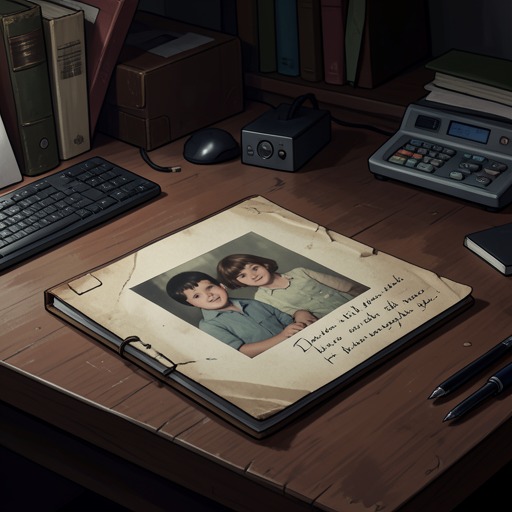
The file’s form shapes the reader’s understanding of the event. Rob Ryan presents the case as something read after he became a detective, a record he says he will return to in different ways. Witnesses establish the afternoon’s routine and the children’s entry into the wood; the medical observations and recovered watch narrow some possibilities but leave essential questions open. The narrative offers no confirmed account of violence, no identified source for the blood, and no conclusion about the missing children’s fate. Its unresolved evidence is also personal for Rob: the file concerns the childhood disappearance from which he alone returned, while his own memory of the central interval is absent.