Knocknaree’s Uncanny Agency
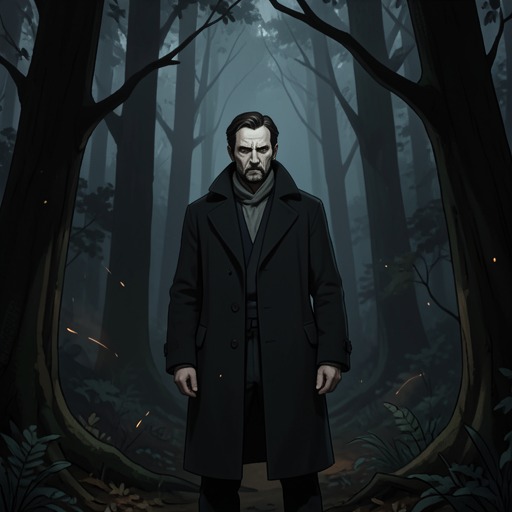
In the WoodsKnocknaree’s Uncanny Agency is the recurring impression that the wood and the surrounding estate do not behave as passive settings but resist the people who try to explain, map, develop, or remember them. Rob Ryan experiences this resistance as an unsettling force during the Katy Devlin investigation, while local folklore and reports of unexplained events offer possible echoes. The novel does not establish that Knocknaree is literally supernatural: it lets physical danger, memory, rumor, and imagination remain in uneasy proximity.
The Will Felt in the Investigation
The idea first becomes explicit in Rob Ryan’s response to a run of investigative dead ends. Seven men in the area fit the limited description of the tracksuit-wearing stranger; two might have been entering the estate near the relevant time, and some alibis could not be corroborated. The possibilities were concrete enough to pursue, but the evidence did not yield a convincing suspect. When Rob studied two photographs pinned to the whiteboard and considered how to test the men’s accounts, he felt that another will was meeting his at every turn: something sly and obstinate, with its own reasons. This is his interpretation of frustration, not evidence that an unseen force has intervened. Yet the language makes the case feel less like a problem awaiting a solution than a contest with something that will not be fully known.
That impression attaches to the investigation’s material surroundings as well. Sam O'Neill’s map remains taped to the office wall, and its elaborate pen-and-ink details—tiny leaves, stones in a wall—make it more than a functional display of information for Rob. He imagines, without claiming to see them, that two small faces might appear among the trees. Cassie Maddox draws a property developer with horns and fangs in one of the map’s yellow patches. Her caricature turns land development into a menacing presence, and Rob repeatedly startles when he catches it in the corner of his eye. The map promises that land can be rendered legible; its detail and the drawing instead give it an uncanny life in the office.
A Wood That Resists Memory
Knocknaree’s apparent agency also takes shape through Rob’s attempt to remember what happened there in childhood. He begins cautiously, walking for hours in the early morning when he cannot sleep and finding himself in parts of Dublin City without knowing how he arrived. The memory work is neither a clear recovery nor a reliable account: it is a hesitant approach to a past that has remained inaccessible. Against that uncertainty, some images arrive with striking precision, including his recollection of descending the stairs at home without touching them. The contrast between detailed remembered scenes and the absence of an ordinary, coherent explanation makes memory itself part of the uncanny.
One recovered image is a secret garden that Rob remembers himself, Jamie Rowan, and Mark Hanly finding in the wood. In his recollection, it lay behind a concealed wall or doorway and contained overgrown fruit trees, damaged marble fountains, and statues whose broken pieces lay in the grass. The scene belongs to the remembered childhood world, but Rob immediately recognizes a difficulty: if the garden had existed where he recalls it, archaeologists surveying the site should have found it, and Mark would have described the statues to the children. That contradiction does not erase the memory. Rob insists inwardly on its persistence even as its physical plausibility fails. Knocknaree’s mystery therefore includes not only what the wood may conceal, but the unsettling possibility that a remembered place cannot be verified by the landscape that supposedly held it.
Folklore, Sound, and Unsettled Explanations
Local stories add a communal version of the same uncertainty. Mrs. Fitzgerald tells Rob that people believed the two missing children had been thrown into the river, while her mother attributed their disappearance to the pooka, a creature from Irish legend. Others say the children still haunt the wood; a local woman, Theresa King, was said to have seen them the previous year. Rob does not accept ghosts as fact, but the stories affect him. Their unsettling force comes partly from the gap between the disappearance’s unresolved reality and the explanations that folklore supplies. He also feels an irrational sting at the report that someone else had supposedly seen the children, a response that links public legend to his private history without making either account conclusive.
A separate account connects the wood’s uncertainty to an unexplained sound. Cassie Maddox tells Rob what Sandra Scully reported after an encounter with Cathal Mills: people nearby heard a loud, birdlike call coming from the trees. They could not see its source; after a stone was thrown toward the shadows, the sound continued and then seemed to move away. Sandra also reported a strong animal smell. The account leaves open whether the cause was an animal, a person, or a mistaken interpretation under stress. Rob suggests that Sandra may have imagined it, but cannot confidently fold the episode into his childhood memories either. He remembers running and being frightened, yet doubts that the children would have returned to the clearing to produce the sound themselves. Neither his recollection nor Sandra’s report resolves what was there.
Development, Danger, and Ambiguity
The uncanny is not confined to ancient woods or childhood legend. Sam O'Neill’s inquiries lead him to journalist Michael Kiely, who recalls that the proposed motorway and the promised urban development around Knocknaree had attracted suspicion. Kiely suggests that the language of future development may have helped sell houses at elevated prices before further development fell through, while acknowledging that he has no proof. He also reports that injuries and fatalities during construction occurred at nearly three times the national average. His suggestion that a place might rebel against human mismanagement is speculation, but it gives local misfortune a vocabulary of agency. The estate’s past is thus entangled with modern decisions about land, money, and infrastructure, not set apart from them as a purely folkloric mystery.
Rob rejects a supernatural explanation for Katy Devlin’s death: whatever one might say about Knocknaree, the place did not put the plastic bag over her head. That distinction matters. The landscape’s eerie character cannot excuse a human act or replace the work of investigation. At the same time, Rob’s confidence in ordinary explanations is compromised by his approaching childhood memories, by reports that remain unresolved, and by the feeling that the case repeatedly resists him. Cassie Maddox is more receptive to the possibility of an unidentified wild animal, partly because the possibility preserves the idea that some corners of Ireland remain beyond complete mapping and surveillance. Rob shares that appeal in the abstract but has little patience for it while the investigation presses on.
Knocknaree’s agency consequently remains an interpretive pressure rather than a solved supernatural fact. Maps, archaeological surveys, police inquiries, development plans, and personal memory all promise to make the place knowable, but each meets a limit: evidence fails to identify the stranger, the secret garden cannot be reconciled with the survey, and the reported sound remains without a settled source. The explanations are not equally established, and the novel does not ask that folklore be treated as proof. Instead, it keeps the tension alive between human control and what cannot be accounted for, making the landscape an active presence in the characters’ attempts to understand both the present case and the vanished children.