McCabe
In the WoodsMcCabe is a former investigator of the Knocknaree children’s disappearance, remembered through competing explanations for what happened to two children who were never found. His death from a heart attack several years before Cassie Maddox revisits the case leaves his views available only through the investigation’s recollections. Those views matter because they resist a single settled account: unlike Kiernan, McCabe thought the disappearance might have involved an outsider who encountered the children by chance, and he was not certain they had been murdered.
Identity and Connection to the Case
McCabe had worked on the old Knocknaree case with Kiernan, but the available account gives little personal biography beyond his death several years earlier from a heart attack. His presence in the narrative is therefore chiefly investigative: he survives as a remembered colleague whose explanation of the children’s disappearance differs from Kiernan’s and helps show why the case resisted resolution.
Cassie learns about both men’s recollections when she follows up on the old case. Kiernan, now retired, recounts his theory to her, and she later relays it to Rob Ryan and Sam O'Neill. In that conversation, Rob asks whether McCabe shared Kiernan’s view. Cassie’s answer makes clear that the investigators did not agree. The account reaches the reader at a remove, through Cassie’s report rather than through McCabe’s own testimony, so his hypotheses remain theories rather than established findings.
McCabe’s Explanation of the Disappearance
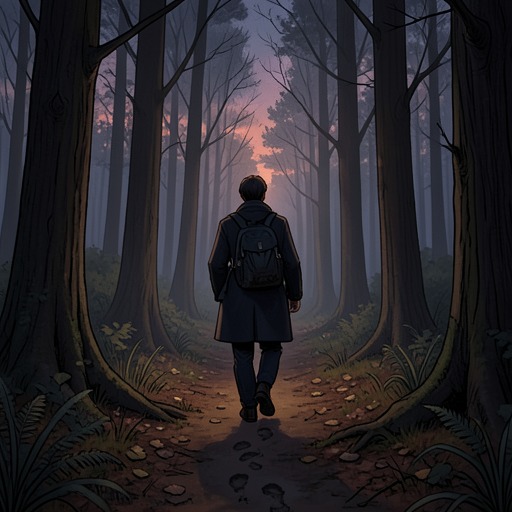
McCabe thought the children had been playing by the river and had followed it to the point where it emerged on the other side of the wood. They had made that long walk before. A small back road ran alongside that stretch of river, and McCabe imagined a passing driver seeing the children and trying to draw or drag them into a car. In this version, Adam Ryan resisted, escaped, and ran back into the wood, while the driver left with the other two children.
The circumstances of Adam’s discovery helped make this scenario possible without proving it. He had been with the other children that afternoon and was found in the wood a couple of hours into the search. He had no injuries, but there was blood in his shoes, he was badly shaken, and he could not remember what had happened. Kiernan treated Adam’s return to the wood as evidence that the attack must have occurred there or nearby. McCabe’s river-and-road hypothesis instead made the wood the place Adam returned to after escaping, while the other children were taken away.
McCabe spoke with Interpol and the British police in pursuit of the possibility that the person responsible had come from outside the area, but those contacts produced nothing useful. Cassie describes the suspect he imagined as a possible tourist, perhaps visiting from England for work. This idea addressed an unsettling feature of the inquiry: investigators had failed to identify a convincing suspect. A large investigative effort, including nearly a thousand questionnaires and hundreds of interviews, had accounted for local men’s movements and examined known offenders in south Dublin, yet each lead had ended without a viable suspect.
Disagreement with Kiernan and Unresolved Questions
Kiernan interpreted the absence of a suspect differently. He believed someone local had watched the children and might have concealed his role with a false alibi. He imagined an approach in or near Knocknaree, perhaps followed by an attack at a nearby house or in the wood itself. In his theory, Adam escaped and returned to the wood, while the attacker killed the other children and later hid or disposed of their bodies. McCabe, by contrast, thought the responsible person might never have been present long enough to come onto the investigators’ radar. Their difference is not simply about where the children were taken: it is about whether the search should have been looking for a local offender at all.
The possibility of abduction also complicates the claim that McCabe believed the children were murdered. Rob briefly groups McCabe with Kiernan as investigators who thought the children had been killed, but Cassie qualifies that impression: McCabe was not sure. She recalls that he considered a kidnapper who might have been mentally ill and desperately wanted children. The early possibility that the children had run away was also entertained, but, as Cassie points out, two twelve-year-olds without money would likely have been found within days. McCabe’s account therefore leaves several possibilities open—abduction, an outsider’s intervention, or death—without evidence sufficient to decide among them.
Narrative Significance
McCabe’s theories give shape to the old case’s failure without resolving it. The nearly exhaustive search and the lack of a credible suspect could support opposing conclusions: for Kiernan, the culprit may have been local and hidden by a false alibi; for McCabe, the culprit may have been a transient who was never available to find. The same absence of evidence thus becomes the ground for incompatible explanations.
His account also makes Adam’s unexplained return central to reconstruction. The blood in Adam’s shoes, his shaken condition, and his inability to remember the afternoon establish that he was found in the wood after the other children disappeared, but they do not establish whether he escaped an attacker there or returned after an encounter by the river. McCabe’s unresolved alternative keeps that distinction visible. In the later conversation, Sam O'Neill contrasts the old case with Katy Devlin’s murder, which required a meeting and a place where she could be kept; that comparison sharpens the contrast between a planned encounter and McCabe’s chance sighting by a passing driver. McCabe remains significant not as the source of a solution, but as the investigator whose competing hypothesis exposes how little the surviving clues can conclusively say.