Memory, repression, and trauma
In the WoodsMemory, repression, and trauma define the gap between Rob Ryan’s adult identity and the childhood episode that left him as the only child found alive in Knocknaree wood after Peter and Jamie disappeared. The gap is never a clean blank: physical evidence, involuntary reactions, and recovered fragments seem to approach an explanation, yet no stable account finally replaces what he cannot remember. The narrative treats recovery as partial and precarious, and its eventual reversal makes the limits of memory as consequential as its revelations.
The First Rupture
As a child, Rob was found standing against an oak tree, apparently unresponsive. His clothes preserved clues that could not settle what had happened: blood had soaked through his running shoes from the inside, while the socks showed a different pattern, and analysis could not establish whose blood it was. The evidence raised questions about the missing children and Rob’s time in the wood without supplying a remembered explanation. At the hospital he remained nearly catatonic, did not speak for two weeks, and later had no memory of the period between leaving home and being examined. His silence and the unexplained physical traces thus became two different forms of evidence, neither of them a narrative he could personally provide.
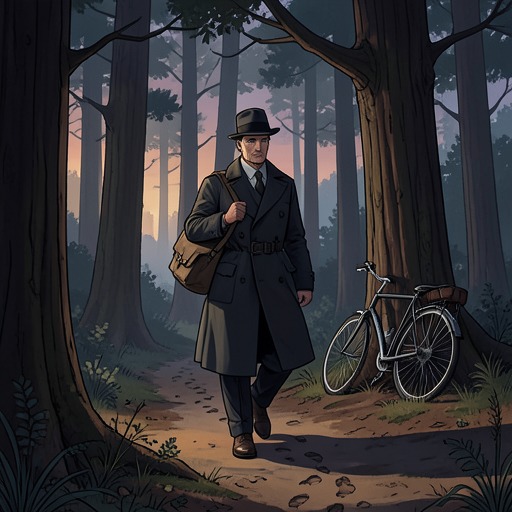
The loss persisted as the family’s life moved on. A few weeks after the disappearance, Rob went to boarding school in Wiltshire; his parents later settled in Leixlip, beyond Dublin. At school he dropped the name Adam and used his middle name, Rob, amid publicity that he feared would connect the child from Knocknaree to the detective he became. The change offered distance and privacy, but it did not restore the childhood years hidden behind the new name. The split between Adam and Rob gives the memory gap a visible counterpart in identity: the adult can know the public story of the child without experiencing it as a continuous personal past.
Secrecy and the Body’s Returns
Rob rarely told people about Knocknaree. His parents and Cassie Maddox knew, as did only a small number of others, while press coverage periodically brought Peter and Jamie’s disappearance back into view. He describes the effects as intermittent rather than as a constant, consciously felt affliction: he could go months without thinking about the case, yet an article could leave his hands shaking and his breathing difficult for a few minutes. Those involuntary reactions complicate his tendency to treat the past as remote. The memory may be inaccessible as a sequence of events while its effects remain legible in the body.
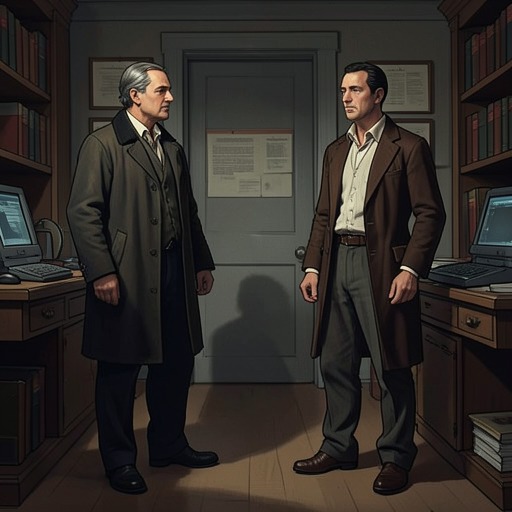
When Rob began working on a case that might connect to Knocknaree, he understood that he should disclose his history to O’Kelly. Doing so would almost certainly remove him from the investigation because police rules barred officers from working on cases in which they might be emotionally involved; it could also bring renewed questioning about the childhood disappearance. He chose not to disclose it. Earlier interviews had left him with a frightening impression of mental blankness, and detectives had returned repeatedly over the years without eliciting anything he could remember. The decision to keep silent therefore joined professional self-interest to an aversion to reopening an experience that had produced no usable account. Rob also recognizes that carrying an undisclosed secret through the case appealed to his ego and to his sense of himself as an enigmatic detective. His silence is not presented as purely involuntary: it is also a choice, made within constraints, that increases the personal stakes of the investigation.
Fragmentary Recovery
For the first time, the investigation prompts Rob to probe deliberately at the edge of his childhood memories. He walks alone for hours, often in the early morning after sleepless nights, and sometimes finds himself in unfamiliar parts of the city without recalling how he arrived. The process does not initially produce a continuous story. Instead, images come in rapid succession, and he learns to hold one briefly as it unfolds. Recovered scraps include a shopping trip for First Communion clothes, a private joke between the children, and details of school life. Their apparent ordinariness matters: each scrap feels momentous to someone who had regarded the first twelve years of his life as largely lost, but none by itself resolves the disappearance.
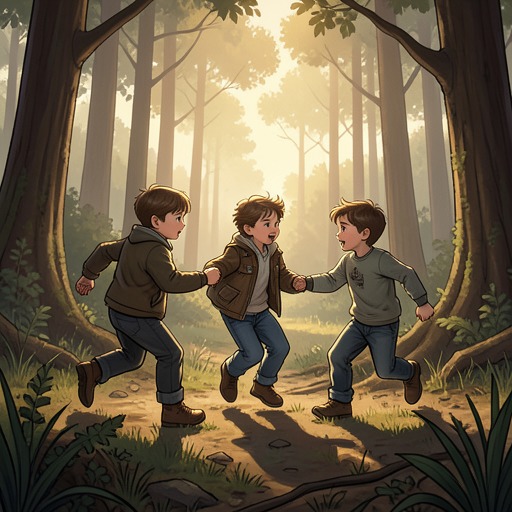
A more consequential memory returns abruptly at night, interrupting a fitful doze. It brings Rob back to the children moving cautiously through Knocknaree wood and seeing Sandra Scully being assaulted by older youths. The recovered scene changes the meaning of the children’s disappearance from an unexplained absence into an event Rob had witnessed, but the memory remains bound to fear and confusion rather than to a complete account. Later, as he tries to follow another thread toward the wood, he experiences the recollection as fragile and difficult to sustain; the effort is accompanied by a return of bodily distress and a sense of mental darkness. The narrative therefore distinguishes between a memory becoming available and its becoming fully knowable. Vividness does not guarantee completeness, and the fact of recollection does not restore command over it.
Loss Again and Narrative Significance
After the investigation, during months spent alone in his apartment, Rob turns back toward Knocknaree despite having resolved not to think about it. He then discovers that the recovered scenes have disappeared. Peter, Jamie, the wood, and the episode involving Sandra Scully feel like distant images from films or stories rather than experiences that belong to him. He fears that even these secondhand-seeming impressions will fade. One image remains: he and Peter lying in Peter’s front garden, trying unsuccessfully to make a periscope from an old comic’s instructions because they lack the proper cardboard tube. The surviving fragment is modest and incomplete, a friendship remembered through a failed childhood project rather than through a decisive revelation.
This second loss prevents recovery from functioning as a simple cure or a final return to the self. Rob can remember having remembered, while the scenes themselves have become estranged from him; he interprets that estrangement as connected to having forfeited his right to them, though the narrative does not establish that judgment as an objective explanation. The pattern of blankness, involuntary response, fragmentary return, and renewed erasure gives the subject its force. Memory is at once evidence and an unstable medium: it can disclose something previously inaccessible, but neither the recovered scene nor the identity built around it is guaranteed to last.