Rob Ryan’s lost memories
In the WoodsRob Ryan’s lost memories shape both his private identity and the limits of what he can know about the 1984 disappearance of Peter Savage and Jamie Rowan. The childhood he cannot recall returns during the Katy Devlin investigation in sensory fragments, including the sexual assault of Sandra Scully that he witnessed in Knocknaree wood. Yet the apparent breakthrough does not restore a continuous past: after he returns to the wood, the recovered scenes vanish, and only one small image remains.
The Missing Years and a Hidden Identity
After the events in Knocknaree, Rob lost access to most of his life before boarding school. The blank was not simply a lack of detail. During the first weeks after the disappearance, while detectives questioned him, his awareness seemed filled instead by white clouds drifting across a blue sky and wind moving through a vast stretch of grass. Their questions reached him as indistinct male voices, while the remembered scene itself was absent. He later described the gap as though his mind had been wiped clean and replaced by a test pattern.
The repeated questioning made the absence frightening in its own right. Detectives returned every few months during school holidays and later about once a year, but Rob had nothing to tell them. By the time he left school, they had stopped coming. He remembered the interviews as unsettling and became sullen and uncooperative when they resumed; he did not experience them as a process that could recover the missing day.
The loss also became something he kept deliberately private. His parents and Cassie Maddox knew, as did only a few people from his earlier life. At boarding school he stopped using Adam and began using his middle name, Rob. The name change helped separate the detective he became from the child identified in the publicity surrounding the disappearance. His silence had practical and personal motives: he expected invasive speculation about memories he did not possess, and he did not want the past to define how others understood him.
When a new case seemed possibly connected to the old one, Rob knew he should tell O'Kelly about his history. He chose not to. Police rules barred officers from investigating cases in which they might be emotionally involved, and disclosure could have removed him from the investigation while exposing him to questioning about the day in the wood. He also admitted that the secret appealed to his ego and to his idea of himself as an enigmatic, unconventional detective. The concealment therefore joined fear and self-protection to a romanticized sense of his own role.
Fragments Return During the Investigation
Rob’s first deliberate effort to approach the missing memories came during the Katy Devlin case. Unable to sleep on nights when he was not staying with Cassie, he walked for hours through the city in a near-trance. He sometimes came to himself beneath the neon sign of an unfamiliar shopping center or beside a Georgian house in Dun Laoghaire, with no recollection of how he had arrived. The walks were an attempt to listen for small traces at the edges of his mind, not a planned therapeutic process.
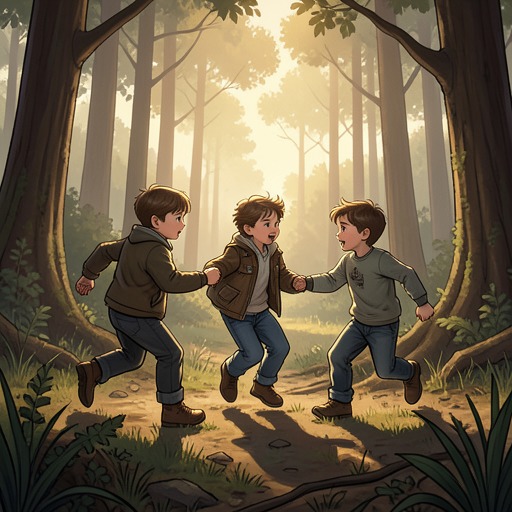
Images began to surface as disconnected scenes rather than a coherent account. Rob remembered his family going into town to buy First Communion clothes; Peter Savage and himself laughing as Jamie Rowan emerged from a dressing room in a dress she hated; and fragments of school life, including the worn wooden desk where generations of pupils had carved and written. He also recalled the local man known as Mad Mick and a disturbing story Peter had told about a girl who died in the wood. These scenes did not solve the case, but their ordinary specificity made their return feel powerful to someone accustomed to treating the first twelve years of his life as gone.
A more consequential image arrived abruptly in the night. Rob woke in bed with his heart pounding, after the photograph of Philomena Kavanagh had left him unsure whether an intrusive image was trivial or connected to a catastrophe buried in his memory. What came was neither explanation: he remembered Peter Savage and Jamie Rowan moving carefully through the undergrowth toward a clearing. From there, the scene opened onto the assault of Sandra Scully. Jonathan Devlin and his friends were holding her down; the boys’ approach had brought them within sight of the violence.
The recollection changed Rob’s understanding of why he had been found alone. He had avoided the possibility that the wood might return anything useful, but he concluded that he was the one person who could know at least part of what had happened to Peter and Jamie. The case had not made his memory reliable or complete; it had made the absence newly consequential, turning his own past into a possible source of answers.
Returning to Knocknaree Wood
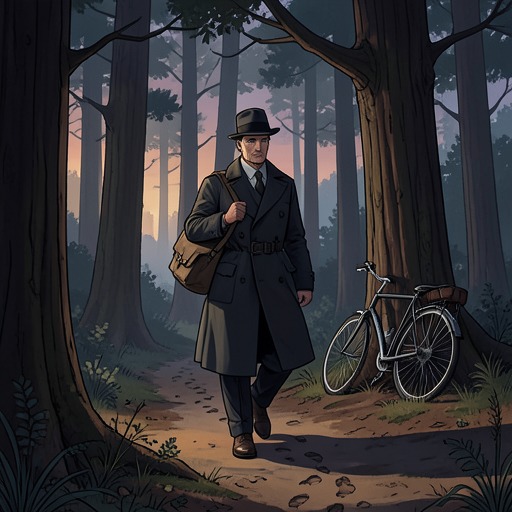
After deciding that the wood might unlock more of the past, Rob went there alone at night and stayed in a sleeping bag, hoping that being in the place would prompt a further memory. The landscape revived childhood recognition before it supplied certainty. He recalled running along faint trails, eating small crab apples from a twisted tree, and watching Jonathan Devlin and his friends assault Sandra at the edge of a clearing. He associated that part of the wood with Peter and Jamie’s disappearance, but could not establish the exact point at which they had vanished.
The night’s experience remained inseparable from exhaustion and fear. Rob had slept little, eaten less, and accumulated tension and vodka before going into the wood. As he tried to follow what he called a fragile thread of memory, he became rigid and drenched in sweat. A sound seemed to spread through the darkness; another scream came from elsewhere in the wood. His fear escalated into a flight through brambles and undergrowth, ending only when he reached the archaeological dig and then his Land Rover. Mud streaked his jeans, though he could not remember falling.
The episode did not provide a confirmed account of what happened to the missing children. Rob later acknowledged that the experience might have been a dream or hallucination, and that he had no way to decide between those explanations. Its vividness could not settle its status as a memory. The distinction matters: the night offered the force of a revelation while leaving its evidence uncertain, just as the recovered scenes themselves had arrived in flashes rather than a verifiable chronology.
Erasure and the Remaining Image
After that night, Rob began sleeping for twelve or thirteen hours at a time. The memories and their stranger effects stopped as abruptly as a light going out. At first he felt relief, convinced that anything connected with Knocknaree could only bring bad news. Only later, when he cautiously tried to reach the memories again and found nothing, did he understand the change as a possible irreversible loss rather than a deliverance.
During the months after the case, every scene he had recovered disappeared from his accessible past: Peter Savage, Jamie Rowan, the bikers, Sandra Scully, and the wood itself. Rob could remember what it had been like to remember them, but the scenes had become remote, like old films or stories told by someone else. He expected even those detached impressions to fade. The recovered past had briefly seemed to belong to him; afterward he felt that he had forfeited any right to it.
One image remained: a summer afternoon when Peter and Rob lay on the grass in Peter’s front garden, trying to make a periscope from instructions in an old comic. They could not ask their mothers for the cardboard tube they needed because they were not speaking to them, so they used rolled-up newspaper instead. It buckled, showing them only the sports page backwards. The small, imperfect memory stands apart from the violence and mystery surrounding Knocknaree: it preserves not an answer to the disappearance, but a fragment of shared childhood whose incompleteness is visible even within the image itself.
Narrative Significance
The memories function as both evidence and a limit on evidence. Their sensory detail can bring Rob close to events he had lost, but it cannot by itself guarantee that every image is complete, correctly placed, or even a recovered memory rather than a product of the night in the wood. His own account emphasizes that uncertainty, while the sequence of return and renewed erasure prevents recovery from becoming a simple resolution of the past.
The pattern also binds memory to identity. Rob’s adult name and professional life have been built partly around distance from the child called Adam, while the investigation makes that suppressed history newly relevant. The recovered images briefly collapse that distance, then withdraw again. What survives is not a full explanation of Peter Savage and Jamie Rowan’s disappearance but a single scene of companionship, leaving Rob with an enduring knowledge of loss and no dependable route back to the years that preceded it.