Adrienne gives birth to the twins
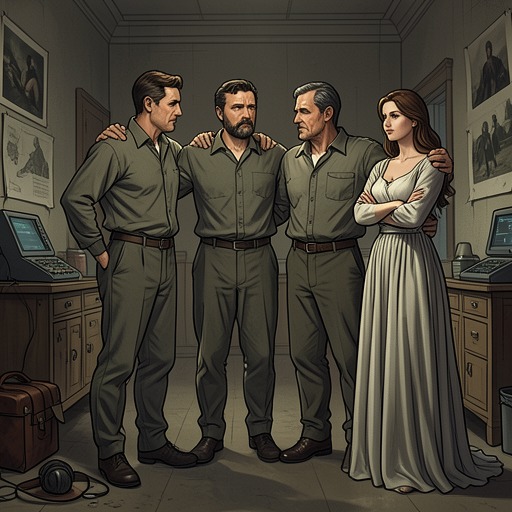
Insatiable Box Set: Books 1-4Adrienne gives birth to the twins is the decisive domestic and biological turning point of the cave episode: an isolated human woman delivers two male pups who embody the projected union of Adrienne and the Samsa werewolves. Wilder is away, but his preparations anticipate the birth, while Lycell’s panic and sudden tenderness reveal that the children alter not only Adrienne’s life but also the emotional and familial structure of the pack.
Causes and Circumstances
Adrienne’s labor follows the werewolf mating logic that Wilder had imposed on her from the beginning of her pregnancy. During the snowbound period, Wilder explained that she was the only nearby female and that werewolves recognized when a female was ready to conceive. He later insisted that she was his mate and that, because she was pregnant or would soon be pregnant with his pup, leaving was dangerous; he also claimed that the Ari Kara clan might send an assassin against the child because the child would be his heir. Pregnancy therefore appears simultaneously as a bodily condition, a source of danger, and a political fact within werewolf society.
The pregnancy is also placed against Adrienne’s human medical history. A year earlier, after an assault involving Paul’s fraternity brothers, a doctor had told Adrienne, her parents, and Paul that she could never have children. Her delivery of twins consequently overturns the human diagnosis that had defined her reproductive future. The birth does not erase the violence and secrecy surrounding that earlier trauma, but it sharply contrasts the doctor’s verdict with the werewolves’ insistence that her body can bear pups and sustain the Samsa line.
Wilder’s conduct before leaving the cave shows that he expected more than one child. He had prepared a large chest containing clothing for Adrienne and the babies or pups, along with milk bottles. His planning becomes legible only after the delivery: what Adrienne had interpreted as unexplained supplies proves to have been practical preparation by a mate who had no doubt that she was pregnant and would have multiple babies.
Labor in Wilder’s Absence
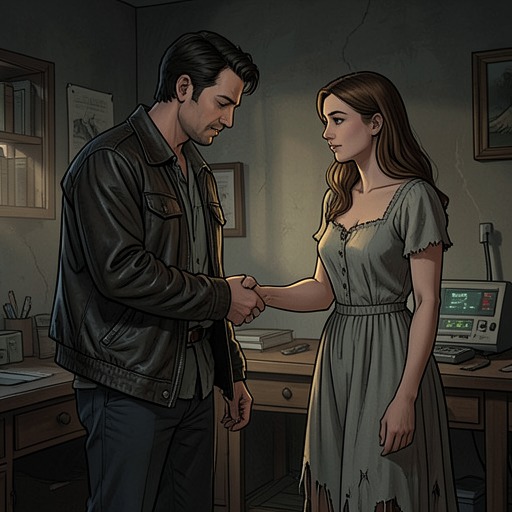
Lycell is beside Adrienne when the labor begins. He has just been telling her that she will have her babies soon and that he will leave the cave until everything is over. Adrienne, frightened by the prospect of being left without Wilder, takes Lycell’s hand and asks him not to go because she does not know what to do. His attempt to comfort her is awkward: he falls back on the idea that giving birth is simply what females do, while the scene exposes how little he understands about human childbirth.
The immediate onset of labor interrupts the sexualized tension between them. Lycell leans toward Adrienne and kisses her, but she suddenly screams. At first he assumes that he has offended her and moves away. Adrienne then clarifies that the baby, or pup, is coming. Her words convert the encounter from seduction to emergency and force Lycell to confront a role for which he has no preparation.
Lycell panics rather than behaving like the composed Alpha figures who govern the pack. When Adrienne tells him to obtain string and scissors or a sharp knife, he rushes toward the kitchen, retrieves string and a sharp knife, and then stands uncertainly, unable to understand how the situation has become his responsibility. He reflects that he is not human but only half human, yet he is acting like a man whose wife is in labor. He also blames Wilder for the circumstances and wonders why Wilder is not there to handle what he has caused. A loud cry finally sends him back to Adrienne, and the silence that follows drives him to return and help.
Birth and Immediate Care
Adrienne is found lying with two infants in her arms. Their later transformation into werewolves is not yet visible; at first she can hardly distinguish their future wolf nature from their present human appearance. The twins therefore arrive as both babies and pups, occupying the unstable boundary between human and werewolf identity that governs Adrienne’s new family.
Lycell drops to his knees at the sight of Adrienne holding the infants close. His first response is practical. He is told to cut the cords, and he runs for water, clean clothes, and blankets. He retrieves the supplies Wilder had placed in the chest, including clothing for Adrienne, clothing for the babies, and milk bottles. The cave, previously a site of confinement, mating, and uncertainty, becomes a makeshift maternity room through the combined foresight of Wilder and the improvised labor of Lycell.
Adrienne explains the bottles to Lycell and identifies Wilder’s intention: Wilder knew that she would have more than one baby. This realization gives the absent Wilder a presence in the scene. His preparation becomes a form of care that reaches across his absence, while Lycell’s confusion emphasizes the difference between possessing werewolf knowledge and understanding the material demands of birth.
Lycell takes the pups from Adrienne and recognizes that both are male. His excitement marks the children as more than dependents; they are sons and future members of the pack. The birth thus fulfills the reproductive purpose that had been repeatedly attached to Adrienne, but it also gives that purpose concrete form: two male children now exist, requiring warmth, cleaning, clothing, and feeding rather than merely serving as an imagined heir or continuation of the bloodline.
Lycell’s Bond and the Family’s Formation
The delivery changes Lycell’s relation to Adrienne. Before the birth, he had threatened her, claiming that he might take and defile her, frighten her into silence, and then send her back to human society carrying a pup that humans would not accept. His threat treated pregnancy as leverage and Adrienne as a vulnerable female within a coercive hierarchy. During the delivery, however, fear of losing her defeats that posture. He fights for her, panics when she cries out, and becomes absorbed in keeping her and the newborns warm and clean.
After seeing Adrienne with the twins, Lycell’s heart softens and his smile broadens. He recognizes a bond tying him to this human woman, imagining that she will one day bear his pups as well. The birth therefore does not make Lycell the biological father of these twins, but it places him inside the family future that their arrival represents. His emotional response converts the children from Wilder’s offspring into evidence of a broader Samsa household.
The event also intensifies the dispute over Adrienne’s marital and reproductive status. Wilder later kneels before her and asks what he must do to obtain forgiveness. Adrienne insists that she be addressed by her name, Adrienne Ward, rather than as merely a female, and declares that she wants to be married to Wilder, Lycell, and Drayton. When the brothers debate the arrangement, Wilder asserts that he is the Alpha male and that Adrienne is his mate, while Lycell argues that because she is having his pups she should belong to him. The twins’ birth thus feeds directly into competing claims of authority, affection, and succession.
Adrienne’s insistence on marriage complicates the reproductive script imposed on her. The werewolf order repeatedly defines females through conception, childbirth, and service to male pack interests; Mena’s history makes that structure explicit, since werefemale lives are described as dependent on Alpha goodness and their worth as tied to giving birth. Adrienne resists being reduced to that title. Her demand for marriage to all three Samsa brothers makes her reproductive role part of a negotiated household rather than a silent submission to one Alpha’s claim.
Consequences and Narrative Significance
The twins’ arrival confirms that Adrienne’s relationship with the Samsa brothers has crossed from dangerous courtship into irreversible family formation. Wilder’s earlier warning that she could not leave while pregnant becomes newly consequential: there are now two children whose safety, identity, and allegiance connect her to the pack. The birth also makes the threat from rival groups more concrete, because the children are linked to Wilder’s inheritance and to the survival of the Samsa line.
The scene establishes a contrast between human and werewolf systems of knowledge. Human medicine had defined Adrienne as permanently unable to have children, while werewolf bodily knowledge identified her fertility and anticipated the twins. Yet the werewolves are not uniformly competent caregivers: Lycell knows the reproductive customs of his people but does not know what to do during labor. Wilder’s practical preparations and Adrienne’s own instructions bridge that gap. Birth is therefore narrated not as a purely natural act but as a crisis in which diagnosis, custom, bodily experience, and care compete to define what Adrienne’s body means.
The two infants also crystallize the novel’s human-werewolf integration. They are born to a human mother, are recognized as male pups by Lycell, and are expected eventually to become werewolves. Their bodies promise a family that is neither wholly human nor wholly wolf. The final image of the cave is consequently not only a conclusion to a pregnancy but a declaration that the Samsa werewolves will have a pack and a family built through Adrienne’s children.
The birth’s deepest reversal lies in Lycell himself. He begins the surrounding episodes as a threatening brother who claims the power to intimidate Adrienne, yet ends the delivery kneeling before her, carrying water and blankets, and confronting the prospect of losing both her and the future he imagines with her. The newborn twins expose the limits of the old hierarchy: even a werewolf who speaks in the language of possession can be remade, however incompletely, by the demands of care.