Human-Werewolf Breeding Strategy
Insatiable Box Set: Books 1-4Human-Werewolf Breeding Strategy is the effort to answer werewolf population decline by relying on human women’s fertility. It is at once a response to a crisis and a system of power: the Samsa family seeks to preserve its pack without abducting women, while rival werewolves treat fertile women as reproductive resources to be seized and controlled. The contrast makes consent, kinship, and political survival inseparable.
The demographic crisis and the Samsa response
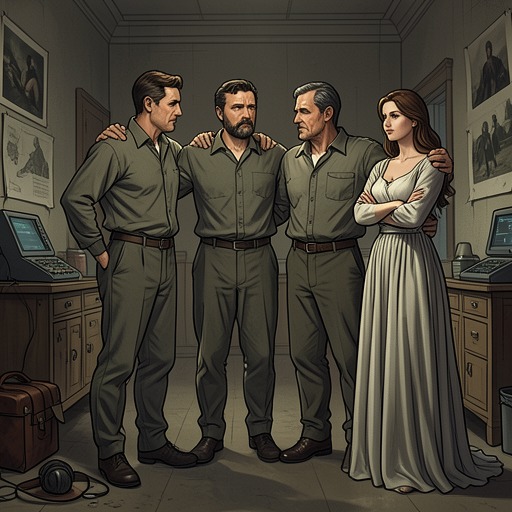
Wilder’s strategy begins with the scarcity of fertile Werefemales. He wants a family but has not found a compatible werewolf female, and most Werefemales are sterile. Because Wilder, Drayton, and Lycell are triplet Alphas bound by a pact to remain together and share control of their inherited territory, his choice of a mate is not solely private. The woman must accept his brothers, and the brothers agree to accept the woman Wilder selects. Their arrangement links reproduction to the family’s unity and the succession of its leadership: if Wilder dies, the next brother in line is to take and marry his mate.
Wilder’s response is distinguished by a boundary he refuses to cross. He convenes a council to address the clan’s breeding shortage, but will not bring human females into the pack by capturing them. He fears that kidnapping women would expose the werewolves to human retaliation and destruction. Instead, he hopes that money and the prospect of meeting handsome brothers will attract women willing to mate with them. Some women join other pack members, while Wilder waits for the woman he considers right. His policy therefore does not remove the pressure to reproduce; it attempts to pursue that goal without making abduction the method.
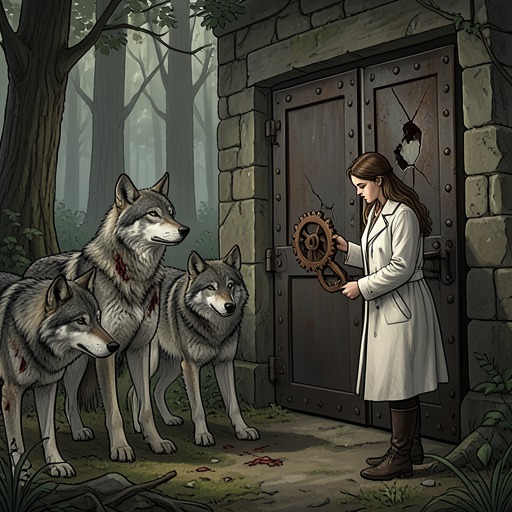
That ideal is strained when Wilder finds Adrienne Ward alone in the wilderness. He tells her that he will soon need to mate and that, because of the snow, she is the only female nearby. Later, he explains that he has chosen not to capture human women even as the packs he polices dwindle. The contrast between his stated refusal of abduction and his immediate pursuit of Adrienne exposes a central tension in the strategy: a policy meant to protect human women operates alongside a powerful pack system in which reproduction, mate selection, and inheritance are tightly connected.
Mating, marriage, and the limits of consent
The Samsa arrangement is presented as a family pact, but the story repeatedly tests what consent means within it. Wilder tells Adrienne Ward that she is not his prey or captive and can come and go, yet also says that if she is pregnant with his pup she cannot take the child with her. He invokes the danger that the Ari Kara clan might discover the heir and send someone to assassinate it. His explanation frames restriction as protection, but also makes the child’s safety and future a source of control over Adrienne’s choices.
The brothers do not respond to Adrienne Ward as interchangeable participants in a shared plan. Drayton says he can control his desire, while warning her that Lycell has never been with a female and reacts strongly to the scent of a human woman. Lycell, in turn, threatens to force himself on her and send her home with a pup. These differences matter: an agreement among the brothers does not itself guarantee that the woman at the center of it is safe or consenting. The breeding strategy’s family rules coexist with individual conduct that can undermine them.
Adrienne Ward eventually asserts a more explicit claim to choice. When Wilder asks her what she wants, she demands an apology for being addressed merely as a female and states that her name is Adrienne Ward. She then says she wants to marry Wilder, Lycell, and Drayton. Her request makes marriage a form in which she can name the relationship she is accepting; it is not simply the silent fulfilment of the brothers’ original pact. Wilder asserts that he is the Alpha male and will marry her, while Lycell argues that Adrienne Ward should decide whom she prefers. The disagreement shows how the same reproductive arrangement can be described as Alpha authority, pack necessity, or a woman’s decision—and how those claims do not automatically agree.
Fertility as medicine and alliance
Mena’s story shows another route through the crisis. Her father intends to marry her to Drayton as an alliance between powerful Alphas, but she falls in love with Robert, a human doctor who comes to her pack. Her father allows Robert to remain because the diminishing pack needs his care. Rather than focus on solving the mystery of the Werefemales’ sterility, Robert develops a serum intended to counteract and reverse it. He finds a way to prevent future females from becoming sterile, although he expects side effects and does not know what form they will take. Mena is happy to discover that she is pregnant; the evidence does not establish the full safety or effects of the treatment.
This marriage changes the terms of the breeding plan. Wilder later tells Robert that he sanctions Robert and Mena’s marriage and welcomes him to remain as the pack doctor. He connects that approval to the prospect of Drayton and Adrienne Ward marrying, placing two relationships within the same political settlement. The pairings are not equivalent: Mena’s marriage to Robert grows from her love for him despite her father’s earlier arrangement, while Drayton is later told that he must mate with Mena to prevent war. Wilder says the decision is about keeping the werewolves from war, not love. Reproduction and marriage thus serve both personal attachment and alliance, but political necessity can also override the feelings of those expected to fulfil it.
The potential scale of the Samsa family’s growth makes these intimate arrangements a matter of inter-pack power. Wilder learns that Bane’s Oregon pack has heard that the Samsa brothers have impregnated a human female. A beta warns that rival packs may try to kill Adrienne Ward because she is human and young and fertile. If Drayton also gets her pregnant, the Samsa Pack could reach as many as twenty fighting males, a demographic change said to secure its dominance across North America and Europe for years. Her fertility is therefore treated not just as the means to produce children but as a strategic advantage capable of provoking violence.
Rival practices and the cost of survival
Lycell’s account of werewolf history places the strategy in a broader conflict over survival. Speaking to Robert, he argues that humans hunted werewolves, poisoned their water, and injured them with traps, driving them toward extinction. He presents mating with human females as the werewolves’ response to that danger and insists that they had to create their own laws while living among humans. His argument explains the pack’s sense of reproductive urgency, but it does not settle the question of whether practices imposed on women are justified by collective survival.
The rival packs make the danger explicit. Their members have few fertile females and, when they find one, pass her among young and old werewolves in the hope of impregnating her, continuing until she is used up. In Bane’s group, Mena is told that she and her pups will not be killed if she behaves, that there are plans for her, and that she is being sent back to Alaska; Adrienne Ward, by contrast, is called fair game. The separation exposes how fertility can determine both a captive’s treatment and her assigned destination. Bane’s men speak of keeping Mena safe while exercising control over her movement, and their assurances do not erase the threat surrounding her and her pregnancy.
Adrienne Ward’s captivity also reveals how the breeding logic enters a person’s own understanding of her worth. Alone with Bane, she fears that the Samsa brothers may not come for her because they have already obtained the pups they wanted to strengthen their pack. Her immediate purpose becomes staying alive and protecting Drayton’s pups. That fear is not proof that the brothers have abandoned her; it is evidence of how thoroughly the reproductive bargain has shaped what she believes she is worth to them. Bane, for his part, recognizes the underlying demographic motive: because most Werefemales are sterile, werewolves must tolerate the trouble and resistance of human females if their species is to survive.
The strategy therefore never remains a private solution to infertility. Across the Samsa family’s shared-mate pact, Robert’s fertility treatment, the marriage negotiations, and Bane’s coercive practices, children become heirs, evidence of alliance, and measures of pack strength. The story’s sharpest distinction is not between reproduction and politics, since the two are consistently intertwined, but between different ways of pursuing survival—and the freedom, safety, and bodily autonomy left to the women expected to secure it.