Samsa Brothers Ranch
Insatiable Box Set: Books 1-4Samsa Brothers’ Ranch is the decisive threshold between Adrienne’s isolation in the wilderness and her incorporation into the Samsa brothers’ hidden werewolf household. First glimpsed from a distance as a vast, fenced estate beneath a mountain range, it promises water, shelter, and food while also warning of dogs, wolves, and an unfamiliar social order. When Adrienne finally crosses its boundary, the ranch does not merely save her life: it places her inside Wilder’s family, its laws, its secrecy, and its contested plans for marriage and reproduction.
Setting and Physical Boundaries
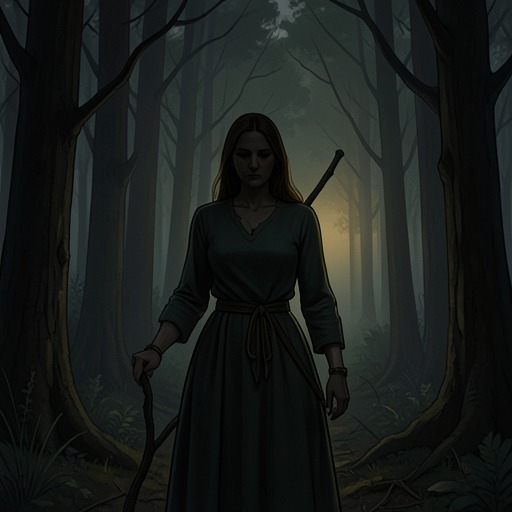
Samsa Brothers’ Ranch first appears as a distant possibility during Adrienne’s exhaustion and hunger. From the forest, she sees a huge white fence stretching for miles, a house backed against the mountains, and tall pine trees concealing the building from visitors. The scale of the property makes reaching it a serious decision: without food, the journey could take days, and the mountain, possible dogs, and uncertainty over whether the house is occupied all make the estate as threatening as it is attractive. Its physical design therefore establishes the ranch as a protected and hidden territory rather than an ordinary farmhouse. Adrienne’s approach confirms that impression. After hearing rushing water and encountering a large wounded white wolf, she continues through thick brush until she finds the sign identifying Samsa Brothers’ Ranch. The warning to beware of large dogs and watch out for wolves does not deter her; escape from Wilder’s cave matters more to her than the danger announced at the gate. She climbs the fence and lands safely, with her former gymnastics and the physical conditioning acquired during her month with Wilder making the leap possible.
Adrienne’s Arrival
Once inside the grounds, Adrienne sees the ranch as an enormous working estate. The house is large enough to accommodate five families, and a swimming pool stands to one side. Near the stable, two men prepare horses while three exceptionally large German Shepherds surround Adrienne, barking and displaying their teeth. The dogs expose her presence, bringing the men toward her, but they also mark the ranch’s first line of defense against intruders and predators. The men are Lycell and Drayton. Adrienne identifies herself, but exhaustion overcomes her before she can do more than raise a hand in greeting. Lycell catches her, carries her into the house, and places her in the master bedroom. Her movement from the wilderness into the bedroom changes the immediate value of the ranch from exposed danger to physical shelter, although the relief is unstable because Lycell recognizes her as Wilder’s female rather than as an independent stranger.
Household and Werewolf Territory
Lycell’s response reveals that the ranch is governed by the Samsa brothers’ internal hierarchy. He tells Drayton that they must wait for Wilder, who will decide whether Adrienne is the right choice for them. Drayton begins preparing the house for a woman, instructs the cook to prepare a feast, and anticipates a wedding. The estate is thus both a working ranch and the headquarters of a family arrangement in which Adrienne’s arrival has immediate consequences for the brothers’ future. The household staff also demonstrates the ranch’s secrecy. The cook and maid have served the family since Wilder, Drayton, and Lycell were born, and they are sworn never to reveal that the father and his sons are werewolves. The cook helped deliver the triplets, while the ranch’s domestic labor has long been organized around the Samsa family’s concealed identity. Adrienne’s presence therefore interrupts an established secret community rather than entering a conventional human home. The property contains more than the main house. Drayton later leads Adrienne through firs and evergreens, past his mother’s flower garden and a stream, while a river runs eastward through Samsa land. A small redwood house with white trim stands on a hill, and the surrounding stables, horses, forest, water, and mountain terrain give the ranch a self-contained ecology. The brothers’ lives are connected to riding, ranch work, hunting, and the sensory world of wolves, even as the estate presents a cultivated domestic face.
Conflict, Courtship, and Law
The ranch becomes the principal arena in which Adrienne’s autonomy collides with the Samsa brothers’ customs. Wilder insists that Adrienne is his mate and that he will marry her, while Drayton argues that she should decide whom she wants to marry. Lycell claims that because she is carrying his pups, he should be the one to marry her. These competing assertions turn the house into a political space where love, possession, inheritance, and pack survival are debated together. Adrienne’s pregnancy intensifies the conflict. Wilder tells her that she is free to come and go, but that she cannot take the child if she leaves because the pup would be endangered and may become his heir. His statement presents the ranch as protective sanctuary and controlling institution at once. The brothers’ reproductive arrangement is explained as a response to a wider crisis: most werefemales are sterile, and Wilder has refused to capture human women because he fears that abductions would expose the clans to human hunters and destruction. The ranch is consequently a proposed solution to werewolf population decline, with Adrienne placed at its center. The brothers’ relationship with Adrienne remains disputed even after she reaches the estate. Lycell’s jealousy becomes visible when he rides a black stallion past Adrienne and Drayton at reckless speed, nearly causing her to fall before he regains control of the horse. Drayton interprets the behavior as jealousy over his walk with Adrienne. The ranch’s paths and gardens thus become spaces where sibling rivalry, desire, and the expectation of shared mating are made visible.
Refuge, Surveillance, and Narrative Significance
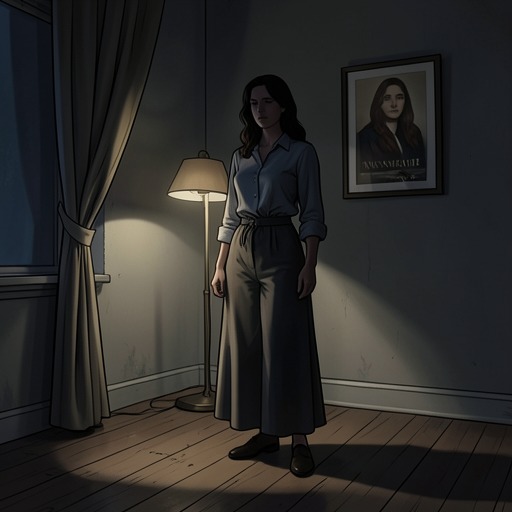
Adrienne does not experience the ranch as a secure home without qualification. Although she loves Wilder and wants to remain with him, she repeatedly regards the estate as a den of wolves and plans to leave when she has recovered. A newspaper found in the bedroom reports that Adrienne Ward has disappeared, that she is presumed dead after a month of searching, and that her car has been recovered while her body remains missing. The report confirms that the ranch is cut off from the human world and that her survival there has become a form of presumed death outside its boundaries. The ranch also stands in contrast to Wilder’s cave. The cave offered immediate shelter but embodied confinement, pregnancy, and the demand that Adrienne accept the brothers as mates. The ranch appears larger, more cultivated, and more socially organized, yet its fences, dogs, secrecy, and marriage plans create their own system of control. Adrienne’s entrance therefore shifts her from wilderness prey to a protected but contested member of a hidden community. As a recurring location, Samsa Brothers’ Ranch concentrates the novel’s central tensions between human law and werewolf law, individual choice and pack necessity, and domestic life and animal territoriality. It is where the brothers’ hidden identity is maintained, where Adrienne’s relationship to Wilder becomes a matter for family governance, and where the future of the Samsa pack is imagined through marriage and children. Its white fence suggests order and protection, but the warnings at its boundary and the disputes within its house reveal that belonging there always carries a cost.