Drayton–Mena relationship
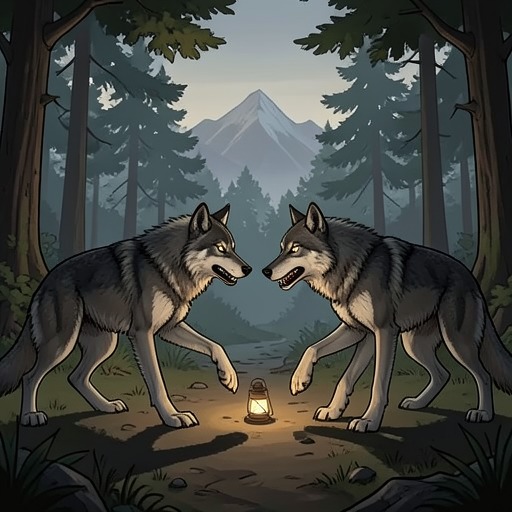
Insatiable Box Set: Books 1-4The Drayton–Mena relationship is a proposed political marriage shaped by a dispute over pack authority, a shortage of breeding females, and the threat of war. Drayton accepts the assignment as a duty rather than an act of love, while Mena says plainly that she does not love him and loves Robert. The arrangement’s decisive turn comes when Wilder chooses to recognize Mena’s relationship with Robert and sanctions their marriage conditionally, transforming a forced alliance into a negotiated alternative.
Political origins
The dispute begins with Ramsey accusing Wilder of breaking a promise concerning Mena. Ramsey says Wilder had promised that Mena would marry one of the Samsa brothers, but had sent her back at Adrienne’s insistence. He treats this as an injury to his daughter’s standing and argues that no one will mate with her now. His complaint is not only personal: he challenges the brothers’ authority to let a human woman influence their laws.
Wilder resists Ramsey’s attempt to dictate terms in his own home. He says that he did not dishonor Mena, and points out that his brothers hold Alpha status equal to his within their pack. The confrontation takes place under a full moon, when the wolves’ heightened tempers make internal fighting especially dangerous. Lycell steps between them and offers to accept responsibility, asking what he can do to prevent a war. Ramsey’s answer is that Lycell must mate with Mena and give her status in his pack. Adrienne objects, though the immediate exchange does not resolve the dispute.
A marriage assigned as duty
The proposed match shifts to Drayton when Wilder tells him that he will have to mate with Mena. Drayton’s first response is that he does not love her. Wilder answers that love is not the issue: the marriage is intended to prevent conflict among the werewolves, who are not strong enough to fight the combined Oregon and Alaska packs. In this negotiation, Drayton is being asked to serve as a political and reproductive instrument, not to pursue a personal bond.
That demand sits within a wider pressure on the Samsa brothers. They are triplets, all Alpha wolves, and have sworn to remain together rather than displace one another. Wilder’s stated breeding policy also reflects the scarcity of fertile Werefemales: the pack needs pups, but he has refused to capture human women, fearing that kidnappings would bring human retaliation and destroy the clan. The marriage proposal therefore links Mena’s status to the pack’s security, even as the story shows how such collective calculations can disregard the wishes of the people expected to fulfill them.
Mena, Drayton, and Robert
Mena rejects the premise that she and Drayton share a romantic attachment. Speaking with Drayton while holding Robert’s hand, she tells him that neither of them loves the other. Drayton recognizes the affection between Mena and Robert and asks what they have not yet told him and Ramsey. Robert then explains that they are in love, want to marry each other, and want Drayton to take them back to his ranch.
Drayton does not respond by claiming Mena as a beloved partner. He describes the proposed mating as his duty and continues to treat the matter as a political obligation. When he later returns, he gives two reasons: Adrienne and the fact that Mena loves Robert. That explanation makes the relationship’s imbalance explicit. The political arrangement binds Drayton to a role, while Mena’s emotional commitment is directed elsewhere; Robert’s presence turns what might have remained a private objection into a concrete alternative.
Terms of the alternative
Mena does not simply leave the werewolf customs behind when she asks to be with Robert. She explains that their union still requires a ceremony and celebration, vows, and mating according to the laws of the relevant pack. She also specifies the sequence: after the ceremony, the couple must return to a cabin and mate. Her account shows that choosing Robert does not remove the institutional conditions attached to marriage; it changes who is to enter the union and on what basis.
Wilder ultimately tells Mena and Robert that he sanctions their marriage, but places it after the marriages of Drayton and Adrienne. He also welcomes Robert to remain as the pack’s doctor. His approval is tied to the wider political crisis: he says Ramsey will not retaliate if Wilder can reach Oregon with his sons and stop the uprising. Robert’s ability to travel with Devin is discussed as part of that plan, with Robert estimating that Devin will be able to travel in two weeks. The resolution is therefore conditional and practical, not a simple declaration that the conflict has vanished.
Significance and outcome
The relationship’s course moves from a promise disputed by Ramsey, through a proposed mating assigned by Wilder, to a conditional recognition of Mena’s love for Robert. Drayton’s lack of love and Mena’s declaration that she loves someone else distinguish this arrangement from a mutual romance. At the same time, the proposed ceremony and mating rules show that personal choice must still be negotiated within werewolf law and pack politics.
The available account establishes Wilder’s sanction and the intended order of the marriages, but does not establish that Drayton and Mena marry or mate. Nor does it confirm that Mena and Robert’s planned ceremony takes place. The relationship thus ends as a resolved decision about whom Mena may marry, but with its practical fulfillment still dependent on political developments and the stated conditions.