Lycell hosts a werewolf dating party
Insatiable Box Set: Books 1-4Lycell hosts a werewolf dating party at the Samsa ranch, presenting it as entertainment while using it to bring human women and visiting werewolves into the same social space. The gathering is meant to attract potential human wives for wealthy Alpha males, but its timing and unregulated guests make it dangerous: Adrienne Ward is pregnant with Wilder’s pup, rival Alphas resent Wilder’s control, and unfamiliar werewolves may lose control if alcohol triggers transformation. The party therefore becomes more than a celebration of Lycell; it exposes the political, sexual, and reproductive systems underlying Samsa society.
Causes and Social Purpose
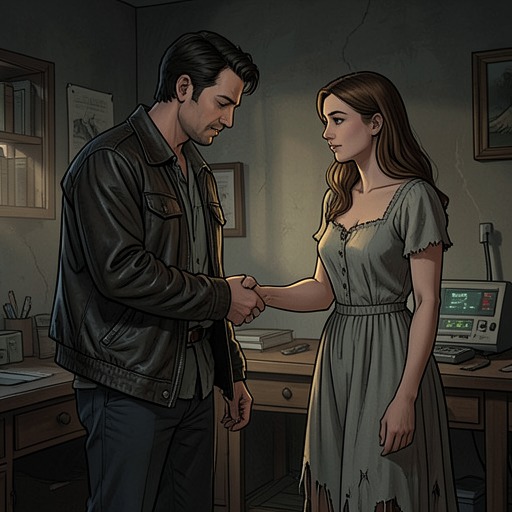
Lycell’s immediate reason for arranging the party is personal frustration. He is captivated by Adrienne but has no accepted way to approach her. He admits that he is accustomed to human women submitting to his sexual demands without requiring courtesy, questions, or emotional effort. Adrienne’s resistance unsettles him: she frustrates and angers him precisely because she does not fit the role he expects women to perform. Instead of learning to address her as an individual, he turns toward a familiar environment of sexual availability, inviting women to distract him from his fixation.
The party also belongs to a broader Samsa strategy of human-werewolf integration and reproduction. The Samsa family protects the surrounding area, supports local businesses with its money, and helps create employment, while some townspeople know the family’s identity. Other human women are brought to the ranch by friends who hope they will marry Alpha werewolves. The event thus functions as a matchmaking institution: human women are displayed within a wealthy werewolf household, and marriage offers them extraordinary material security. Drayton explains that the family inherited billions from its father and that a woman who married the brothers, together with her pups, could become wealthy beyond her expectations.
Preparation and Rising Danger
The party is announced to Adrienne after Drayton observes that her morning sickness has ended. The cooks have gone into town to purchase extra food, and Lycell expects a large gathering that night. Drayton, however, makes clear that Lycell invited a visiting pack from Oregon without Wilder’s approval. The arrival of those guests is especially reckless because the event coincides with the beginning of the new moon, when a house filled with human women and unfamiliar werewolves may become volatile.
Drayton identifies the specific danger: an intoxicated guest might transform into a wolf. The risk is not merely embarrassment or a breach of etiquette. A transformed werewolf among human women could cause injury, expose the family’s secret, or provoke a conflict that Lycell cannot contain. Drayton warns that Wilder will not approve, and he refuses to be associated with Lycell’s reckless parties because his priority is caring for Adrienne. Lycell acknowledges that he needs Drayton nearby, but Drayton’s refusal leaves the organizer responsible for the consequences of his own decision.
The danger is heightened by Adrienne’s pregnancy. Drayton tells her that she cannot attend because the party will be wild, with drinking and women seeking rich husbands. More seriously, visiting Alpha males may harm her if they see or smell that she is pregnant. The threat comes from the political resentment surrounding Wilder: not every neighboring Alpha accepts his authority, and Adrienne’s pregnancy identifies her as Wilder’s mate and the bearer of his heir. Her body becomes a visible sign of succession, making a matchmaking party a potential arena for rivalry.
The Gathering at the Ranch
When Drayton and Adrienne return from town, twenty cars follow them and park in front of the house, while additional vehicles fill the grass in rows. The sounds of shouting, laughter, screaming, and horses being ridden around the track convey a gathering that has escaped the scale of a private family celebration. Lycell is seen laughing with the young woman from the makeup counter, an image that links the public social event to the recruitment of human women who are aware, or partly aware, of the Samsa family’s status.
The party’s atmosphere contrasts sharply with the careful secrecy required by werewolf coexistence. The family can maintain influence in the surrounding human community because it provides protection and economic support, but the ranch gathering brings many outsiders into close contact with werewolves, wealth, alcohol, sexuality, and the physical signs of transformation. The event therefore concentrates the conditions under which secrecy could fail. The guests’ sheer number also makes individual control difficult, particularly when Lycell has not consulted Wilder and Drayton cannot remain to supervise him.
Lycell’s conduct further unsettles the boundary between courtship and coercion. His earlier threat toward Adrienne shows that he understands sexual access as something a powerful werewolf can seize, while Drayton’s warning that the party will not make Adrienne like Lycell exposes the gap between Lycell’s assumptions and her insistence on recognition and consent. His attempt to surround himself with women who are expected to seek Alpha husbands does not resolve his attraction to Adrienne; it dramatizes his inability to treat desire as separate from dominance.
Conflict with Adrienne’s Choices
The party contributes to Adrienne’s demand that the brothers address her as a person rather than as a generic female. When Wilder later begs for her forgiveness, she requires him to use her name, Adrienne Ward, and declares that she wants marriage to Wilder, Lycell, and Drayton. Her demand transforms the question of mating from an arrangement imposed by Alpha custom into a choice articulated by the human woman at its center.
That choice also exposes the limits of the brothers’ competing claims. Wilder asserts that he is the Alpha male and that Adrienne is his mate, while Lycell argues that because she is carrying his pups, he should be the one to determine her future. The party has already revealed the logic behind those claims: women are treated as potential wives, mothers, and reproductive resources within a system organized by Alpha power. Adrienne’s insistence on marriage to all three brothers does not simply accept that system; it redirects it through her own stated preference.
The contrast with Mena clarifies the event’s gender politics. Werefemale life is described as dependent on male Alpha authority, with a woman’s value tied to bearing pups and her marriage commonly arranged by her father. Adrienne’s refusal to let Drayton decide where she will go demonstrates a different model of female agency. Mena, meanwhile, has moved from being promised to powerful Alphas toward a marriage with Robert based on love, and she recognizes that human women can act independently. The party’s matchmaking purpose thus sits uneasily beside the novel’s repeated insistence that women can resist, choose, and redefine the bonds that govern them.
Consequences and Narrative Significance
Lycell’s party makes the Samsa family’s hidden social order visible. It combines enormous wealth, human economic dependence, Alpha hierarchy, arranged reproductive expectations, and the danger of werewolf transformation in one crowded setting. What Lycell imagines as private amusement becomes an unauthorized political gathering involving Oregon werewolves, human marriage prospects, and a pregnant woman whose existence threatens rival packs.
Its deeper consequence is to sharpen the conflict between werewolf law and Adrienne’s human understanding of autonomy. Wilder insists that a mate and her unborn pup fall under werewolf obligations, while Adrienne repeatedly resists being treated as captive property. Later, Wilder explains that werewolf law has been internalized across generations and that he must enforce it as head of a pack extending across the Americas to Russia. The party anticipates this larger legal struggle: the same customs that promise protection for a pregnant mate can also be used to restrict her movement, define her reproductive role, and justify competing claims over her.
The event also foreshadows the later rivalry over Adrienne. Bane’s abduction of an Alpha’s mate is treated by Wilder as a violation requiring punishment, and Bane’s fixation on mating with Adrienne turns the conflict into a contest between two single-minded hunters. Against that background, Lycell’s gathering appears as an earlier, less overt version of the same struggle: female bodies are placed at the center of pack alliances, while male werewolves debate access, authority, inheritance, and protection. The party’s decisive significance lies in this contradiction. It is designed to create marriages and replenish werewolf society, yet it exposes how quickly courtship can become danger when desire, hierarchy, and reproduction are governed by competing laws.