Samsa shared-mate family arrangement
Insatiable Box Set: Books 1-4The Samsa shared-mate family arrangement is a reproductive pact among Wilder, Drayton, and Lycell that develops into a household and a system of shared authority. Conceived to preserve the Samsa family without separating its triplet Alpha brothers, it places one fertile partner at the center of their future pack. Adrienne’s arrival gives the plan a human face—and exposes its central tension: the brothers’ need to secure heirs cannot, by itself, settle who chooses a mate, who may leave, or who holds power within the family.
Formation and purpose
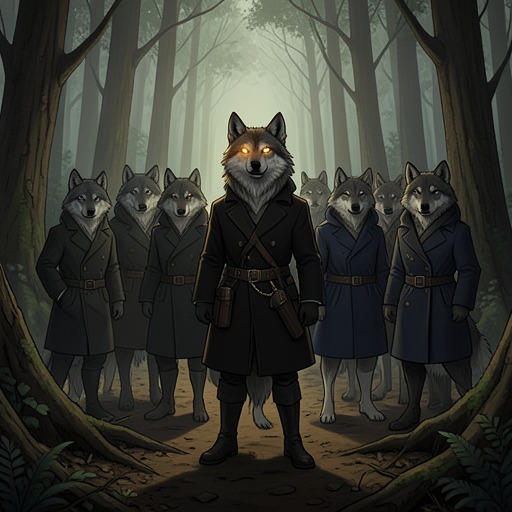
Wilder’s plan grows from the werewolves’ fertility crisis. Most female werewolves are sterile, and Wilder has not found a compatible female werewolf who could both bear pups and accept his brothers as partners. Because the three brothers are triplets, all Alphas, and bound by a pact to remain together, he will not solve the problem by displacing either brother or dividing the territory they inherited from their father. Instead, he imagines one fertile female bearing the brothers’ pups and strengthening their pack.
The pact assigns Wilder the first choice. Drayton and Lycell agree to accept the female he selects because they trust Wilder as head Alpha; if Wilder dies, the next brother in line is to take her and marry her. The succession provision makes the arrangement more than a shared courtship: it is also a rule for preserving the family’s reproductive future and its continuity of leadership.
Wilder’s approach is shaped by a refusal to abduct human women. He convenes a council over declining wolf populations, but rejects capturing women because he fears that kidnappings would bring human hunters against the clan. Instead, he hopes that money and the brothers’ appeal will attract women willing to meet and mate with them. Some women choose to live with other pack members; Wilder waits for the partner he considers right. This policy distinguishes his proposed arrangement from coercive recruitment, even as the later terms he imposes on Adrienne complicate that distinction.
Adrienne and the limits of consent
Wilder first explains his immediate need in terms of the snow: he must mate, and Adrienne is the only female nearby. She challenges the premise that desire or biology removes his responsibility for self-control. His reply—that she should understand he is a werewolf—announces a clash between her expectations and the pack’s customs, rather than resolving it.
After their mating, Wilder tells Adrienne that she is his mate and that she can come and go, but not leave while pregnant—or potentially pregnant—with his pup. He says the child would be at risk if the Ari Kara clan discovered the heir and sent someone to assassinate him; he also insists that she could not take the pup with her. The promise of freedom is therefore sharply qualified by pregnancy, danger, and Wilder’s claim over the child. Adrienne calls herself a captive audience, and the difference between his account of protection and her experience of constraint remains part of the arrangement’s unresolved cost.
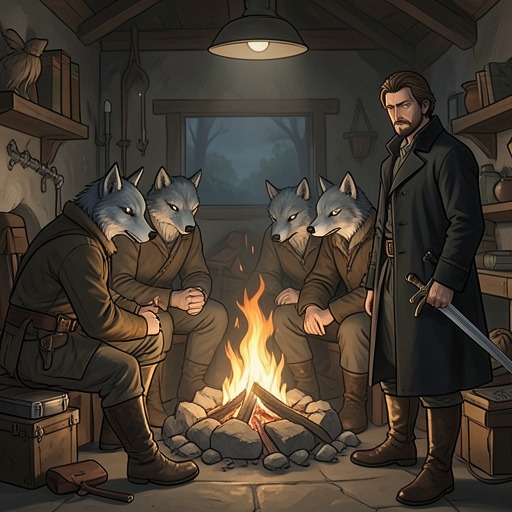
The brothers do not respond alike. Drayton tells Adrienne that they will not mate with her unless she wants them to, and warns her that Lycell is especially affected by the scent of a human female. Lycell, by contrast, threatens to take and defile her, then tell Wilder she escaped. His threat makes plain that the brothers’ pact does not guarantee that each brother will respect Adrienne’s boundaries. The arrangement can only become a shared family in practice if its members’ conduct matches its stated limits.
Adrienne’s position changes from the woman selected to bear pups to a participant who makes the brothers hear her terms. During a confrontation with Wilder, she demands an apology and rejects being called merely a female: her name is Adrienne Ward. She also says that she wants to marry. When Wilder asks whom she wants to marry, she names him, Lycell, and Drayton. The choice does not erase the tensions surrounding the pact, but it makes her decision—not simply Wilder’s selection—the basis for the family she agrees to form.
From a brothers’ pact to shared governance
Adrienne’s choice does not settle the question of marriage. She can marry only one brother, and the brothers argue over whose claim should prevail. Drayton identifies the original source of the difficulty: Wilder devised the plan for one female to sire their pups, while Drayton and Lycell had doubted it from the beginning before agreeing to go along. Drayton proposes letting Adrienne choose whom she prefers to marry, acknowledging that marriage matters to her as a human woman. He further suggests that her husband would determine the next steps for the pack.
Wilder initially answers from his rank as Alpha: he is the pack’s Alpha male, Adrienne is his mate, and he will marry her. Lycell argues that he should have priority because Adrienne is carrying his pups. Their disagreement shows how the shared-mate plan can unite the brothers in reproduction while sharpening competition over status and intimacy. A pact to share a partner is not the same as an agreement to share decision-making.
Wilder eventually concedes that living together and sharing Adrienne require harmony, or the arrangement meant to keep the brothers together will divide them. He proposes that the brothers share decisions and that two council votes override one. He also grants Adrienne the decisive choice over whom she wants beside her and whom she wants to marry, recognizing her status as the mother of their pack. The settlement does not let her marry all three, but it distinguishes her authority over her own relationships from the brothers’ collective authority over other family and pack matters.
Adrienne’s insistence on her name and her marriage preference thus has institutional consequences. Wilder does not cease to be Alpha, but his original unilateral selection no longer governs every question. The brothers’ council becomes a means of managing their rivalry, while Adrienne’s choice is explicitly protected in the decisions that concern her intimate life.
Reproduction, diplomacy, and the wider family
The arrangement’s reproductive purpose remains consequential beyond the brothers’ household. When Ramsey accuses Wilder of breaking a promise to marry Mena to one of the brothers and returning her at the insistence of a human woman, he frames the dispute as an insult to his daughter and a breach of werewolf expectations. His complaint also reveals how readily the reproductive and marital plans for one woman can become entangled with another family’s standing. Wilder rejects Ramsey’s right to dictate to him and says Mena was not defiled, but the confrontation shows that the Samsa arrangement exists within a wider political order, not apart from it.
That pressure becomes explicit when Wilder tells Drayton that he must mate with Mena to prevent war. Drayton objects that he does not love her; Wilder answers that the decision is about keeping the werewolves from war, since the Samsa family is not strong enough to face the Alaskan and Oregon packs. The episode contrasts Adrienne’s eventual say over whom she marries with a political mating imposed on Drayton for the pack’s survival. It also shows that reproduction can serve as diplomacy as well as family-building.
Wilder later sanctions Mena’s marriage to Robert, aligning it with the marriage of Drayton and Adrienne. He welcomes Robert as the family’s doctor if he wishes to remain, and discusses whether Robert’s son Devin can travel with the group. The resulting family structure therefore reaches beyond the three brothers and Adrienne: marriage, medical care, children, and political security become linked questions. The arrangement’s shared household is one part of a broader effort to keep relationships and alliances from becoming sources of division or war.
Fulfillment and significance
Adrienne’s final account of her decision emphasizes that she knows what agreeing to mate with the brothers entails. She accepts that she will meet their sexual needs and bear their children to grow the pack, and describes herself as content with a life among the men who love her. The conclusion presents the arrangement as a chosen family and a source of happiness, bringing the plot’s initial reproductive plan to a willing commitment by Adrienne.
That resolution does not make the arrangement simple or erase its coercive pressures. Its history includes a fertility crisis, rules of succession, Wilder’s conditional claim on a possible child, Lycell’s threat, conflict over Alpha authority, and a separate political mating demanded to avert war. Against those pressures, Adrienne’s insistence on being named and on choosing her own marriages marks the arrangement’s decisive change: the brothers’ pact can endure only when the woman at its center is treated as more than the means by which it reproduces. The family’s final promise combines shared parenthood with an acknowledgment that love and consent are not interchangeable with biological necessity.