The Samsa brothers’ rescue expedition
Insatiable Box Set: Books 1-4The Samsa brothers’ rescue expedition is the armed search for Adrienne Ward and Mena after Bane’s werewolves abduct them and move them toward a northern stronghold. It begins as an improvised response to disappearance and becomes a disciplined incursion into Bane’s territory, demanding supplies, reconnaissance, scent-tracking, endurance, and a willingness to confront rival werewolves. The expedition’s decisive significance lies in its fusion of private attachment and public law: the brothers are trying to recover women they love, but Wilder also understands Bane’s abduction of an Alpha’s mate as an offense requiring punishment under werewolf law.
Causes and Stakes
Lycell initiates the expedition when the family learns that Adrienne and Mena are missing. After promising nurses will remain with the babies while the men are away, he reaches for his phone to contact Wilder, Hunter Samsa, and Devin Samsa, though the mountain setting makes reception difficult. He immediately converts fear into logistical action, ordering Robert to pack water and food and Drayton to gather wilderness supplies, boots, and equipment. Because the spring thaw has made travel dangerous, Lycell also prepares flashlights, LED lamps, and a ski suit, treating survival conditions as part of the rescue rather than as a secondary concern.
The search acquires a more desperate shape when the Mercedes is located by its GPS system roughly ten minutes outside Samsaville. The police have found clothing and shoes in the vehicle and discovered that someone tried to burn it. The abductors removed the women’s clothes to conceal their scent, but Lycell insists that he could smell Adrienne from a mile away. His confidence is not merely bravado: scent is the principal intelligence system of this world, and the attempt to erase it turns the abandoned vehicle into both evidence of violence and a challenge to werewolf tracking. Lycell’s declaration that he will never love another woman makes the search personal, while the stripped clothing and missing bodies make the stakes potentially fatal.
Organization and Departure
Drayton eventually insists that the party leave because the car is loaded with food and water and Robert is waiting. Lycell has delayed to say goodbye to his sons, and Drayton recognizes that the delay is caused by fear that Adrienne may already be dead and by Lycell’s reluctance to leave Hunter and Devin. The exchange distinguishes the brothers’ forms of courage. Drayton presses toward action, while Lycell pauses over the emotional cost of departure; neither response cancels the other, because the expedition requires both urgency and attachment.
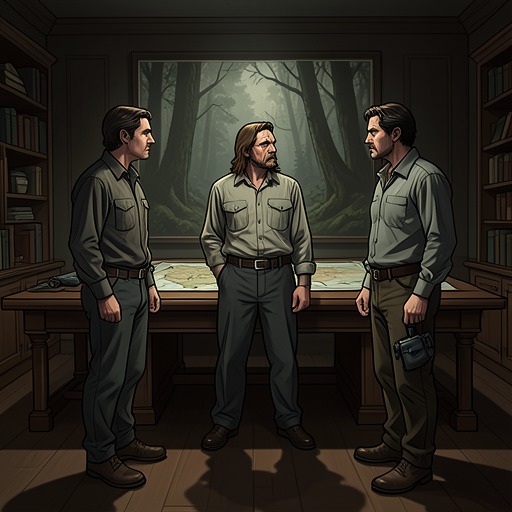
The group travels in an SUV over rocks, snow, and ice-covered grass. Before reaching Bane’s compound, Lycell proposes establishing a camp about a mile away. He and Wilder will inspect the site after dark, determine its layout, discover whether dogs are guarding it, and identify any rogue werewolves who may have joined Bane. Drayton is assigned to protect Robert from wild animals, a task delivered with a menacing joke that also acknowledges Robert’s vulnerability among hunters. The plan therefore separates reconnaissance from support: Lycell and Wilder will penetrate the enemy’s perimeter, Drayton will preserve the expedition’s human medical resource, and the camp will remain a fallback position.
Hazards and Losses on the Trail
The expedition is threatened before the men reach Bane’s compound. A large black bear, hunting for its young, surprises Lycell in the trees. He is distracted because his thoughts and senses are filled with Adrienne, and the intensity of his concern has temporarily blunted the vigilance expected of a werewolf. The bear strikes across his chest and brings him down before Drayton can warn him. The attack makes the rescue physically costly: the brothers must continue while one of their strongest fighters is wounded, and Drayton must choose between carrying Lycell to safety and pursuing Mena.
Lycell tells Drayton to leave him in the snow and go after Mena, promising to keep himself alive if Drayton promises to bring her back. Drayton agrees, though he privately doubts that he can fulfill the promise. This moment gives the expedition its clearest statement of reciprocal duty. Lycell accepts immediate abandonment as the price of Mena’s recovery, while Drayton carries the burden of both promises: rescue the missing woman and prevent his injured brother from dying in the wilderness.
Reconnaissance and Assault
Wilder separates from the others when the urgency of Adrienne’s trail outweighs the need to remain with the group. At Bane’s compound, he tells Hunter and Devin to stay in the woods near a stream while he approaches the cabin alone. The building is dark, cold, and apparently empty; Wilder’s exhaustion is severe because he has been running for an hour without sleep or fresh raw meat. Even so, he continues toward the danger, knowing that he will need his strength for the confrontation ahead.
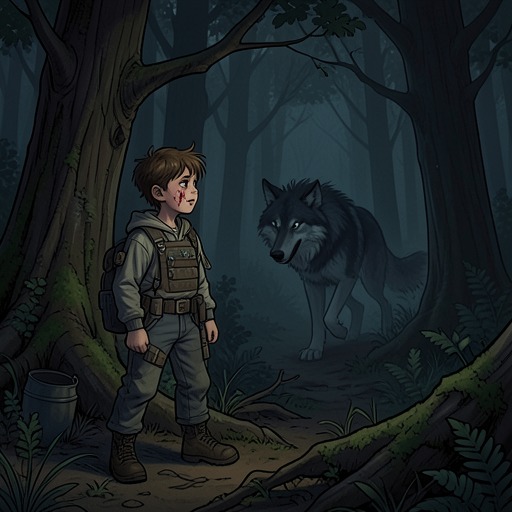
The brothers use disguise as a tactical weapon. They conceal their natural scents beneath the smells of pine trees, squirrels, bears, and other forest animals, allowing them to pass among hostile werewolves without immediate detection. When they jump the newly built log fence, all four land together in the deep snow behind the cabin. Wilder initially finds the structure dark and seemingly vacant, but at the front they encounter ten large werewolves gathered around a fire. His commanding challenge exposes the limits of Bane’s security: the guards did not know the Samsas had entered because only werewolves could move past them while masking their scents.
The raid is supported by inherited discipline as much as by wealth or physical force. Although the Samsas appear rich and comfortable, their father’s teachings and generations of cunning wolves have trained them to remain formidable among the animals of the forest and among the werewolves they oversee. The expedition thus turns family history into operational knowledge. Hunting senses, coordinated movement, knowledge of terrain, and control of fear are not decorative traits; they are the equipment that makes the incursion possible.
Law, Loyalty, and the Pursuit of Bane
The rescue is governed by a conflict between human and werewolf systems of meaning. Adrienne embraces aspects of werewolf law but does not fully understand the pack’s need to hunt, its internal morality, or the authority of rules transmitted through generations. Wilder, by contrast, has been taught those laws since childhood by his father and now leads a pack extending from the Americas to Russia. From his perspective, Bane has not simply removed a woman from her family. He has kidnapped an Alpha’s mate, seized another werewolf’s woman, and violated the order Wilder is responsible for enforcing.
That legal framework explains why the expedition cannot remain a private rescue attempt. Wilder’s pursuit of Bane becomes a hunt between rival hunters, governed by the principle that he must kill or be killed. Bane’s single purpose is to mate with Adrienne, while Wilder’s single purpose is to stop him and restore the authority of the pack. The language of law also appears in earlier disputes surrounding Adrienne: Wilder insists that she is his mate and that he will marry her, while Ramsey objects that a human woman has been allowed to dictate werewolf laws. The expedition carries this unresolved argument into the wilderness, where questions of consent, possession, marriage, protection, and punishment become matters of life and death.
The brothers’ unity is therefore both powerful and unstable. Wilder acts as Alpha and claims the final responsibility for Adrienne. Lycell organizes the search, risks his life while following her trail, and refuses to imagine a future with another woman. Drayton presses the group forward, suffers the emotional cost of leaving the children, and remains responsible for the wounded Lycell and the human Robert. Hunter and Devin are brought to the edge of the operation as young members of the family who must learn that the laws of the werewolves will eventually send them out to find mates of their own. The expedition is a rescue mission, but it is also an apprenticeship in pack obligation.
Narrative Significance
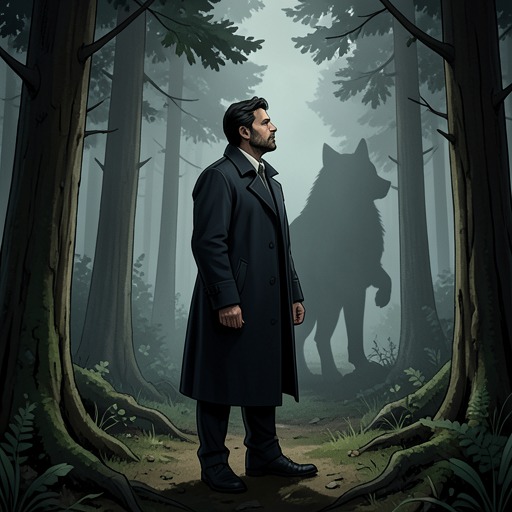
The expedition repeatedly converts absence into evidence. The GPS signal, the burned Mercedes, the discarded clothes, faint scent trails, concealed camps, and the cold cabin all make disappearance materially legible while withholding certainty about Adrienne and Mena’s survival. Bane’s effort to erase scent is answered by the Samsas’ ability to read the landscape, while Wilder’s later decision to shift into wolf form allows him to travel faster, camouflage himself in snowy fields, and follow Adrienne along frozen riverbanks. The environment is not passive scenery; weather, rivers, bears, darkness, and animal scent determine who can pursue, hide, or endure.
The expedition also stages the brothers’ private grief before the final confrontation. Lycell’s goodbye to his sons, Drayton’s uneasy promise, Wilder’s refusal to stop for sentiment, and the bear attack all expose the cost of treating love as a mission. Yet the search does not dissolve into emotion. It becomes more methodical as the danger increases, moving from phone calls and supplies to camp planning, scent concealment, fence-jumping, and direct entry into Bane’s compound. In that progression, the Samsa brothers’ rescue expedition defines loyalty as an organized practice: love provides the reason to go, law supplies the justification, and collective skill keeps the search alive when the wilderness and the enemy both demand surrender.