Wilder–Drayton–Lycell sibling bond
Insatiable Box Set: Books 1-4The Wilder–Drayton–Lycell sibling bond is the governing alliance at the heart of the Samsa brothers’ family: three triplet Alpha wolves bound by affection, inherited territory, and a vow not to displace one another. Their unity gives Wilder authority to choose a mate for them all, but it does not erase disagreement. As the brothers’ plans for Adrienne and the demands of inter-pack politics collide, their relationship is tested by jealousy, competing ideas of leadership, and the sacrifices each is expected to make for the group.
Formation and Shared Foundations
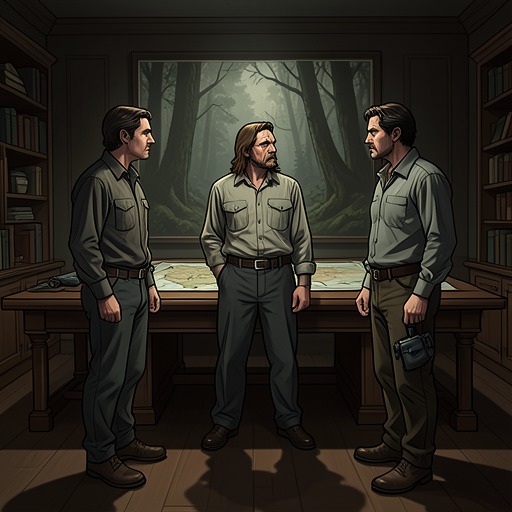
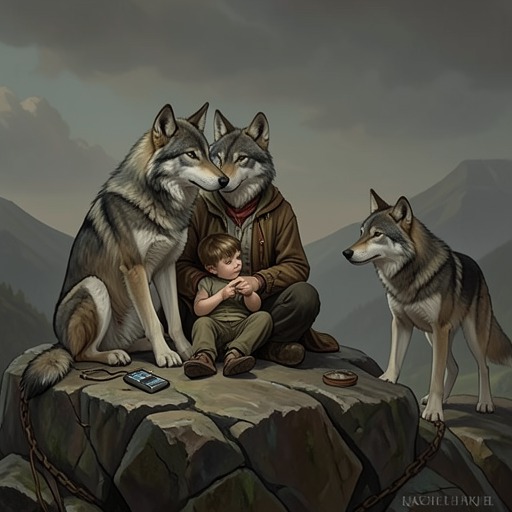
Wilder, Drayton, and Lycell are triplets and Alpha wolves. They inherited territory from their father and control it equally, including lands across Nevada wolf territory, Oregon wolf territory, Washington State, and Wyoming, as well as a small pack in Alaska wolf territory. Their pact is explicit in its central purpose: none will push another out or destroy their brother’s place. The promise makes their authority collective even as they recognize a ranking within it.
Wilder is the eldest and the head Alpha, and his brothers trust his judgment enough to accept his choice of mate. That trust gives his personal decision consequences for all three: the woman he selects must accept his brothers, and the brothers expect to share a future with her rather than divide their family. Their unity is therefore not only emotional or territorial; it is built into their approach to lineage and the survival of their pack.
The brothers’ shared life also includes ordinary differences. Drayton favors rabbit, Wilder dislikes its smell and prefers deer, and Lycell is less particular about food. These distinctions sit alongside a more consequential division of temperament: Drayton is described as calm and diplomatic, while Lycell is more impulsive and confrontational. Their differences do not dissolve the bond, but they shape how each brother responds when its rules are strained.
Wilder’s Authority and the Shared-Mate Plan
The brothers’ pact becomes most consequential in Wilder’s plan to find a fertile mate. Most Werefemales are described as sterile, and the brothers believe that one woman would need to bear their pups if their family and pack were to endure. Because they are inseparable and equally committed to remaining together, Wilder’s prospective mate must also be willing to accept Drayton and Lycell. If Wilder dies, the stated succession plan is for the next brother in line to take her and marry her.
The plan grows out of a choice about how to respond to the pack’s declining numbers. Wilder has convened a council to address the lack of breeding and refuses to capture human women, fearing that kidnappings would lead to the clan being hunted and destroyed. Instead, he and his handsome brothers hope to meet women through the lure of money. Other women have joined pack members, but Wilder waits for a woman he considers right for all three. The plan makes the brothers’ solidarity a proposed solution to a demographic crisis, while placing the cost of that solution largely on the woman expected to bear their children.
Wilder presents Adrienne with the danger he believes surrounds a child who would be his heir: the Ari Kara clan might learn of the child and send someone to assassinate him. He also says that, although Adrienne may leave, she cannot take the child with her because it would be too dangerous. His account reveals how the brothers’ family arrangement is tied to inheritance and pack security, but it also exposes the imbalance between their collective plan and Adrienne’s ability to decide freely what that plan means for her.
Friction, Loyalty, and Adrienne’s Choice
The bond is affectionate but not effortless. When Drayton defends Adrienne and says that he loves her, Lycell reacts as though she is coming between the brothers. Drayton and Lycell posture as if they might attack each other, yet the narration emphasizes the love between them and their reliance on one another. The scene makes the conflict legible as a threat to their closeness, not merely a disagreement about Adrienne.
Drayton later challenges Lycell’s treatment of her. Lycell insists that werewolves answer to no one, especially not a woman, whether human or Werefemale. Drayton counters that Lycell is human as well as animal and that refusing his human capacity for reason makes him weaker, not stronger. He also warns that without Adrienne their pack is doomed. Lycell admits that he had not considered the point. The exchange shows Drayton trying to protect both Adrienne and the brothers’ future by appealing to Lycell’s responsibility to the pack, even as Lycell’s conduct places their unity under pressure.
Adrienne’s own decision changes the terms of the arrangement. She demands to be addressed by her name rather than as a female and says that she wants marriage; she then specifies that she wants to marry Wilder, Lycell, and Drayton. When Wilder asks what changed her mind, she credits Lycell. Her choice does not make the brothers’ competing claims disappear, but it gives her an expressed role in a relationship that had initially been framed chiefly through Wilder’s selection and the pack’s needs.
That tension becomes explicit when the brothers discuss whom Adrienne should marry. Drayton argues that she should decide for herself and that her husband could then determine what should happen for the good of the pack. Wilder asserts that he is the pack’s Alpha and that Adrienne is his mate, so he will marry her. Lycell adds that he is carrying her pups and argues that it should be him. The exchange reveals three different grounds for authority—Adrienne’s preference, Wilder’s Alpha rank, and Lycell’s paternity—without resolving them into an uncomplicated consensus.
Political Duty and the Bond’s Costs
The brothers’ shared commitments also extend beyond their household. After Ramsey accuses Wilder of breaking a promise to his daughter Mena and dishonoring her, Wilder refuses to accept Ramsey’s authority over him and defends his conduct. Lycell observes that Wilder’s controlled response contrasts with the attack Lycell himself might have launched. The contrast reinforces the brothers’ different temperaments and Wilder’s place at the top of their hierarchy.
To keep the werewolves from war, Wilder tells Drayton that he must mate with Mena. Drayton objects that he does not love her; Wilder replies that the issue is preventing war, because the brothers are not strong enough to face the Alaskan and Oregon packs. The directive makes Drayton’s private wishes subordinate to the collective political need, demonstrating that the same solidarity that protects the brothers can require personal sacrifice from one of them.
Wilder later sanctions Mena’s marriage to Robert, welcoming Robert as the pack’s doctor if he wishes to remain. He links that approval to the prospect of Drayton and Adrienne marrying, and promises that Ramsey will not retaliate if Wilder can stop the uprising in Oregon with his sons. The arrangement connects intimate and political alliances: marriage, medical care, family, and peace between packs become parts of one negotiation. For the brothers, loyalty is thus both a source of strength and an obligation that can turn love and marriage into instruments of survival.
Significance
The brothers’ bond is neither simple harmony nor a purely political compact. It rests on remembered family closeness, mutual trust, and a refusal to abandon one another, yet its rules repeatedly bring them into conflict over women, authority, inheritance, and duty. Wilder’s accepted role as chooser and head Alpha coexists with Drayton’s diplomacy and Lycell’s forceful claims; their love for one another is real, but it does not prevent rivalry or unequal demands.
By tying the shared-mate plan to infertility, succession, and the threat of war, the narrative makes sibling unity consequential well beyond the brothers themselves. Their pact determines who may choose a mate, how a potential heir is protected, and what sacrifices may be demanded to hold the pack together. Adrienne’s stated choice and Drayton’s reluctant political obligation expose the limits of that unity: it can preserve the brothers as a family, but only by continually negotiating whose desires and authority count.