
Faith and Damnation
Interview with the VampireThis flow follows Louis’s movement from Catholic belief through supernatural doubt to a self-imposed conviction of damnation.
increasing Bearing strength in each event
 decreasing
Bearing strength in each eventdecreasingThe Catholic Inheritance
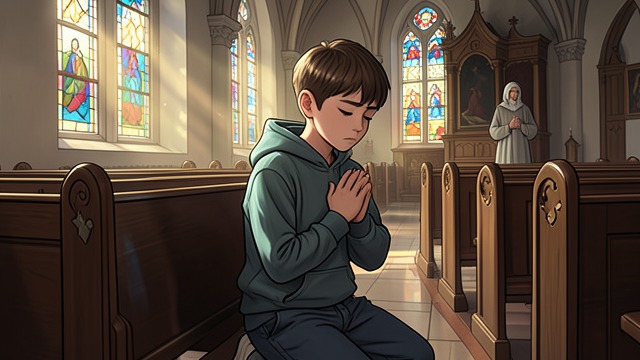
The Catholic Inheritance
Formation
Louis grows within Catholic rituals, saints, confession, and family memory.
Framework
Faith gives death a structure that grief alone cannot provide.
Vulnerability
His later Vampirism becomes terrifying because it attacks this inherited order.
The Devil’s Explanation
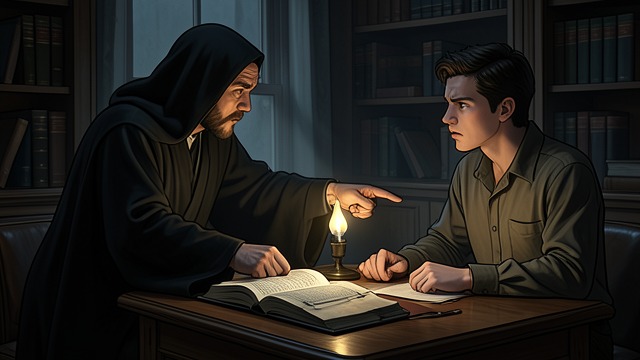
The Devil’s Explanation
Conflict
A priest explains Paul’s visions as possession rather than sanctity.
Rejection
Louis sees the explanation as shallow egotism.
Echo
The dispute becomes a model for Louis’s later refusal to accept simple supernatural answers.
The Confessional Vampire
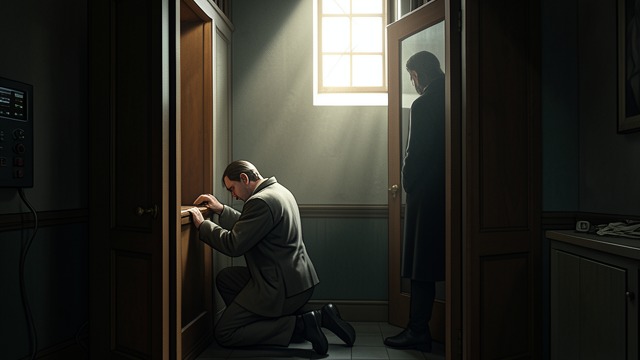
The Confessional Vampire
Confession
Louis tells a priest that he has killed for decades and is a Vampire.
Rejection
The priest treats the revelation as sacrilege or mockery.
Result
Louis leaves with no human absolution and a deeper sense of isolation.
The Fallen Angel Image

The Fallen Angel Image
Metaphor
Louis imagines Vampires as dark angels wandering outside heaven and hell.
Ambivalence
The image grants grandeur to his condition without granting innocence.
Tension
He wants damnation to be real because certainty would end his spiritual uncertainty.
The Empty Heaven
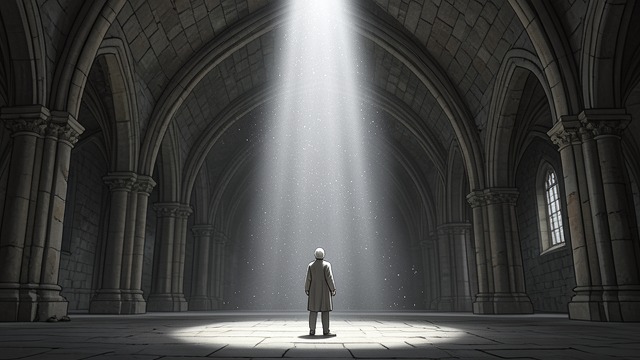
The Empty Heaven
Denial
Armand admits that no Vampire he knows has proof of God or Satan.
Collapse
Louis loses the final hope that supernatural existence carries a divine explanation.
Consequence
He must judge himself without heaven, hell, or external authority.
Louis’s mortal life in Louisiana
after Paul’s death
after Claudia’s apparent death
during Louis’s early European reflections
during Armand’s theological discussion
