All aesthetic decisions are moral
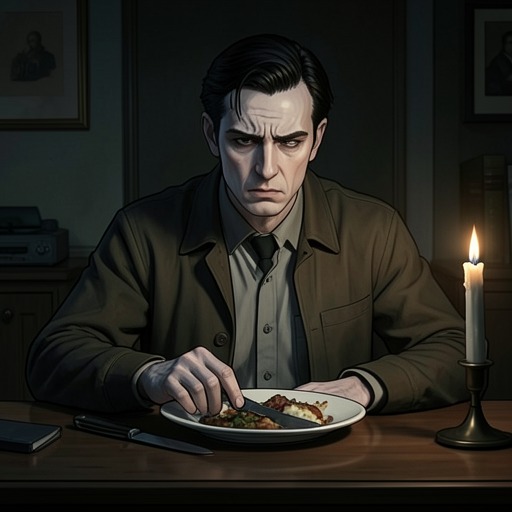
Interview with the Vampire“All aesthetic decisions are moral” is the central proposition of Louis’s reflection on the relation between artistic choice and ethical responsibility. He first presents his preference for killing animals rather than humans as an aesthetic decision: he wanted to understand death in stages, taking the pleasure and experience of an animal’s death before confronting the more developed experience of human death. The expression then overturns that distinction. What Louis had called aesthetic restraint was also a moral choice, because it determined which beings would bear the cost of his vampiric hunger.
The Expression in Context
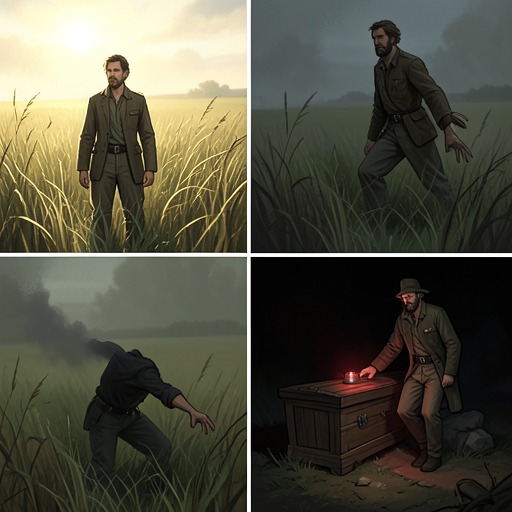
Louis articulates the idea while recalling the night when Lestat led him to a hotel after killing an old man to obtain a suite. As dawn approached, Louis was consumed by a desire to die, yet his physical thirst still required satisfaction. Rather than kill a person, he moved across the rooftops and searched for rats. The immediate circumstance gives the expression its practical foundation: animal and human victims are not merely different artistic stages in an abstract theory, but different objects of an actual predatory decision.
Louis explains that, at the time, he would have insisted that his choice was aesthetic rather than moral. He believed animal death offered a form of pleasure and knowledge through which he could gradually approach human death, preserving the latter for a more mature understanding. In retrospect, however, he identifies this explanation as a hedge against the larger moral question of whether his nature had damned him. The expression therefore records a later recognition: aesthetic language had concealed an ethical act rather than replaced one.
Aesthetic Choice and Moral Conflict
The claim does not mean that every aesthetic judgment agrees with social morality. Louis distinguishes the artist’s own moral system from the morals of society. He argues that an artist who leaves a wife and children in order to paint, or Nero who plays the harp while Rome burns, may make decisions that society condemns, but those decisions still serve what the individual regards as a higher good. Their conflict is consequently between competing moralities, not between morality and aesthetics.
This distinction makes the expression more demanding than the simple claim that art should be morally respectable. It treats aesthetic preference as a form of practical allegiance. The artist’s chosen beauty, purpose, or higher good governs conduct, and conduct exposes the values embedded in the aesthetic choice. Even the decision to privilege artistic creation over family or civic duty remains moral in structure because it establishes what matters most.
Responsibility, Guilt, and Despair
Louis’s discussion also addresses the psychological consequences of separating aesthetics from morality. He describes an artist who steals paints and imagines that the act was inevitable but immoral. If the artist then sees himself as fallen from grace, one transgression can become the basis for despair and petty irresponsibility, as though morality were a glass world shattered beyond repair by a single act.
The argument resists that collapse. A wrong choice does not prove that moral life has ended; rather, it reveals the moral commitments already operating within the choice. Louis applies this insight to himself only retrospectively. At the time, he did not fully understand it. He believed he killed animals for aesthetic reasons alone and used that belief to postpone judgment on the vampire nature he had acquired from Lestat.
Theological and Existential Stakes
The expression is inseparable from Louis’s conviction that he may be damned. Although Lestat had never explained his transformation through devils or hell, Louis believed that becoming a vampire resembled Judas’s recognition of guilt when he put the noose around his neck. His question was not only whether individual killings were permissible, but whether his very nature made him evil.
That anxiety gives the expression its existential force. Louis cannot escape ethical responsibility by claiming that killing is simply what a vampire does, nor can he secure innocence by calling his selective diet artistic. His recoil from Lestat’s killing, his earlier fear, and his choice to seek rats instead of humans all show that his physical nature does not erase judgment. The expression names the burden of choosing within damnation: every preference becomes evidence of what kind of being he is trying, or failing, to become.
Significance in Louis’s Narrative
The expression marks a turning point in Louis’s account of vampirism. It links the apparently separate domains of taste, violence, theology, and self-knowledge. Feeding is not merely biological necessity; the chosen victim, the manner of death, and the meaning assigned to the act all disclose a moral position. Louis’s later formulation also exposes the limits of his earlier self-description. He had imagined that aesthetic distance could protect him from the question of evil, but the distinction cannot hold once aesthetic choice produces consequences for another living being.
Its force lies in the collision between Louis’s refined language and the material facts beneath it: an old man dies in a doorway, Lestat treats the killing as a joke, dawn approaches, and Louis searches for rats while wishing for death. Against that scene, the expression becomes neither a decorative maxim nor a general theory of art. It is Louis’s admission that the choices through which he tries to make vampiric existence bearable are already ethical choices, and that refusing to name them as such only deepens his despair.