Lestat
Interview with the VampireLestat is the decisive maker and antagonist in Louis’s transformation. He brings Louis into vampirism for the practical purpose of acquiring Pointe du Lac plantation, yet his instruction does more than create an immortal body: it forces Louis to witness death, surrender human certainty, and enter a world governed by appetite, secrecy, and unequal knowledge. Across the narrative, Lestat shifts from dazzling initiator to hated domestic tyrant, apparently destroyed enemy, and finally pitiable survivor, while remaining inseparable from Louis’s understanding of what it means to be a vampire.
Identity and Introduction
Lestat first enters Louis’s account as the vampire who attacks him near his New Orleans home after Louis has collapsed into grief, drunkenness, and a wish to die. He drains Louis almost to death, but returns that night after Louis has been feverishly bled by physicians and enraged by a priest’s dismissal of Paul’s visions as demonic possession. Lestat arrives through the courtyard with a tall, fair-skinned body, blond hair, graceful movements, incandescent gray eyes, and long white hands that reveal him as no ordinary human being. His presence crushes Louis’s self-absorbed ego: confronted with Lestat’s aura and power, Louis forgets himself and suddenly recognizes the immense possibility of another existence.
The offer is not purely philosophical. Lestat wants Pointe du Lac plantation, and his father, a blind old man who does not know that his son is a vampire, makes life in New Orleans increasingly difficult. Lestat therefore brings Louis to the plantation and uses the property, together with the need to provide for both households, to bind the new vampire to him. His motives are practical and self-serving, but his effect on Louis is transformative. Lestat becomes simultaneously benefactor, captor, instructor, and living evidence that the world contains powers beyond the moral and religious explanations Louis has inherited.
Making Louis a Vampire
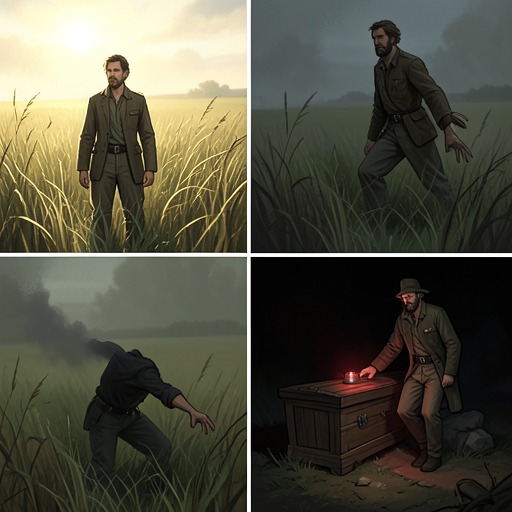
Lestat turns Louis through a series of ordeals rather than a single ceremonial act. The first is the death of the overseer, whom Lestat takes in his sleep while Louis is required to watch and approve the killing as proof of commitment. Louis finds the scene more difficult than facing his own death: Paul’s recent death has intensified his horror of mortality, and he retains a profound regard for the lives of others. Lestat makes him remain while the overseer struggles, is drained, and dies slowly in the narrow bedroom.
Lestat then requires Louis to help dispose of the body. They drive along the river road into open fields, tear the overseer’s coat, steal his money, and stain his lips with liquor so that the death will resemble robbery. Louis thinks of the overseer’s wife in New Orleans and suffers not only for her future grief but for the fact that she will never know what actually happened. Lestat laughs at this revulsion and predicts that vampirism will make Louis laugh at death as well. The prediction fails. Louis later insists that he never laughs at death, even though he becomes its regular cause, establishing the ethical difference between the two vampires.
The final stage of the transformation is spatial as well as bodily. Lestat insists that they sleep in the same room for protection, but Louis refuses, regards him as frail and carping, and carries his coffin down the brick stairs to Paul’s oratory. There, after declaring that he can finally feel both nothing and everything for his dead brother, Louis closes the blinds, bolts the door, climbs into the satin-lined coffin, and locks himself inside. His isolation from Lestat does not make him independent; it marks the moment when he becomes fully a vampire under Lestat’s coercive instruction.
Power, Dependence, and Conflict
Lestat maintains authority by controlling knowledge. He tells Louis that he alone can teach him how to survive, warns him that other vampires may see him before he can find them, and orders him to kill quickly while continuing to manage the plantation. When Louis rejects shared sleeping arrangements, Lestat threatens him with the dangers of daylight and insists that separate rooms will reduce their security. Louis disobeys, but the exchange reveals the relationship’s structure: Louis possesses new strength, yet Lestat controls the practical information on which that strength depends.
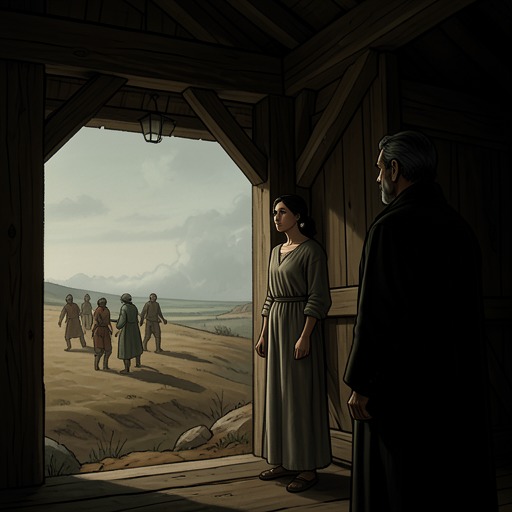
Their conflict also exposes Lestat’s dependence on the human world. His blind father requires care, the plantation supplies material security, and the New Orleans household allows him to conceal his condition. When Babette Freniere shelters the two vampires after the fire at Pointe du Lac, Lestat becomes frantic because he wants to reach New Orleans quickly and suspects that Louis may escape him. Locked with Louis in a storage room, he declares that Louis was needed only while his father lived and tries to find a way out. The confinement reverses their apparent hierarchy: Lestat remains physically formidable, but his plans depend on Louis, property, secrecy, and the decisions of a human woman who has understood enough to lock the door from outside.
Louis’s later reflections imagine the friendship Lestat might have offered if he had possessed character and the capacity for thought. Instead, Louis remembers a companion who sneered at his library, called it a pile of dust, and ridiculed his reading. This contrast between possible intimacy and actual contempt gives their relationship its persistent tension. Louis hates Lestat’s vanity and shallowness, yet the absence of any other vampire like himself makes Lestat’s presence emotionally and intellectually irreplaceable.
Claudia and the Destruction of the Household
Lestat is directly responsible for Claudia’s creation. When Louis weakens while feeding on the feverish child, Lestat urges him to take her, then cuts his own wrist and gives her his blood after Louis has nearly drained her. Claudia revives with extraordinary force, clinging to Lestat’s wrist and drinking until he struggles to pull free. Lestat immediately treats the act as a new danger: he tells Claudia that she must never take from him again and prepares to control her through instruction and performance.
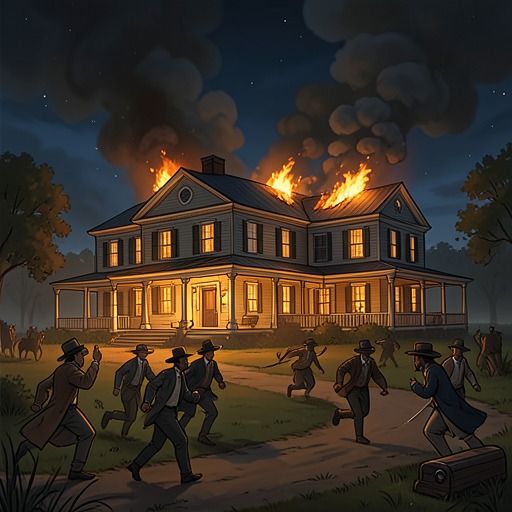
The creation changes the balance between the adults. Claudia becomes outwardly Louis’s companion but also inherits Lestat’s instinctive relation to killing, while Louis increasingly recognizes the gulf between her and human sympathy. Her growing intelligence turns the household into a concealed contest. Louis and Claudia eventually plot against Lestat, and their attempt appears to succeed when the plantation household is destroyed and Lestat is left amid fire and swamp. During the later Eastern European journey, Louis repeatedly fears that they may have killed the only other conscious vampire capable of explaining their condition, even as he discovers that the mindless undead of Transylvania, Hungary, and Bulgaria offer no knowledge at all.
Lestat’s absence therefore becomes a form of presence. In the empty nights of the vampire quest, Louis imagines Lestat’s face and remembers him at home, playing with the keys of the spinet. The longing is disturbing because it exposes attachment beneath hatred. Lestat is the enemy Louis wants to forget, but he is also the only vampire whose intelligence, personality, and conscious life resemble their own.
Survival and Return
Lestat survives the destruction that Louis and Claudia believe has ended him. In Paris, when Louis is captured by the vampires of the Théâtre des Vampires, Lestat appears in the subterranean ballroom scarred but alive. His gray eyes remain sharp, his black cloak and fine linen preserve his old elegance, and his mutilated face displays the damage inflicted during the attack. He immediately identifies Claudia as the one he wants and demands that Louis return to him, promising to give Louis back his life and claiming that he has something to reveal about the night in the swamp.
The encounter restores Lestat as a figure of coercive knowledge rather than a dead memory. He does not rescue Louis or Claudia; instead, he tries to reclaim Louis and expose Claudia, while Santiago and the theater vampires control the scene. His survival confirms that the earlier destruction was incomplete and makes the conflict with him part of the larger law and violence of the Paris coven.
After Claudia and Madeleine are executed, Louis burns the Théâtre des Vampires in revenge against Santiago, Celeste, and the vampires who destroyed them. Armand later reveals that Lestat escaped the fire with the help of two vampires made by the same master, securing passage back to New Orleans. Louis had not burned the theater primarily because of Lestat; hatred for Lestat had been entangled with feelings he did not want to acknowledge. Once the concealed fact is disclosed, however, the desire to see him again becomes the force that brings Louis and Armand back across the Atlantic.
Final Appearance and Narrative Significance
Louis finally finds Lestat in a decaying New Orleans house, living beside a young vampire and a crying baby. The scene reverses the image of the elegant predator who once entered Louis’s sickroom. Lestat now sits beside a fire in oppressive summer heat, shivering in a shabby blue robe, feeding on miserable animals while the bodies of dead cats lie scattered in the dust. His coffin is neglected, his room stinks of rot, and his back is bent as though age has overtaken an immortal body.
Recognition arrives through contradiction. Lestat’s face is smooth and free of the old scars, yet his blond hair, profile, eyes, and whining voice expose him. When Louis knocks on the window, Lestat rises like an invalid, clutches his robe, and calls for Louis to be admitted. His tears and desperate smile transform the former master into a figure of dependence and humiliation, though the old theatricality has not vanished entirely.
Lestat’s trajectory gives the narrative one of its sharpest reversals. He begins as the embodiment of possibility, a beautiful and terrifying power who frees Louis from mortal limits while binding him to an unequal relationship. He becomes the household’s manipulator, Claudia’s creator, and the object of a murderous conspiracy; then he returns as proof that death, destruction, and certainty are unreliable categories in the vampire world. His final degradation does not erase his earlier force. Instead, it reveals the instability beneath his brilliance and leaves Louis confronting a troubling truth: the vampire he hated was also the figure through whom he first encountered wonder, knowledge, intimacy, and the irreducible burden of immortal life.