Louis
Interview with the VampireLouis is the narrator and moral center of the vampire’s history, a Creole of New Orleans whose transformation into an immortal predator never extinguishes his attachment to human feeling. His decisive significance lies in the contradiction he cannot escape: he kills to live, yet experiences every killing as evidence against his right to live. From the death of his brother Paul to his separation from Armand, Louis repeatedly seeks an authority that might explain or absolve him, only to discover that the deepest judgment comes from his own conscience.
Identity and Mortal Background
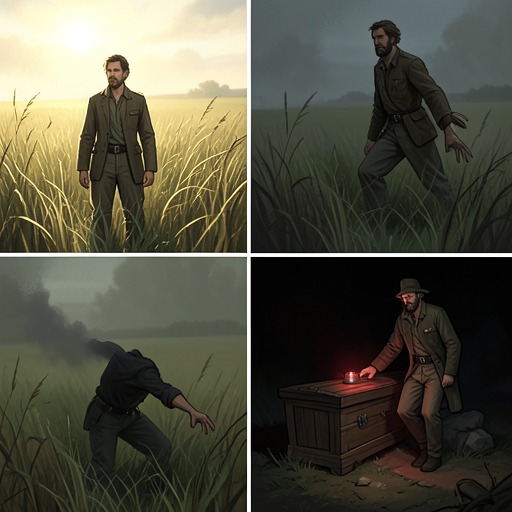
Louis’s mortal identity is shaped by family, property, Catholic imagery, and an intense relation to Europe. After Paul’s death at Pointe du Lac, Louis could neither return to the plantation nor release himself from responsibility for what had happened. Paul had believed that he experienced visions, while Louis rejected the possibility because Paul was his brother: sanctity seemed imaginable in saints but impossible in someone known intimately. After an argument, Paul walked onto the gallery and fell down the brick stairs, breaking his neck. Louis had not seen the fall, yet he treated his disbelief and unkindness as the true cause of the death.
The consequences became obsessive. Paul’s body was buried in the St. Louis Cemetery in New Orleans, but Louis continually imagined it rotting in its coffin and dreamed of holding his brother back from the stairs, promising that he now believed him. He drank constantly, avoided home, walked black streets and alleys, backed out of two duels from apathy, and wished to be murdered. When a vampire attacked him near his door and drained him almost to death, Louis interpreted the assault less as a rescue than as the continuation of a self-destructive existence.
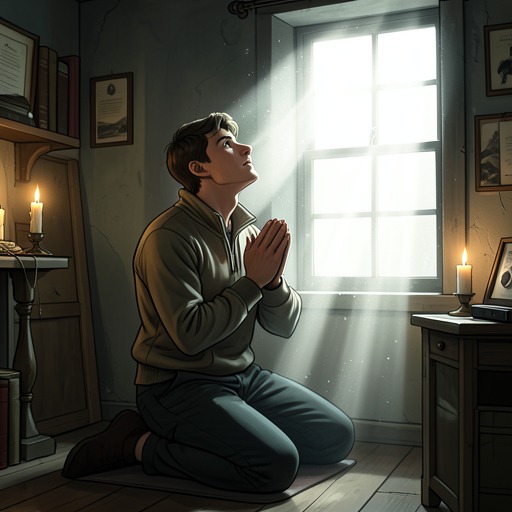
His fevered confession to a priest brought no consolation. Louis admitted his guilt over Paul, but the priest explained the death through possession by the devil, declaring that Louis had been speaking not to his brother but to the devil within him. Enraged by this reduction of Paul’s visions to a convenient doctrine, Louis nearly killed the priest and wrecked the room. The episode exposes the pattern that governs his later life: he distrusts explanations that remove moral complexity, whether those explanations appeal to the devil, vampire origins, or a law imposed by other immortals.
Transformation and Life with Lestat
Lestat found Louis at a moment when Louis wanted death but lacked the courage to cause it himself. After arranging the attack that left Louis near death, Lestat brought him back to Pointe du Lac and offered him the choice of death in a form Louis could not actually accept. On the brick steps where Paul had fallen, Louis begged Lestat to kill him. Lestat instead drained him to the threshold of death and insisted that Louis’s consciousness and will must keep him alive. The transformation therefore begins as a coercive answer to Louis’s despair, but also as an exposure of his dependence on another being to perform the death he repeatedly imagines.
Louis completed the transformation by entering a satin-lined coffin in Paul’s abandoned oratory. Before closing himself in, he addressed Paul and recognized a reversal in his own feeling: for the first time he felt nothing for his brother’s death and, at the same time, felt the sorrow of the loss as he had never felt it before. This paradox marks the birth of the vampire Louis. Immortality does not free him from the dead; it makes memory more durable and gives his grief an inhuman duration.
He remained with Lestat because Lestat possessed practical knowledge Louis lacked, including methods of travel, the transportation of coffins, access to shops after hours, and the financial arrangements that allowed vampires to move through human society. Lestat could furnish Pointe du Lac lavishly and manage visitors, while dismissing Louis’s library and journal as mortal nonsense. Louis recognized Lestat as an adequate teacher in mundane matters but remained uninterested in the man Lestat had been in life. Their relationship thus joins dependence and hostility: Lestat supplies the means of survival, while Louis resists the values and emotional coldness that Lestat represents.
The Search for Meaning
Louis’s confession in a New Orleans church reveals the scale of the life he has led. He tells the priest that he killed the woman who died two nights earlier in Jackson Square and thousands of others over seventy years, walking the streets of New Orleans like the Grim Reaper and feeding on human life for his own existence. The priest responds with disbelief and outrage rather than recognition. When Louis reveals his teeth and asks why God permits him to live, the encounter ends in another killing. His attempt to confess becomes a confrontation with the limits of religious language: the institution that promises forgiveness cannot accept the literal truth standing before it.
Louis’s attraction to Europe grows from mortal memory, French language and literature, and the historical identity of a Creole shaped by Europe more deeply than by the rest of the United States. He remembers anger at the Louisiana Purchase and longs to see the place from which his cultural world began. After years in New Orleans, he turns toward the Old World with the hope that geography and history might disclose the origin of creatures like himself.
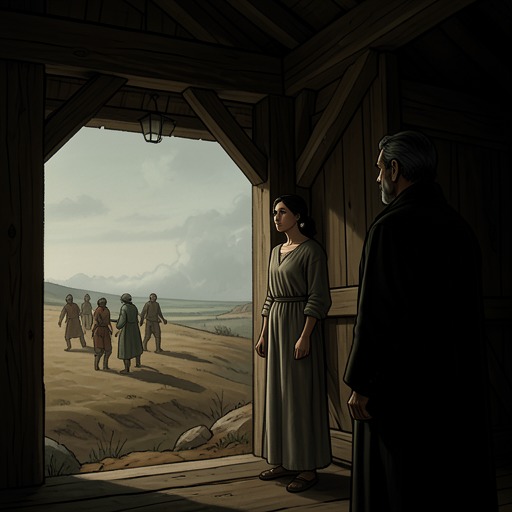
Claudia directs the journey toward central and Eastern Europe, where she expects vampires to be more prevalent and believes that ancient beings might explain their origins. The route carries them toward the Black Sea, Varna, and the Carpathians. Yet the vampires they find in Transylvania, Hungary, Bulgaria, and neighboring regions are generally mindless corpses: rotted, ragged, and devoid of the conscious life Louis and Claudia possess. Their bodies confirm the legends of the living dead but provide no philosophy, history, or answer. The discovery intensifies Louis’s despair and revives his fear that they may have destroyed the only other vampire capable of conscious existence, Lestat.
Paris offers a different promise. Louis experiences the city as a complete universe, more durable and historically fashioned than New Orleans, and as a place where art, philosophy, sanctity, war, and spectacle seem to coexist. He enters the Théâtre des Vampires and meets Armand, whose detachment and knowledge appear to offer the authority Louis has sought. Their conversations challenge Louis’s belief that vampires are the children of Satan. Armand argues that if God created Satan, then Satan’s power also comes from God, making the category of “children of Satan” logically unstable. Louis nevertheless insists that his repeated killing makes him evil and that evil is not merely a matter of degree.
Armand recognizes Louis’s difference from the other vampires. Louis suffers when he kills, feels sympathy for human victims, and experiences his own survival as a form of guilt. His conscience is not a temporary weakness but the defining condition of his existence. Yet Paris eventually gives him not absolution but a model of coldness. Armand’s beauty, power, and apparent freedom from regret initially attract Louis; the theater’s cruelty ultimately teaches him what he might become if he extinguished the capacity to suffer.
Relationships, Loss, and Conflict
Louis’s relationship with Claudia is founded on attachment but increasingly divided by incompatible conceptions of vampirism. Claudia seeks knowledge of her own kind and wants contact with ancient vampires, while Louis continues to measure immortality against human sympathy. In Eastern Europe, her practical determination contrasts with his brooding uncertainty. She interprets Lestat’s death as final and insists that consciousness does not matter if he is dead; Louis remains haunted by the possibility that Lestat survived and by the emotional residue of their relationship.
In Paris, Louis becomes bound to Armand through fascination, intellectual dependence, and shared isolation. Armand sees Louis’s suffering in the theater and understands that Louis dies inwardly when he kills. Louis, however, cannot accept Armand’s detachment as an answer. When the Théâtre des Vampires turns against Claudia, Armand rescues Louis but initially refuses to rescue Claudia, warning that the other vampires would rise against him. Louis returns for her, and Armand follows. The rescue reveals both Armand’s power and his limits: he can intervene for Louis, but he cannot simply overturn the coven’s authority without risking his own position.
Louis ultimately describes his bond with Armand as a form of mutual love made terrible by their nature. He tells Armand that love and goodness cannot coexist securely with what they know to be evil; what remains is confusion, longing, and the pursuit of goodness in a phantom human form. Armand responds that he had expected Louis to become warm again after the pain of Claudia’s death, to recover his curiosity and conscience, and to allow the two of them to become one another’s teachers and protectors. Louis rejects that imagined future. Armand has shown him not salvation but the depth of coldness required to end his pain, and Louis has accepted that lesson so completely that Armand now sees only a mirror of himself.
Later Life and Ending
Louis leaves Paris with Armand, first turning toward Egypt and the pyramids, royal graves, grave-thieves, and unopened tombs. Before departure he returns to the Hôtel Saint-Gabriel intending to preserve belongings of Claudia and Madeleine and prepare graves for them in Montmartre Cemetery. The task becomes meaningless when he sees Madeleine’s embroidery ring and the orderly rooms that make their return seem possible. He leaves without carrying out the burial plan.
His response to art also changes. At the Louvre he had sought transcendent pleasure capable of obliterating pain and even himself. After Claudia and Madeleine’s deaths, paintings become detached from the human hands that made them, like objects severed from their origins and capable of being reduced to ashes. The transformation is not simply aesthetic; it signals Louis’s increasing withdrawal from the human heart, which he no longer treats as the privileged source of meaning.
Louis and Armand later live in New York, while Louis repeatedly postpones a return to New Orleans. Armand eventually reveals that Lestat survived the fire at the Théâtre des Vampires and traveled toward New Orleans with help from two vampires made by the same master. The news reawakens Louis’s desire to see Lestat, and he returns with Armand. New Orleans feels like home through its warm pavements, familiar oaks, old mansions, the Vieux Carré, and the wilderness of Pointe du Lac. The old town house on Rue Royale remains recognizably connected to the home Louis shared with Lestat and Claudia, and Louis senses Lestat there more strongly than Claudia.
The return does not restore Louis’s former self. He tells Armand that his pursuit of love and goodness was impossible from the beginning because he knew that his feeding was evil, yet refused to accept the death implied by that knowledge. He sought other vampires, God, the devil, and countless explanations, but none could persuade him away from what he already believed in his own mind and soul: that he was damned. Armand then leaves him beside the river. Louis does not see him again; Armand’s coffin remains for a time, is placed in the St. Louis Cemetery beside Louis’s own, and is later removed and broken apart.
Louis’s ending therefore remains neither redemption nor simple despair. He continues to possess conscience, memory, aesthetic longing, and the capacity for love, but he no longer expects these qualities to reconcile him with the life he leads. His journeys across New Orleans, Eastern Europe, Paris, Egypt, New York, and back to New Orleans form an external quest for origins that becomes an inward recognition: no priest, legend, coven, master vampire, or lover can make his moral knowledge disappear. Louis survives as the vampire who cannot stop feeling the cost of survival.