Louis–Lestat relationship
Interview with the VampireLouis–Lestat relationship is the central apprenticeship, dependency, and rebellion of Louis’s early existence as a vampire. Lestat gives Louis immortality in exchange for Pointe du Lac plantation, but the gift is inseparable from coercion, secrecy, and control. Louis’s heightened sensitivity turns the transformation into an ethical and metaphysical awakening; Lestat treats the same experiences as routine, and the resulting gulf makes their companionship unstable from its beginning. What binds them is therefore never simple affection: it is need, fear, instruction, possession, resistance, and an attachment that survives even after Louis has tried to destroy him.
Creation and Unequal Apprenticeship
Louis first encounters Lestat after illness, religious conflict, and the violent aftermath of his brother’s death have reduced his former identity to guilt and despair. Lestat enters the family house in New Orleans to obtain Pointe du Lac plantation, where Louis’s blind father must remain unaware of his son’s vampirism. The plantation is thus the material condition of Louis’s transformation: Lestat wants the property, and Louis becomes the price of acquiring it. Lestat does not present vampirism as membership in an elite order or as a carefully explained philosophy. He has an immediate practical problem and uses Louis’s vulnerability to solve it.
The transformation is deliberately made into a test of commitment. Lestat kills the overseer in his sleep while Louis watches, requiring him to witness the man’s prolonged death as proof that he accepts the new life. Louis finds the scene nearly unbearable. He is forced not only to participate in killing but also to help dispose of the body, which Lestat has arranged to resemble the work of robbers. Louis remains conscious of the overseer’s wife, whom he knows in New Orleans, and of the suffering created by the false explanation. Lestat’s casual laughter and prediction that Louis will soon laugh at death establish their first decisive contrast: Lestat demands adaptation, while Louis remains morally and sensorially attentive.
Their disparity becomes explicit after Louis drinks from Lestat and experiences killing as a cataclysm. The blood passing too quickly into him produces physical torment, while the act alters his perception of everything around him, from the portrait of his brother to a single star seen through the French window. Louis responds with respect for existence and a hunger for experiences that are beautiful and devastating. Lestat responds with chatter, triviality, and a refusal to recognize the magnitude of what has happened. By morning Louis judges himself superior to his teacher. He does not yet possess freedom, but he has already decided that his education cannot remain under Lestat’s authority.
Dependence, Instruction, and Conflict
Lestat nevertheless retains power because Louis depends on him for practical knowledge and because Lestat has bound him to the household. The relationship becomes a struggle between Louis’s demand for truth and Lestat’s use of knowledge as personal power. Lestat knows how to survive among humans and vampires, but he withholds explanations, substitutes warnings and anecdotes for understanding, and expects Louis to accept his authority. Louis increasingly sees this authority as a performance of superiority rather than evidence of wisdom.
The crisis surrounding Lestat’s father exposes the emotional violence within their bond. When Daniel, the family overseer, discovers the secret and Louis kills him to prevent an alarm, Lestat orders Louis to kill his own father as well. Lestat admits that he cannot perform the act himself, though he has long wanted his father dead, and attempts to make Louis carry the burden. Louis instead sits with the dying old man, whose body is a living corpse but whose mind remains lucid enough to remember Lestat as a gentle, brilliant boy. By whispering “Father,” Louis gives the old man comfort that Lestat cannot give him. The episode reverses the expected hierarchy: the supposedly dependent fledgling becomes the one capable of compassion, while the maker appears emotionally incapable of facing his own history.
Louis’s growing independence also changes the balance of material power. He tells Lestat that he has managed everything while Lestat has made a pretense of superiority, and that Lestat needs him more than he needs Lestat. Louis refuses to sign property over to him, even though Lestat persuades him to undertake other acts that violate his conscience. Louis later identifies fear, rather than greed, as the reason he remains financially tight with Lestat. The refusal to surrender Pointe du Lac becomes one of the few boundaries Lestat cannot cross: Louis can be pressured into violence, but he will not make his dependence legally absolute.
Morality, Violence, and the Making of Claudia
The relationship is most consequential when Lestat converts Louis’s moral hesitation into an instrument of retention. Louis wants to protect the Freniere family, especially Babette and her brother, from Lestat’s violence. He has developed a strong feeling for Babette and secretly watches over her happiness after her marriage. Lestat, by contrast, treats the Frenieres as targets and assumes that Louis’s intervention is merely a delayed form of predation. Louis confronts him directly, asserting that he has no need of Lestat’s lessons and no use for his version of life. He threatens to remove Lestat if Lestat touches the Freniere slaves, turning their relationship into an openly declared battle for authority.
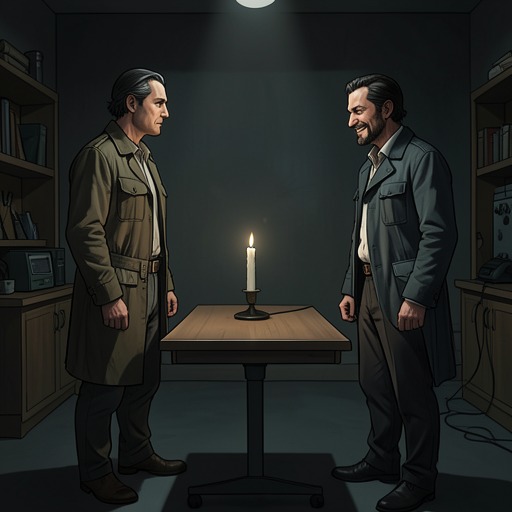
Lestat’s answer is not an argument but a domestic trap. He leads Louis to a room where he has killed two women and left one body still bleeding, arranging the corpses beneath bright candles as though for a party. The scene makes Lestat’s violence theatrical: he stages murder for Louis’s inspection and demands that Louis share both the act and its interpretation. Louis refuses to accept Lestat’s explanation of vampiric nature, accusing him of killing beyond necessity, frightening his victims, and using grotesque display as a form of blasphemous power. Their disagreement is no longer merely about taste or temperament. It concerns whether vampirism should be understood as a moral problem demanding reflection or as a license to enact appetite.
Lestat then persuades Louis to create Claudia, a dying child whom Louis has encountered in a plague-stricken room. The act gives their relationship a new structure while intensifying its coercive logic. Lestat presents Claudia as a daughter and uses her transformation to keep Louis from leaving. Claudia herself immediately exposes the lie in that arrangement: she says that she is her mother’s daughter, while Lestat insists that she is now the daughter of both vampires. He also tells Louis that he will stay to care for her and make her happy. Louis recognizes the manipulation, yet remains. Lestat has turned Louis’s capacity for love into a bond that can be used against him.
Family, Rivalry, and Breakdown
The three-person household temporarily gives Louis and Lestat the appearance of a family, but Claudia’s development makes the imbalance impossible to hide. Lestat treats her as a child who must obey; Claudia increasingly sees herself as an equal. When she becomes cold toward him, stares at him for hours, and refuses to answer him, Lestat responds with outrage because he cannot tolerate being ignored. Louis is forced to fight him again, explaining that Claudia is no longer merely a child and that the household must learn to reason with her rather than command her.
Claudia’s independent killings reveal how thoroughly the household’s violence has exceeded Lestat’s control. After two servants, a mother and daughter, disappear, their bodies are found decomposing together in the unused kitchen. Lestat blames Claudia and demands authority over her. Louis restrains him and argues that she must be taught to respect what belongs to all of them, because she now regards herself and the two older vampires as equals. The argument exposes a contradiction in Lestat’s position: he has taught Louis that vampiric life is organized by power, yet he cannot accept the equality that his own creation has inferred from that lesson.
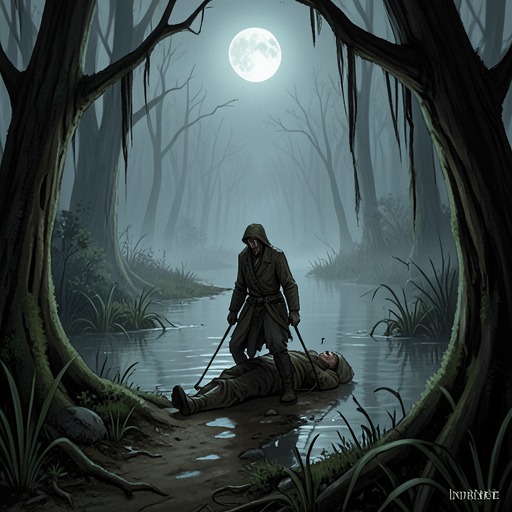
Louis and Claudia eventually conspire against Lestat. They destroy his body and carry the remains to Bayou St. Jean, where Louis lets the sheet-wrapped form sink into the dark water before dawn. His reaction reveals the depth of the relationship’s hold. He experiences the loss not simply as liberation but as the death of transformation and mystery itself, and he feels an almost irresistible pull to descend into the water with Lestat. Claudia calls him back, embraces him in the coffin, and repeats that they are free of Lestat forever. Freedom therefore arrives through murder, but it is marked by grief, compulsion, and the inability to separate escape from attachment.
Return, Exposure, and Final Separation
The relationship does not end with Lestat’s apparent destruction. When Louis and Claudia enter the Théâtre des Vampires, Lestat reappears among the Paris vampires, scarred and alive. His return is a reversal of Louis’s attempt to make the past final. Lestat demands that Louis come back to him and claims that he can give Louis his life back, while also insisting that Claudia is the one who harmed him. Even in ruin, he speaks in the language of possession and bargaining: Louis is to be reclaimed, Claudia is to be punished, and their shared history is treated as an unresolved claim.
Louis’s response is not renewed dependence but decisive retaliation. After Claudia and Madeleine are executed by the theater’s vampires, Louis returns to Armand’s rooms and finds them empty, then spreads kerosene through the cells, ballroom, stage, curtains, and theater doors. He nails the front doors shut from outside and sets the Théâtre des Vampires alight. The fire is both revenge against the institution that destroyed Claudia and Madeleine and a final rejection of the world in which Lestat’s methods have been reproduced as spectacle. Louis hesitates at the door to the yard where Claudia and Madeleine died, but continues because they are dead and there is no purpose in reopening that scene. His action transforms the relationship’s accumulated violence into an attempt at erasure.
Years later, Louis finds Lestat again in New Orleans, not as the commanding creator of his early nights but as a bent, trembling, impoverished figure living among dead animals and dependent on a younger vampire. His old scars have nearly disappeared, yet the recognizable eyes and desperate excitement reveal him. Lestat begs Louis to enter, while Louis recoils from the room’s stench and takes up a crying baby instead. The encounter reduces the former master to a degraded remnant and leaves Louis in the position of witness rather than pupil. Yet the reunion also proves that Lestat’s influence cannot be made wholly absent: Louis has returned to see him, and the sight still carries recognition, pity, and horror.
Narrative and Thematic Significance
Louis–Lestat relationship is built from incompatible ways of experiencing vampiric existence. Louis seeks knowledge, beauty, moral distinction, and reverence; Lestat relies on secrecy, appetite, mockery, and action. Louis’s account repeatedly presents Lestat as both an obstacle and the person who makes every later experience possible. Lestat creates the conditions of Louis’s perception even as he frustrates Louis’s attempt to understand them. The maker is therefore also the failed teacher, the intimate adversary, and the origin of the freedom that Louis gains by resisting him.
Their bond also turns performance into a form of power. Lestat stages killings for Louis, disguises bodies as crimes committed by robbers, and later reappears within the theatrical world of the Théâtre des Vampires. Louis, meanwhile, recounts the relationship to a human interviewer, shaping memory into an explanation while still revealing what explanation cannot master: the bodily shock of blood, the pull toward a drowning corpse, and the recognition of Lestat’s eyes beneath a ruined form. In this structure, both vampires perform roles, but Lestat treats performance as domination, whereas Louis uses narration to examine the cost of belonging to him.
The relationship’s lasting force lies in its refusal of simple emotional classification. Louis condemns Lestat’s cruelty, fears his power, resists his demands, and ultimately attacks the systems that sustain him. Yet Louis also learns through him, remains bound to him through shared history, and experiences his apparent death as a loss of mystery itself. Lestat’s failure is not that he leaves no mark; it is that the mark he leaves produces a companion who can see through him. Their relationship ends in separation rather than reconciliation, but its contradictions remain the emotional and philosophical engine of Louis’s story.