Paul
Interview with the VampirePaul, Louis’s younger brother, is the religious center of the family and the immediate source of the guilt that reshapes Louis’s existence. His withdrawal into prayer, reported visions, and sudden death make him more than a lost sibling: he becomes the figure through whom Louis confronts egotism, faith, responsibility, and the possibility that the supernatural has entered ordinary life.
Identity and Devotion
Paul grows up in Louisiana after the family receives a land grant and establishes indigo plantations along the Mississippi near New Orleans. Unlike the rest of the household, he dislikes visits, parties, and social life. He stops attending such occasions altogether before the age of twelve, finding significance instead in prayer and in his leatherbound lives of the saints. His difference is not initially treated as wickedness. Louis, then head of the family, protects him from their mother and sister and eventually builds him an oratory apart from the house so that he can pursue his religious life in seclusion.
The brothers’ relationship is intimate despite their difference. Louis regularly visits Paul in the garden near the oratory and tells him about the practical burdens of plantation life: disputes involving the slaves, distrust of the overseer, anxiety about weather, and problems with brokers. Paul listens with few comments but such sympathy that Louis leaves feeling his troubles have been solved. Louis believes he could deny Paul nothing and promises himself that, however painful the separation might be, Paul will be allowed to enter the priesthood when the time comes. Paul therefore occupies a privileged place in Louis’s affections even before the final conflict between them.
Visions and Conflict with Louis
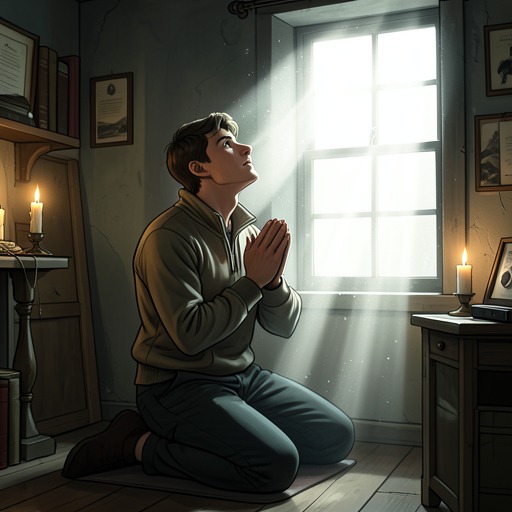
At fifteen, Paul begins to see what he describes as visions. He stops eating, lives in the oratory, kneels before the altar at every hour, and neglects the building itself by failing to tend the candles, change the altar cloths, or sweep away the leaves. On one night Louis watches him for an entire hour from the rose arbor. Paul remains motionless on the flagstones, arms extended in the form of a cross, while the slaves conclude that he is mad. Louis instead persuades himself that Paul is merely overzealous, carried too far by his love of God.
Paul eventually tells Louis that Saint Dominic and the Blessed Virgin Mary have appeared to him in the oratory. According to Paul, they command him to sell all the family property in Louisiana, including the plantations and the town houses in New Orleans, and use the proceeds to do God’s work in France. He is to become a great religious leader, restore the country’s former fervor, and resist atheism and the Revolution. Because Paul owns nothing, the demand falls upon Louis: the elder brother must surrender the family’s wealth on the authority of Paul’s revelation.
Louis refuses. He laughs at Paul’s account, calls it the product of an immature and morbid mind, and announces that the oratory should be torn down and Paul sent to school in New Orleans. His contempt conceals anger and bitter disappointment. Louis later recognizes that his refusal was not simply reasonable skepticism but what he calls vicious egotism. He can believe in saints reported to have seen visions in distant places, light candles before their statues, and accept their images, symbols, and names; he cannot believe that his own brother might be a saint. Paul’s closeness makes the extraordinary impossible for Louis to acknowledge.
Death and Aftermath
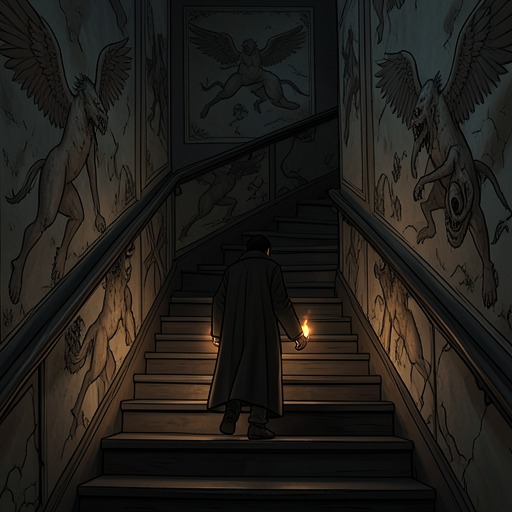
Paul does not waver in his conviction. After the argument, he leaves Louis’s room crazed and grieving, and within minutes walks through the French doors onto the gallery. He pauses at the head of the brick stairs and falls. His neck is broken, and he is dead by the time Louis reaches the bottom. Two servants witness the fall and say that Paul looked upward as if he had seen something in the air before his body moved forward as though swept by a wind. Louis does not see the moment itself; his back is turned when he hears the impact.
The circumstances leave the household suspicious. Paul and Louis have argued shortly beforehand, the servants and their mother have heard the quarrel, and Louis refuses to explain what Paul has told him about the visions. His mother questions him repeatedly, his sister joins her, the priest demands an account, and even the police question him at his mother’s prompting. Louis insists that the argument was only a discussion and that he was not on the gallery when Paul fell, but everyone looks at him as though he had killed his brother. More painfully, Louis himself accepts the accusation inwardly.
Louis sits beside Paul’s coffin for two days repeating the thought that he has killed him. Paul’s skull has been shattered against the pavement, leaving the back of his head misshapen on the pillow. Louis forces himself to stare at the corpse despite the pain and smell of decay, nearly fainting as he studies the face and repeatedly feels the impulse to open Paul’s eyes. His remorse centers not on a proven act of violence but on his own preceding cruelty: he laughed at Paul, refused to believe him, and failed to show kindness. Paul’s death thus becomes a moral injury that Louis cannot settle by deciding whether the visions were genuine.
Paul is buried in the St. Louis Cemetery in New Orleans, but burial does not end his presence. Louis leases the plantations to an agency so that he need never return to the house or oratory, moves his mother and sister to a town house, and tries to avoid the cemetery gates. Nevertheless, drunk or sober, he imagines Paul’s body rotting in its coffin. Slaves at Pointe du Lac begin saying that they see Paul’s ghost on the gallery, while the overseer struggles to maintain order. The public scandal also affects Paul’s family: people in society ask his sister offensive questions, and she responds by becoming what Louis describes as an hysteric, though he believes her reaction is partly performed because she thinks it is expected of her.
Memory, Guilt, and Narrative Significance
Paul returns in Louis’s dreams as a figure still standing at the head of the stairs. In these recurring scenes Louis holds his arm, speaks kindly, urges him back into the bedroom, and tells him that he does believe him, asking Paul to pray that he may possess faith. The dream reverses the decisive failure of their last argument: the living Louis tries to become the brother who would have listened, while the dead Paul remains fixed at the threshold where belief and disbelief separated them.
Much later, Paul is also re-created in a vision that joins him to the imagery of judgment and blood. During a funeral procession through ruined surroundings, Louis sees Claudia carrying a black prayer book beside a coffin that appears to contain the skeletal remains of Lestat. When Claudia recites the curse on the person who has shed a brother’s blood, the vision changes: beneath the coffin’s glass Louis sees not Lestat but Paul, young, blond, and apparently warm and alive, with closed eyes, smooth fingers wrapped around a crucifix, and lips Louis can scarcely endure to see without touching. The apparition ends when Louis reaches toward him. Paul’s image therefore survives not as a settled explanation of the past but as a recurring embodiment of accusation, tenderness, and unresolved doubt.
Paul’s role is defined by the tension between sanctity and pathology. The household interprets his religious extremity as madness; Louis initially calls it fanaticism; yet Louis never proves that the visions were false. The story preserves that uncertainty while making Paul’s effect on Louis certain. Whether Paul saw Saint Dominic and the Blessed Virgin Mary or suffered a delusion, his conviction transforms the family, his death destroys Louis’s confidence in his own moral innocence, and his memory becomes inseparable from the supernatural choices that follow. Paul is thus both a character in Louis’s past and the first figure through whom Louis learns that the most consequential mystery may be the one a person is least willing to recognize in someone he loves.