The vampire’s despair
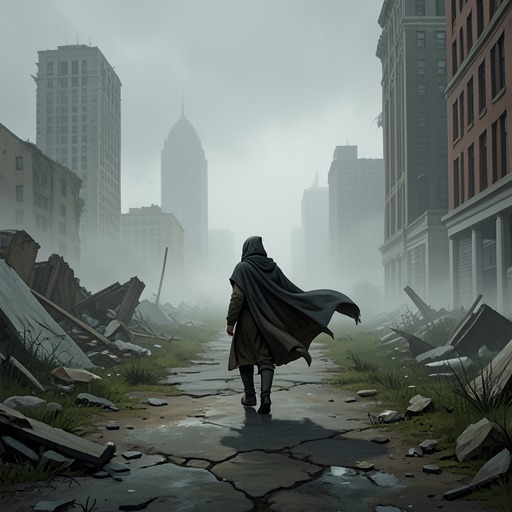
Interview with the VampireThe vampire’s despair names the central danger of immortal existence: not physical death, but the gradual discovery that the world has changed beyond recognition while the vampire remains fixed within it. Armand presents this despair as the condition that explains why immortality does not produce an endless population of vampires. Most vampires do not simply survive forever; eventually, some lose the stamina to continue, vanish from the company of their kind, and seek death without leaving anyone a trace of what happened to them.
Definition and Mechanism
The despair begins with a conflict between permanence and historical change. A newly made vampire may imagine immortality as the preservation of everything that gives life its value: familiar clothes, carriages, customs, artistic forms, and social arrangements. Yet everything except the vampire is subject to corruption and distortion. The immortal body remains, while the surrounding world changes constantly, and the very stability that once seemed desirable becomes imprisonment.
Armand explains that an inflexible mind suffers most severely, but even a flexible one may eventually be defeated. The vampire rises one evening and realizes that the style, fashion, or shape of existence that once made immortality attractive has disappeared from the earth. Nothing remains that can offer release from despair except the act of killing. Such a vampire goes out to die, and the disappearance is often deliberately private: no remains are found, no explanation is given, and even companions may not recognize the despair because the vampire has long since stopped speaking about itself or about anything else.
Knowledge, Death, and the Eastern European Quest
The concept takes shape against Louis and Claudia’s search for older vampires in central and eastern Europe. After leaving New Orleans, they study accounts of vampires from the Carpathians and plan to travel through Varna toward the Black Sea. Those books describe bodies that are burned, hearts staked, and heads severed, suggesting a tradition in which the vampire is treated as a corpse that must be physically destroyed.
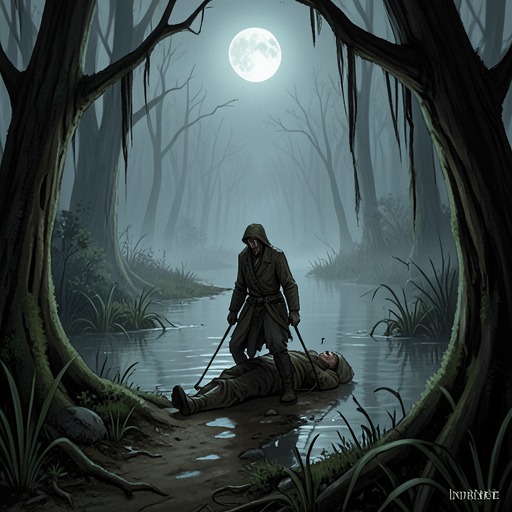
Their search repeatedly confronts them with mindless revenants rather than beings capable of explaining vampire origins. In Transylvania, Hungary, Bulgaria, and neighboring countries, the creatures they encounter are usually corpses with vacant minds, ragged clothing, and no hidden doctrine or secret wisdom. One woman, recently dead and recognized by the villagers, flees through a forest in a blood-stained burial gown, her fingers still caked with grave dirt; her empty eyes offer only despair. These encounters destroy the hope that ancient vampires possess a coherent answer to the meaning of immortality. For Louis, the question becomes whether the damned can offer anything to other damned beings beyond the evidence of their own ruin.
This failure also intensifies his fear that Lestat may have been killed when Louis and Claudia attacked him. Lestat’s absence becomes a recurring presence in Louis’s memory, and Louis eventually wishes that he were alive. The desire is significant because it reverses the emotional logic of their conflict: the vampire whom Louis wanted to escape becomes, in the desolate landscape of eastern Europe, the only vampire he has found who once possessed a conscious, recognizable life.
Armand’s Philosophy of Immortality
Armand makes the vampire’s despair explicit while speaking with Louis in Paris. He argues that vampires rarely die through violence from their own kind because violence is unnecessary. Immortality itself eliminates many of them. The vampire’s true enemy is the widening distance between its unchanging consciousness and a world whose meanings have disappeared.
Louis resists this account because he still experiences the world as rich and worth attending to. He imagines that even if every work of art and every natural beauty vanished, a single candle in an empty cell could hold Armand’s attention through the flicker of its light and the changes in its colors. Armand accepts that Louis is not foolish to hope, but warns that sensitivity itself might become an instrument of madness. The same capacity that allows a vampire to remain responsive to beauty can make the loss of beauty more devastating.
Armand’s own memories embody this tension. He recalls Venice in the fifteenth century, his master’s palace, and the love that accompanied his transformation into a vampire. Time has not dimmed that memory; it has made the period richer and more magical in contrast with the world Armand now inhabits. Memory therefore preserves meaning while also sharpening grief. The past is not merely lost. It remains vividly present, making the present appear poorer by comparison.
Louis, Armand, and the Threat of Emotional Extinction
The vampire’s despair becomes a personal issue in Armand’s relationship with Louis. Armand wants Louis because he sees him as a way to reconnect with the nineteenth century, not merely by learning facts from him but by encountering the spirit and heart of the age. Louis’s uncertainty, pain, and inability to belong are precisely what Armand recognizes as historically representative. Louis believes that his alienation proves he is outside every age; Armand answers that this fall from faith and grace is itself the spirit of the century.
Louis’s attachment to Claudia also reveals his fear of the passage of eras. He loves her, yet he recognizes that their shared life has become an entire period of existence, and that breaking with her would mean breaking with the only living being who shares that history. Armand counters that vampires do not ordinarily survive the passing of many such eras. They disappear when the accumulation of change turns immortality into a penitential sentence. Louis’s bond with Claudia therefore functions both as protection against isolation and as a reminder that even an intimate history cannot remain stable forever.
The concept also clarifies the difference between Louis and Armand. Louis continues to feel responsibility toward a world he loves; Armand has already seen too much of the past to inhabit the present without strain. Yet Armand does not simply surrender. He seeks Louis as a means of revitalization, claiming that Louis’s sensitivity may restore his contact with the modern age. Their relationship is thus shaped by mutual need: Louis seeks knowledge and a way beyond the limitations inherited from Lestat, while Armand seeks a living connection to a world that no longer reaches him directly.
Art, Travel, and the Possibility of Return
Louis’s movements across Europe and back to America test whether aesthetic experience can resist despair. Paris initially offers an extraordinary relief. Compared with New Orleans, which Louis sees as beautiful but fragile, Paris appears whole, historical, and almost as indestructible as nature. Its cathedrals, boulevards, galleries, theaters, cafes, and crowds seem to preserve the possibility that genius, sanctity, philosophy, war, and art might continue to flower even if the outside world fell into darkness.
Yet after Claudia and Madeleine are destroyed, Louis’s relation to art changes. He visits the Louvre seeking a transcendent pleasure that will obliterate pain and make him forget himself. The paintings no longer connect him intimately with the human hands that created them. They become detached, almost dead objects, comparable to children turned to stone, Claudia separated from her mother, Madeleine’s dolls, and the vampires themselves. The possibility of reduction to ashes links art, memory, and immortal bodies: permanence is revealed as precarious preservation rather than true life.
Louis leaves Paris with Armand and turns toward Egypt, wanting to see the desert, the pyramids, the graves of kings, and the furnishings and paintings sealed within unopened tombs. This journey continues his search for knowledge, but it also carries him toward cultures organized around the preservation of the dead. Later, after Armand reveals that Lestat survived the Théâtre des Vampires and escaped toward New Orleans, Louis returns there. The familiar city gives him an extraordinary sense of home, and the sadness he feels among its old streets, mansions, magnolia trees, jasmine, and roses is not painful but rich and almost sweet. That qualified return suggests that despair is not always overcome by a final answer; sometimes it is temporarily altered by memory, place, and the possibility of renewed encounter.
The Concept’s Narrative Significance
The vampire’s despair gives the novel’s immortality a temporal and moral dimension. Eternal life is not presented as limitless freedom but as exposure to endless historical displacement. The vampire cannot preserve the world, cannot guarantee the survival of its relationships, and cannot rely on knowledge to explain the condition of being undead. The search through eastern Europe demonstrates the failure of legend to supply certainty, while Armand’s teaching gives that failure a psychological explanation.
The concept also turns disappearance into a form of death without witness. A despairing vampire may stop speaking before it dies, making its extinction almost indistinguishable from withdrawal, silence, or emotional absence. This pattern resonates with Louis’s own fear of becoming cold and unresponsive. When Armand hopes that the return to New Orleans and a renewed meeting with Lestat will bring Louis “back to life,” Louis recognizes that hatred and revenge no longer move him. The old passions have burned away, but the absence of passion is not necessarily peace; it may be the beginning of the same emotional extinction Armand describes.
Against that danger, the novel sets Louis’s continuing responsiveness to beauty, place, memory, and complicated love. His return to New Orleans does not erase loss, and his encounter with Lestat does not restore the past. Nevertheless, the fact that sadness can still hold him to a city, that a remembered house can still summon a presence, and that art can still provoke a crisis of meaning shows why he has not yet vanished into despair. Immortality remains a sentence, but consciousness remains capable of turning even its ruins into knowledge.